Bad news
Roundup Payouts Average as Little as $10,000 Under Bayer’s Approved $7.25 Billion Deal
A Missouri judge approved a settlement that could cost Bayer up to $7.25 billion over 21 years, but individual payouts average from $10,000 to $165,000, some lawyers call them too small, and the weedkiller stays on the market.

Read the good side of this story
Roundup Cancer Patients Get Guaranteed Payouts as Judge Approves Bayer’s $7.25 Billion Deal

A cancer patient diagnosed with non-Hodgkin lymphoma at 78 or older could receive an average of $10,000 under the Roundup settlement a Missouri judge approved on Friday 20 November. The Associated Press reports that the top average, $165,000, goes to long-exposed agricultural, industrial or turf workers with an aggressive form of the disease diagnosed before 60. Bayer pays up to $7.25 billion in all.
Bayer denies that Roundup causes cancer. The fund is paid in annual instalments over as many as 21 years, and it is meant to close out most remaining claims, including those of people not yet diagnosed.
How the numbers break down
The headline sum is shared among a large group. About 200,000 Roundup claims have been made against Bayer, the AP says, and the settlement also covers people who fall ill in future. Averages run from $10,000 to $165,000 depending on use of the product, age at diagnosis and severity, according to the AP and NPR.
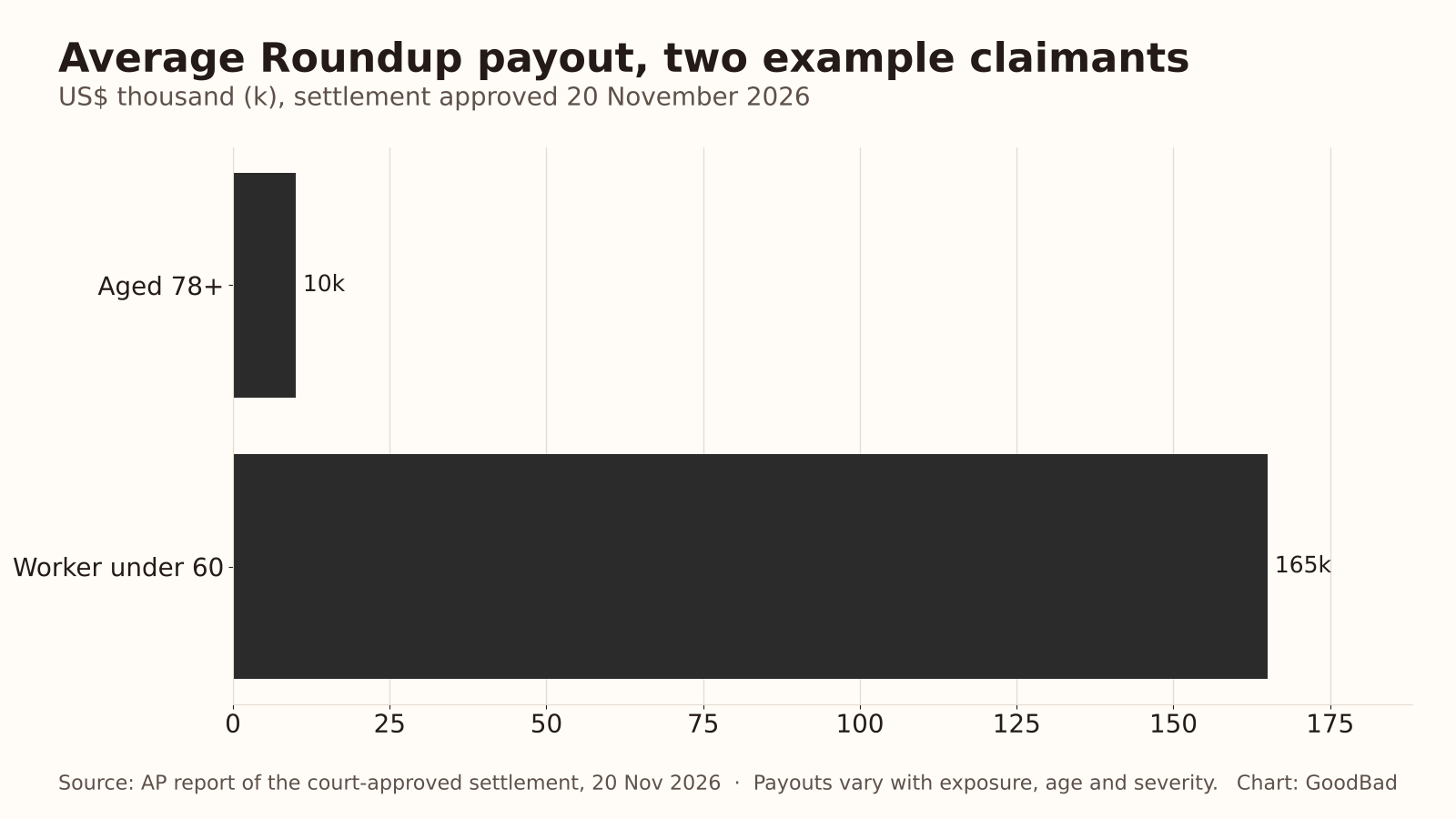 Chart: GoodBad. Data from the Associated Press report of the settlement, 20 November 2026.
The gap between the two ends is more than sixteen to one. Age at diagnosis is one of the factors that pulls the average down, and the AP gives no figures for what the many claimants between those two examples receive.
Why some lawyers object
Some attorneys for cancer patients say the individual amounts are too small and the terms too restrictive, according to the AP. One of them, Gerson Smoger, told a September hearing that the deal locks future claimants in for decades with no chance of punitive damages. He also argued that it leaves the product on the market, so people can keep being exposed. These are his arguments, and the AP reports them as such.
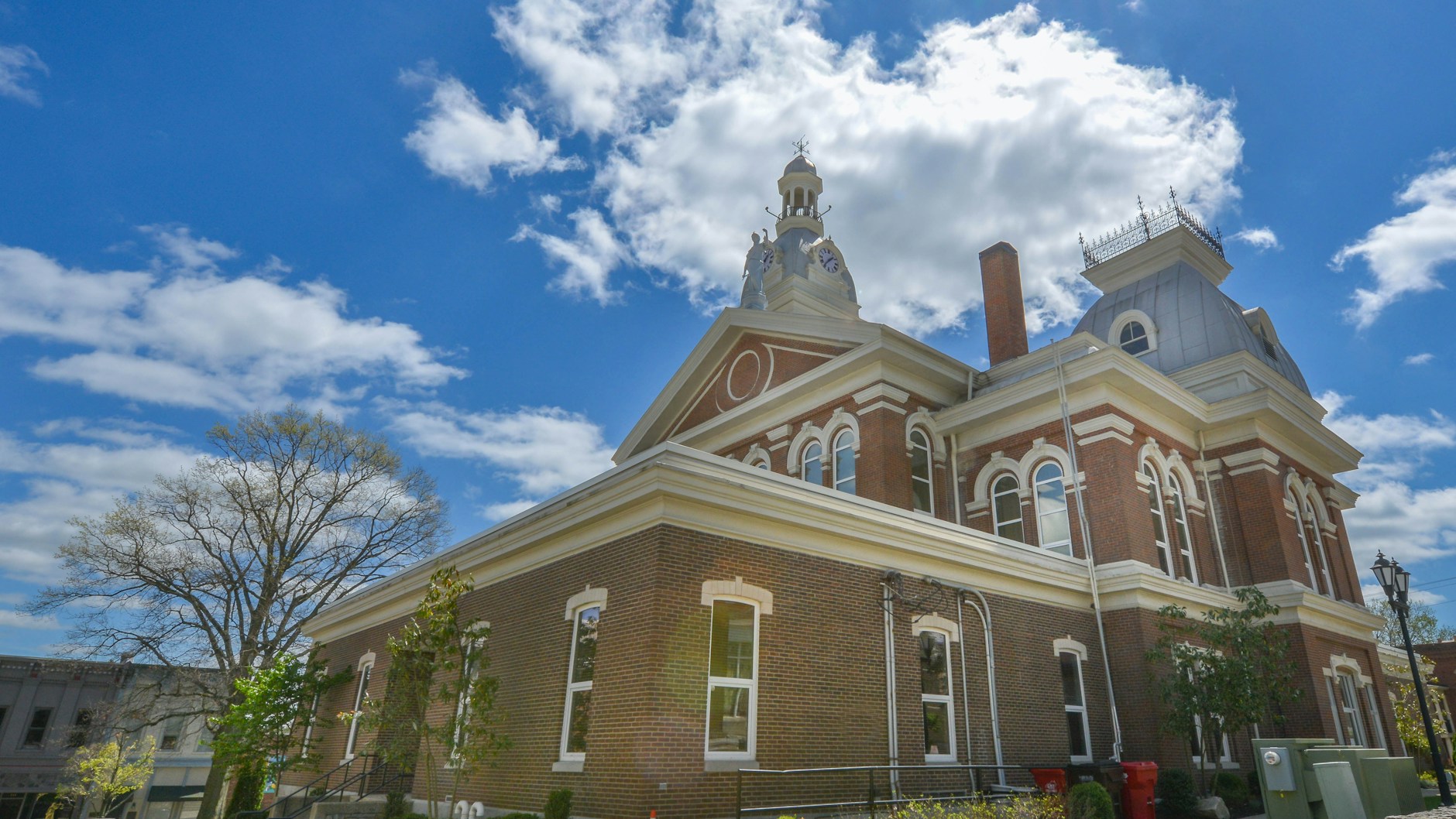
The judge, Timothy Boyer of St Louis Circuit Court, found the average payouts fair and adequate. The BBC reports that he did not want to delay payments to sick people. The AP notes that the decision could be appealed.
What changed before the deal
The leverage shifted while the settlement waited. In June the US Supreme Court ruled 7 to 2 for Bayer, the BBC reports. It said the company cannot be sued in state courts for failing to warn of cancer, because federal rules do not require a cancer warning label. Some lawyers argue the deal is better than nothing, which became a likelier result after that ruling, according to the AP.
Juries have swung both ways. A Georgia jury awarded plaintiffs $2.1 billion in one case, the AP reports. Then in October, a Missouri jury sided with Bayer in the first Roundup verdict since the Supreme Court decision. Bayer’s US general counsel said it should signal that plaintiffs face significant challenges, the AP reports. That is the company’s reading, and a verdict in one case does not decide others.
What Bayer keeps
For Bayer the deal buys certainty. The AP says it provides financial certainty against litigation costs that had led the company to consider pulling Roundup from US agricultural markets. The chief executive, Bill Anderson, called it a milestone in the strategy to reduce the risk of pending and future cases, according to NPR.
The money is on top of earlier payouts. NPR reports that Bayer previously agreed to pay between about $10 billion and $11 billion on more than 100,000 claims. The AP says it had set aside $16 billion for Roundup legal costs. Glyphosate has been removed from Roundup for US households, but it is still used in agriculture.
Who is exposed
Roundup is the most widely used weedkiller in the world, NPR reports, and Monsanto introduced it in 1974, according to the AP. Bayer acquired it with Monsanto in 2018. The settlement covers people exposed before it was proposed in February. A farm worker or gardener exposed in earlier years and diagnosed later falls inside it.
The people with the least say in the deal are those not yet ill. They are bound to its terms for as long as 21 years, which is the point Smoger objected to, and the reports do not say whether they can opt out.
What stays unresolved
The science is disputed, and the settlement does not settle it. The International Agency for Research on Cancer, part of the World Health Organization, classified glyphosate in 2015 as probably carcinogenic to humans. The US Environmental Protection Agency has found it is not likely to cause cancer in humans when used as directed, and NPR reports that the agency is still reviewing the evidence. NPR adds that the Trump administration sided with Bayer in the Supreme Court case.
Christopher Seeger, the court-appointed counsel for cancer patients, said the order guarantees compensation for people who have waited more than a decade, according to the BBC. Whether that guarantee is enough depends on which end of the $10,000 to $165,000 range a claimant lands in, and on whether an appeal delays the first payment.
None of the reports cited here sets out the claim deadlines or how a patient proves exposure, which decides where on the scale a payout falls. Those rules sit in the settlement documents, and a claimant would need them before counting on any figure in this story.