Bad news
Only Three Tropical-Disease Targets Hit 2025 Milestones as Dengue Cases and Deaths Rise
WHO's mid-term report finds only three disease-specific indicators reached 2025 milestones, dengue hit a record 15.1 million cases and funding sits 30% below pre-COVID levels. Progress is real, with 63 countries free of at least one disease.

Read the good side of this story
63 Countries Have Now Eliminated a Tropical Disease, Up From 42 in 2020
Only three disease-specific indicators reached their 2025 milestones in the World Health Organization’s mid-term review of its neglected tropical disease road map. The assessment, published on 4 November, found dengue cases at a record 15.1 million in 2024 and a rise in deaths from vector-borne neglected tropical diseases. Resources for these diseases are 30% below pre-COVID levels.
The same report also finds real gains, and a fair reading holds both. By June 2026, 63 countries had eliminated at least one of these diseases, up from 42 at the end of 2020. The number of people needing interventions fell to 1.41 billion in 2024. The trouble is the distance still to travel.
Targets against progress
The road map sets four main goals for 2030, as WHO lists them in its notes to editors. It aims to cut the number of people needing interventions by 90% and disability and premature death by 75%. It also wants 100 countries to eliminate one disease, and Guinea worm disease and yaws eradicated.
| Target for 2030 | Where the report puts it |
|---|---|
| 100 countries eliminating at least one disease | 63 in June 2026 (42 at end of 2020) |
| 90% fewer people needing interventions | down 19% since 2020, down 36% since 2010 (1.41 billion in 2024) |
| Eradicate Guinea worm and yaws | yaws eradication off track; summary says neither programme on track |
| 2025 milestones for disease indicators | only three reached |
Table: GoodBad. Figures from WHO’s 2026 report, its summary and news release.
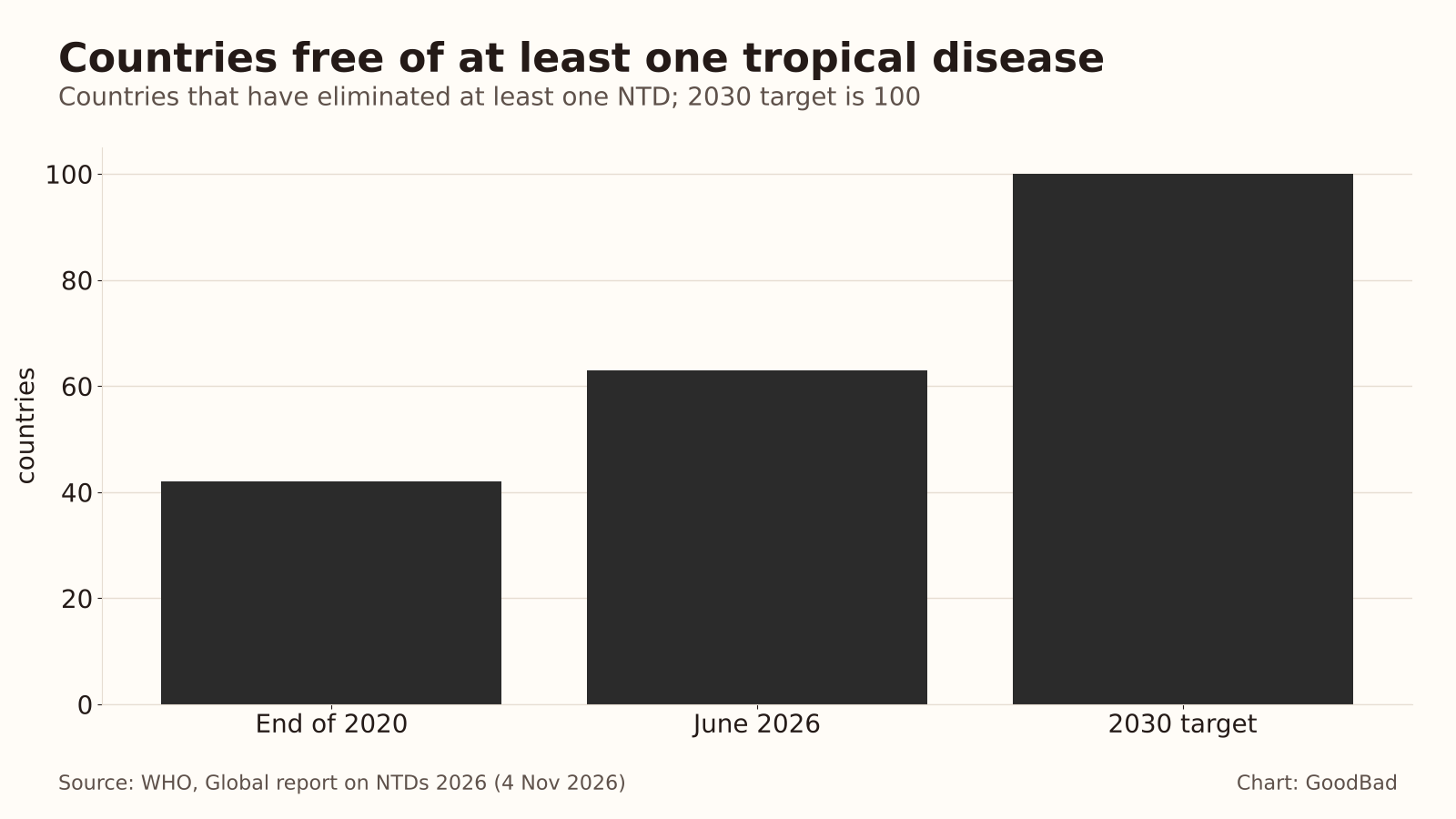 Chart: GoodBad. Data from WHO, Global report on neglected tropical diseases 2026, 4 November 2026.
The money problem
Lack of finance is the biggest barrier, according to Health Policy Watch, which reported on the findings. WHO says a small number of donors supplied nearly 80% of aid for these diseases between 2018 and 2024. That concentration left programmes exposed to abrupt reductions, which disrupted mass treatment, case management, surveillance and vector control.
Donated medicines are at risk of expiring when campaigns stall. Dedicated funding for some programmes has, in WHO’s words, all but disappeared. The report says progress is too slow for most 2030 targets. It names financing, health-system integration, surveillance and reaching fragile settings as the weakest areas.
Where the burden is rising
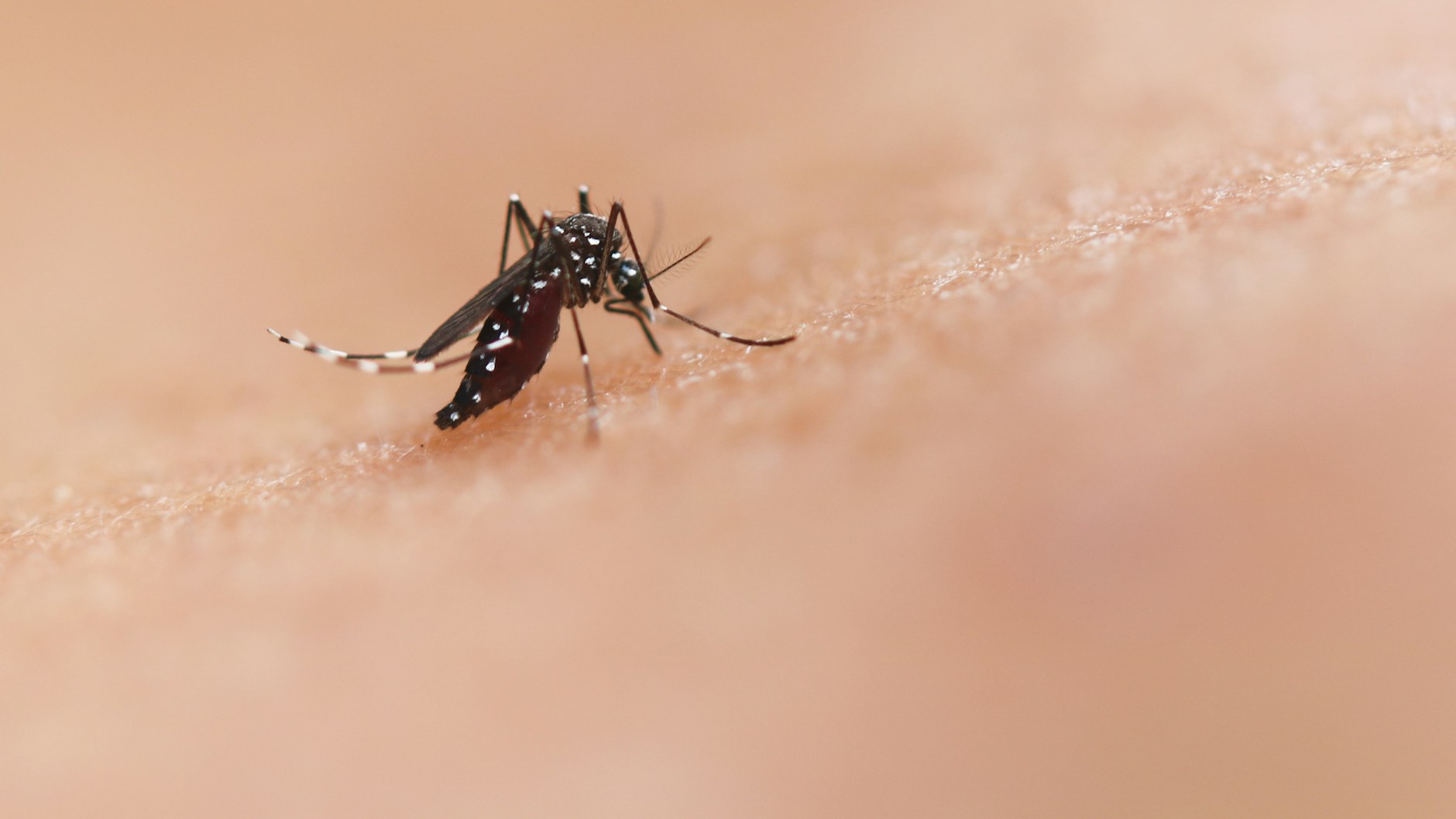
Dengue is the clearest warning. Cases reached a record 15.1 million in 2024, and deaths from vector-borne neglected tropical diseases have risen. Health Policy Watch notes that transmission of dengue and chikungunya has soared with urbanisation and climate change. Conflict and displacement are named as further constraints, and extreme weather can disrupt services.
The report adds gaps in data: comprehensive and timely figures, including numbers split by gender, are missing, which makes progress hard to measure. WHO notes that these diseases fall mainly on poor communities.
What would change it
WHO and its director for malaria and neglected tropical diseases frame the answer as sustainability. The report asks affected countries to increase domestic financing and to fold neglected tropical disease services into universal health coverage. It asks donors to broaden support across interventions, and recipient countries to diversify funding so one withdrawal cannot stall a programme.
There is no published figure in these sources for how much money would close the gap, and none for how many of the 2030 targets are still reachable. WHO’s priorities for 2026–2030 are set out in the full 298-page report. The next test is whether pledges arrive before the 2030 deadline gets closer than the 2025 milestones already missed.