 Bad news
Diesel Stays 77% Above Prewar as Oil Stocks on Land Fall Further
The IEA says oil is back in surplus, but diesel is near $180 a barrel, Gulf fuel exports are at half their prewar level, and stocks held on land are the lowest on record since 2016 while attacks on tankers continue.

Read the good side of this story
Oil Surplus Returns and Crude Falls 32% as Gulf Exports Recover
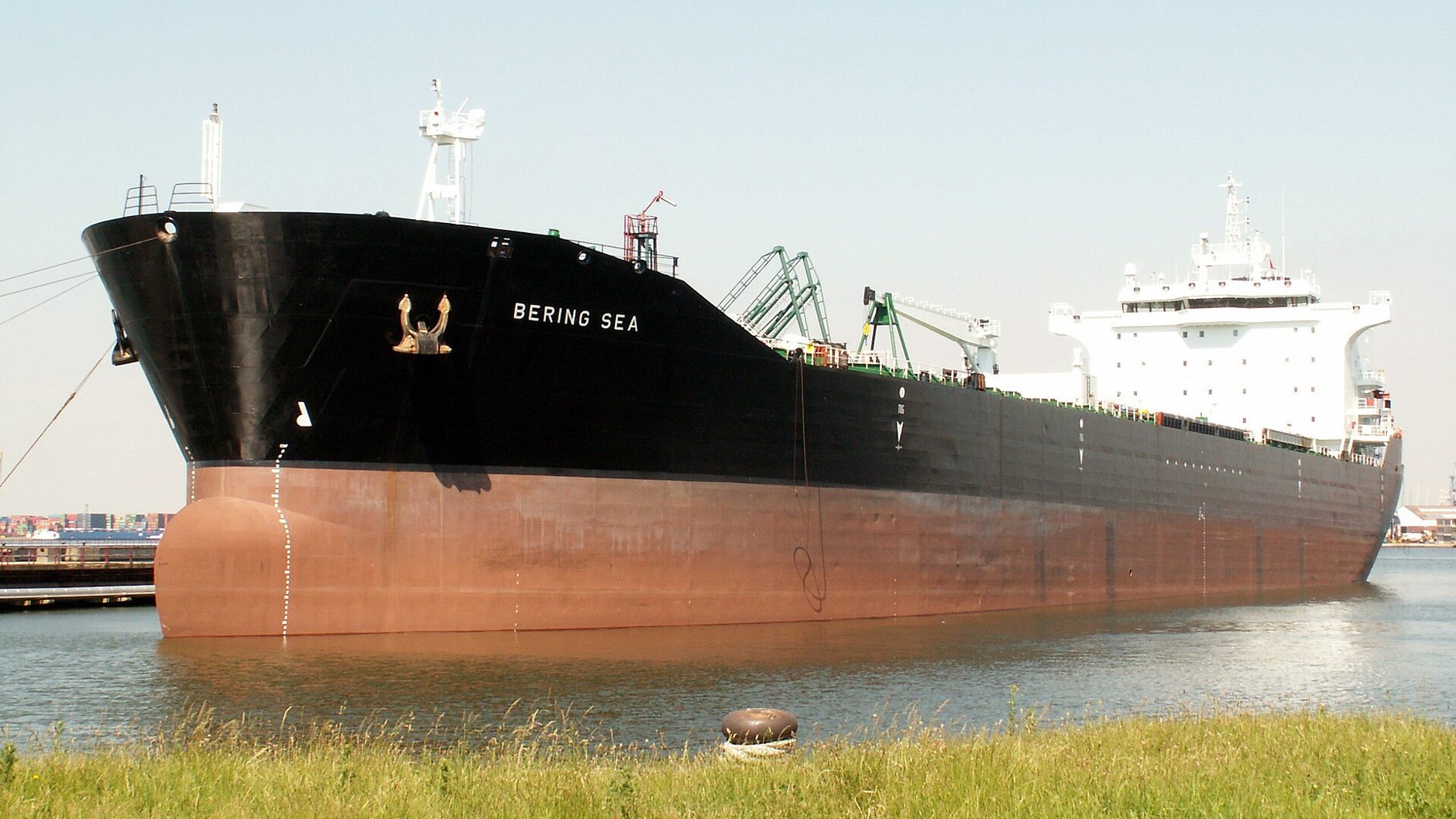
Diesel in Europe is still trading near $180 a barrel, about 77% above its pre-war level, even though the International Energy Agency (IEA) now says the world oil market is in surplus. The figure comes from the agency’s Oil Market Report of 13 November, as relayed by gCaptain. The surplus is real. It is also a crude-oil surplus, and most people buy fuel.
The IEA says supply will average about 105 million barrels a day in the fourth quarter, roughly 1.7 million above demand. The Guardian and Reuters report it as the first surplus since the war with Iran began in late February. North Sea Dated crude has fallen 32% from $136 in early October to about $93, yet the IEA notes it is still $22 above pre-war levels.
What did improve
The good news is concentrated in crude. According to the Oil & Gas Journal, global supply rose 2.3 million barrels a day in October to 105.4 million. That followed a 3 million rise in September, and output is up 5.3 million since August. The IEA expects the United States, Canada, Brazil, Argentina and Guyana to add 1.6 million barrels a day this year. The OPEC+ group pumped 41.23 million in October, 97% of its February level. The agency also raised its fourth-quarter supply estimate by 3.3 million barrels a day. Nobody disputes that the crude market has turned. The question is who benefits when it does.
A shortage that moved downstream
The recovery is uneven by product. According to the Oil & Gas Journal, which summarises the report, Gulf crude exports reached 15 million barrels a day in October, 82% of their pre-war volume. Gulf exports of refined products and liquefied petroleum gas remain at roughly half their pre-war level.
Diesel is where that shows. The same summary says Atlantic Basin middle-distillate margins averaged about $80 a barrel in October, against $22 for gasoline. Refinery runs fell 1.3 million barrels a day in October to 81.3 million during seasonal maintenance, and the IEA expects them to reach 84.7 million in December.
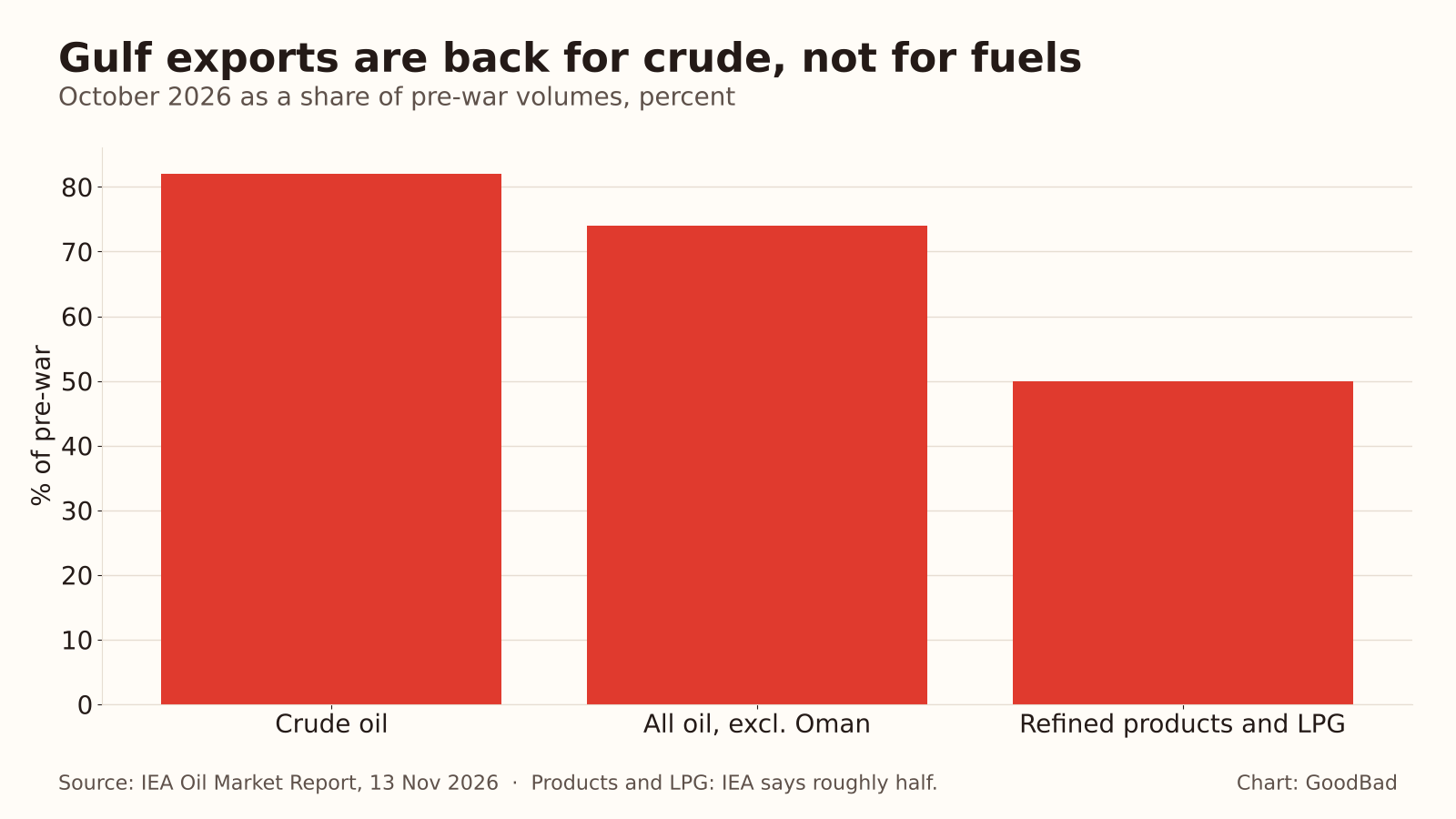 Chart: GoodBad. Data from the IEA Oil Market Report, 13 November 2026, as summarised by Oil & Gas Journal and gCaptain. Products and LPG are the IEA’s “roughly half”.
A cushion that keeps shrinking
The surplus has not refilled the tanks that matter. The IEA says oil on the water rose by 86 million barrels in October and observed global inventories grew by 52 million. Stocks held on land kept falling, however, and are at their lowest since at least 2016.
OECD inventories fell by 47 million barrels in October. Since the war began, observed global stocks have dropped by a cumulative 462 million barrels. Members of the agency have released about 349 million barrels from emergency reserves since 11 March. Another 71 million are due by the end of February, including 15 million barrels of diesel from government stocks, mainly in France and Germany.
The route is still dangerous
Cheaper crude depends on ships getting through. gCaptain, citing the shipping-security body UKMTO, says vessel traffic in the Strait of Hormuz is still about 65% below pre-conflict levels. UKMTO logged eight incidents in its latest period, seven of them tanker attacks, and said it could not independently verify the US-reported transit figures it used.
The IEA calls continued attacks on shipping and energy infrastructure a significant downside risk to its supply outlook. Gulf exports, excluding Oman, reached 18.4 million barrels a day in October, still 26% below pre-war. Freight rates from the Middle East to Asia are near record levels, the agency says.
Demand fell because prices rose
Part of the surplus is a bill that consumers already paid. The IEA expects world demand to fall by 2.7 million barrels a day in 2026, to 102.3 million, because high prices cut consumption. China’s demand fell 7.1% in September from a year earlier, which the agency ties to high fuel prices and a sluggish economy.
Supply is also forecast to fall by 4.8 million barrels a day over the full year before rebounding by 6.6 million in 2027 to 108.1 million. The agency expects demand to recover by about 2 million barrels a day next year, to 104.3 million, but gasoline and diesel use to stay nearly flat. For households and hauliers, a surplus of crude does not undo a year of elevated fuel costs.
What would change the outcome
Three things decide how long the squeeze lasts. Refineries need to return from maintenance, which the IEA expects to happen by December. Gulf producers need to restore product exports, not only crude, and the agency says that has not happened yet. Tankers need safe passage, which the IEA says remains the main risk to its outlook.
Until those happen, the IEA’s picture is of a crude market that has turned and a fuels market that has not. The agency itself calls the improvement tentative, and its own figures bear that out. Anyone buying diesel in Europe pays the refined price, and that is the price still 77% above where it stood before the war began. The IEA’s next monthly report is due in December.