Bad news
Southwest Hydropower Hit a Record Low as Lake Powell Sat Under 1% Above Cutoff
Hydropower in the US Southwest from April to August was 19 percent below last year and 28 percent below its ten-year average, the EIA says. Lake Powell ended September less than 1 percent above the level that keeps its turbines running.
This story runs on the bad side only. The biggest stories of the day are told on both sides.
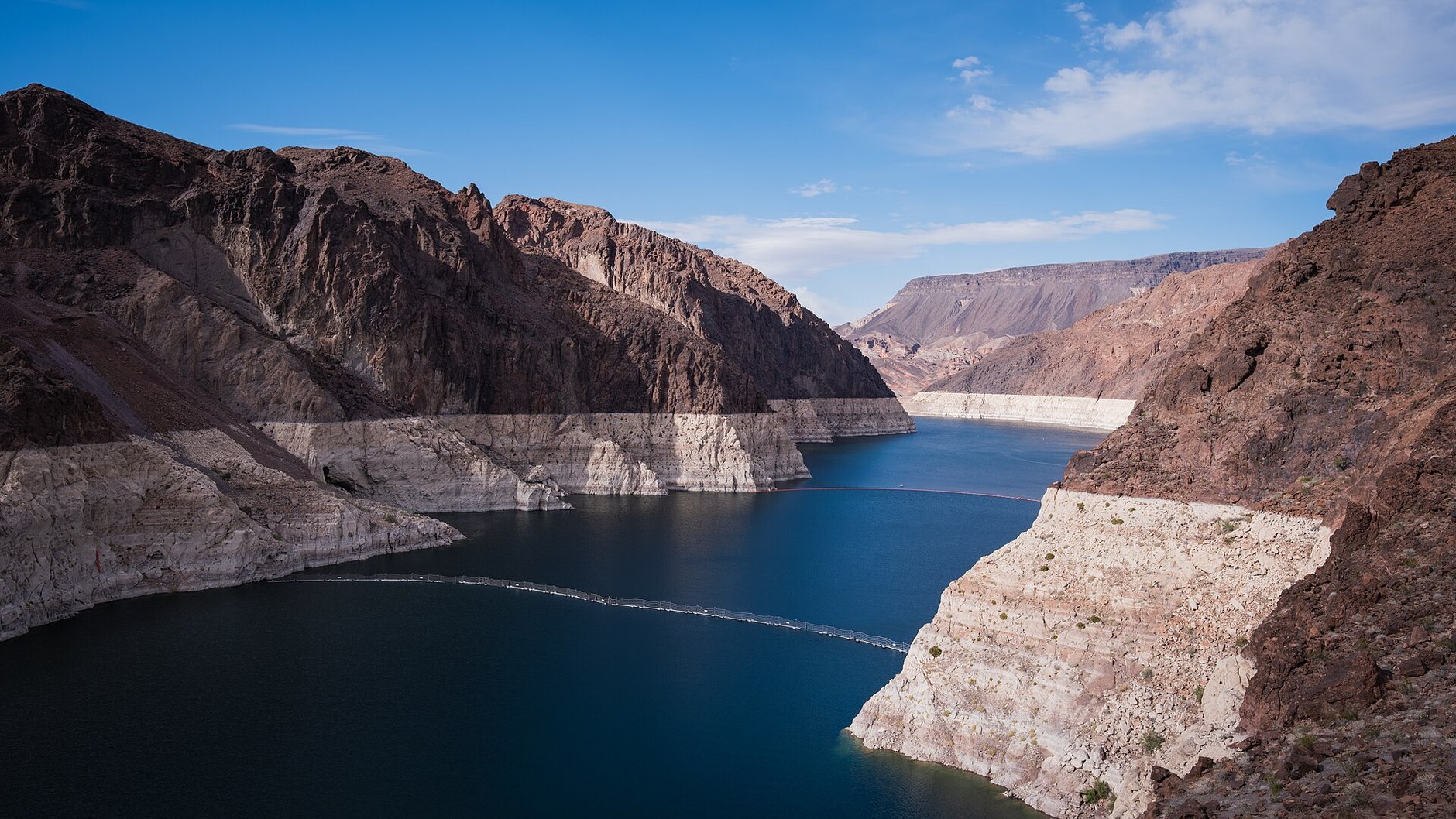
Drought on the Colorado River pushed hydropower in the US Southwest to a record low this summer, and the two biggest reservoirs are close to the point where their turbines stop. Generation from April through August 2026 was 19 percent lower than a year earlier and 28 percent below the ten-year average, according to survey data published by the US Energy Information Administration. The region in question covers Arizona, New Mexico and small parts of Nevada and California.
Hydropower needs water above a minimum level, called the minimum power pool. At the Glen Canyon Dam, Lake Powell has to stay above 3,490 feet. At the end of September it stood at 3,518 feet, less than 1 percent above that line, the EIA says. Hoover Dam needs Lake Mead at 950 feet, and Mead was at 1,038 feet, 9 percent above its minimum.
To protect Powell, water was released from Flaming Gorge, a reservoir in the Upper Colorado basin, and releases from Powell were cut so it holds at least 3,510 feet. Lower releases from Powell can in turn lower Lake Mead and cut output at Hoover Dam. The Department of the Interior has decided that California, Arizona and Nevada must reduce their combined water use by 1.25 million acre-feet a year over the next two years, the EIA reports.
The EIA expects Southwest hydropower to total 6.13 billion kilowatt-hours in 2026, 9 percent less than last year and 24 percent below the ten-year average. For 2027 it expects 6.1 billion, 0.5 percent lower again. Hydropower is about 4 percent of the region’s generation mix in 2026, down from a peak of 8 percent in 2011.
MIT Technology Review notes that the two plants together produced nearly 7 terawatt-hours in 2025, enough for over 2 million people, and that the region has been in drought for 27 years. It adds that production is likely to be at its lowest in more than a decade in 2026 and to slip lower in 2027. The Review also says snowfall in the Rockies supplies about 85 percent of the Colorado River’s annual flow, which is why warmer winters and less snow matter for the reservoirs.
The EIA says this year’s El Niño could bring more precipitation than normal and ease the drought, which would improve the hydropower forecast. It adds a caution: one good water year is unlikely to undo the effect of several years of scarcity. The agency’s forecast for 2027 is nearly flat, so it is not counting on a quick recovery.
What is not yet known
Neither source says how much more households will pay for power if the plants lose output. Nor do they say what share of Southwest electricity would be replaced by gas or coal, or when Powell could drop below the power pool if inflows stay poor. The EIA figures cover generation, not prices, and the Southwest supply region is narrower than the whole Colorado basin, which also supplies hydropower to Colorado, Utah and Wyoming.