 Good news
Solar Met Three-Quarters of Global Electricity Demand Growth in 2025, Ember Finds
Ember's 2026 review puts solar output at 2,778 TWh, up a record 636 TWh, and says fossil generation did not rise for the first time since 2020. Renewables edged past coal at 33.8% to 33.0%.
This story runs on the good side only. The biggest stories of the day are told on both sides.
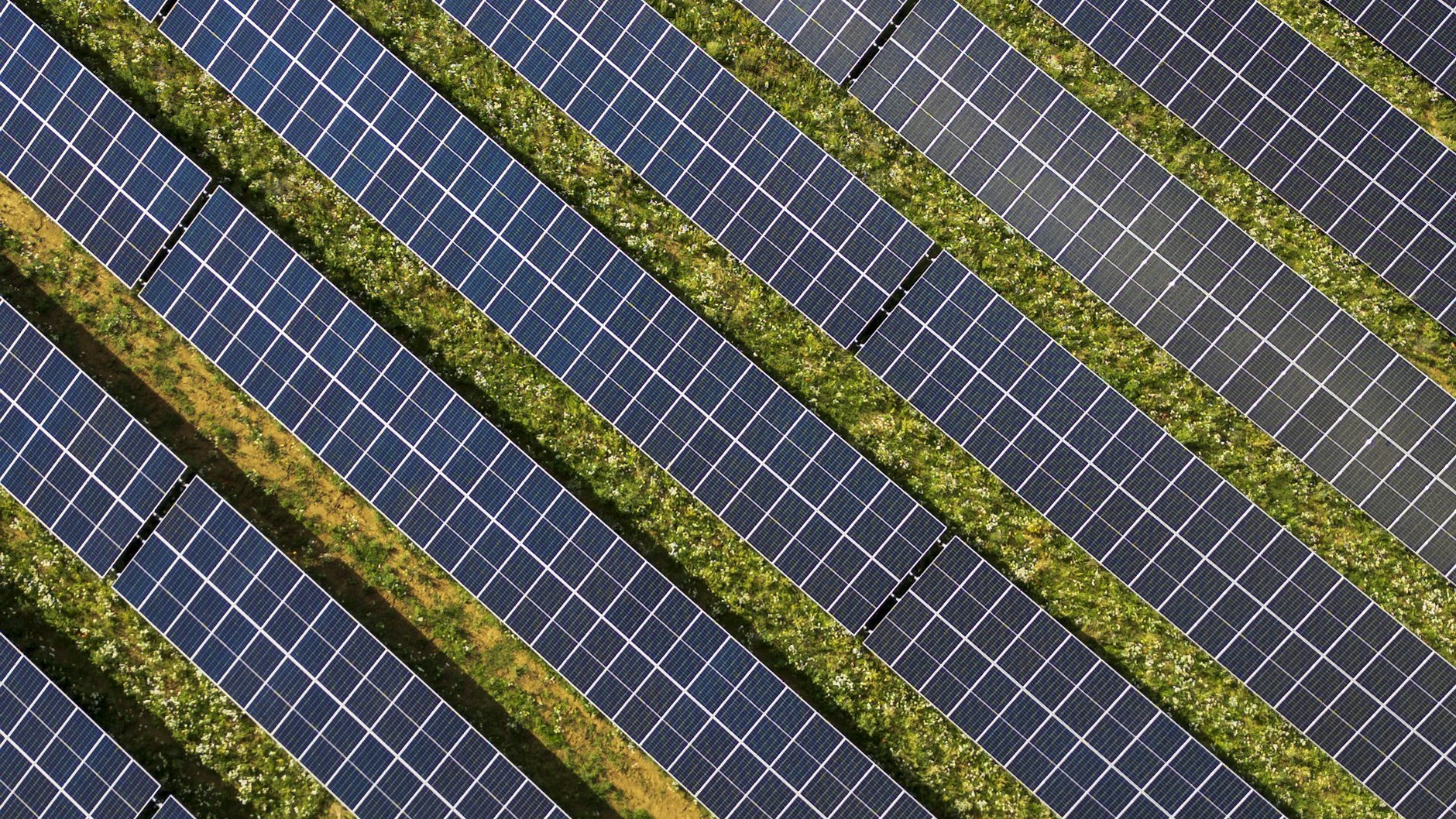
Solar power supplied about three-quarters of the growth in the world’s electricity demand in 2025, according to Ember’s Global Electricity Review 2026, published on 21 April. Solar generated 2,778 terawatt-hours (TWh), up a record 636 TWh, or about 30%, on 2024. That is the fastest percentage growth in eight years. A BBC Future feature published this week uses the data to ask how a technology that gave 1% of the world’s power a decade ago came to rival nuclear.
Did fossil fuels fall?
Barely, but the direction is new. Ember says fossil generation fell by 38 TWh, or 0.2%, which makes 2025 the first year since 2020 without a rise. Solar and wind together met 99% of the growth in demand. Renewables supplied 33.8% of global electricity (10,730 TWh) and coal 33.0% (10,476 TWh), the first time in the modern era that renewables have overtaken coal.
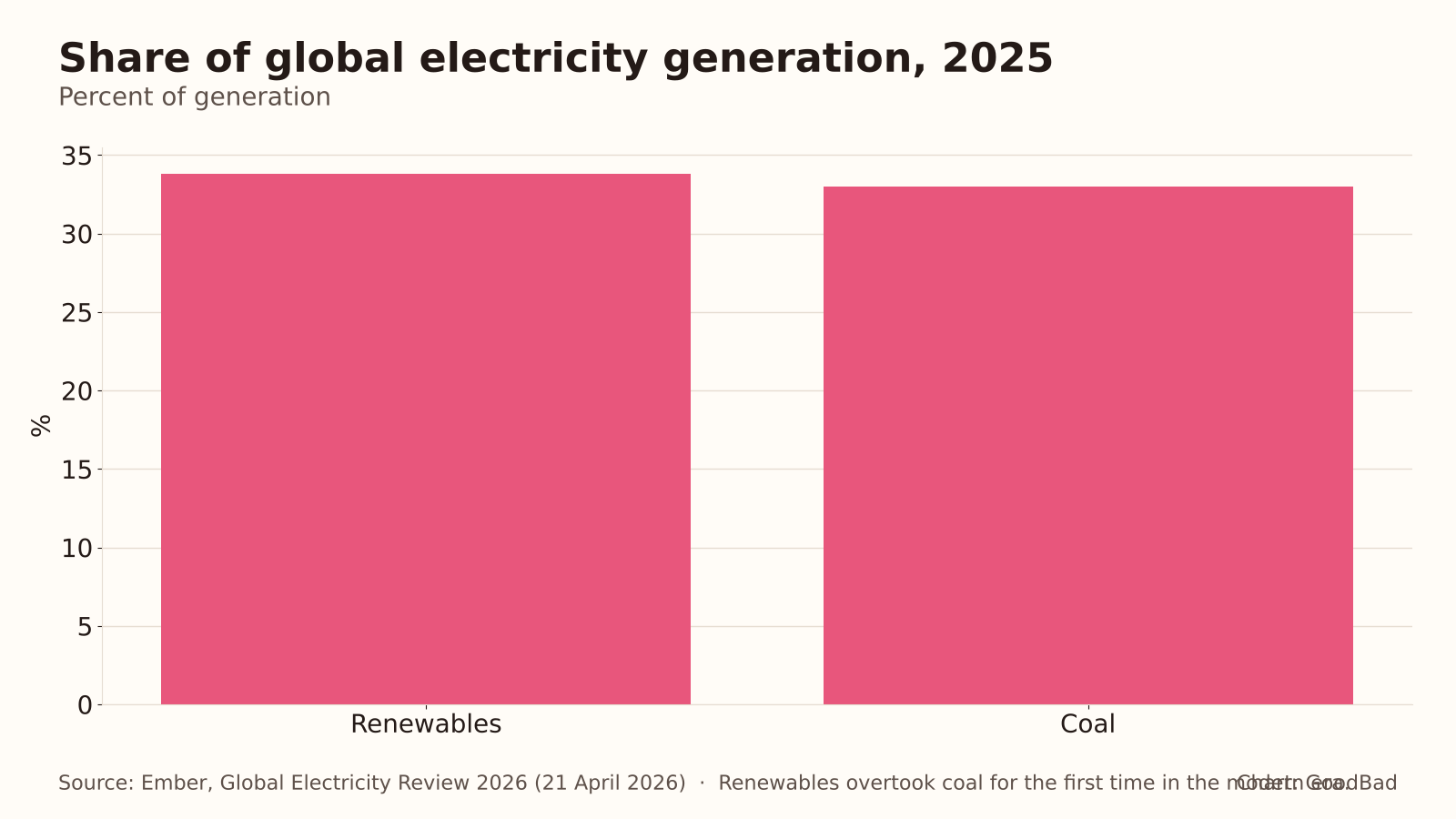 Chart: GoodBad. Data from Ember, Global Electricity Review 2026, 2025 figures.
China’s fossil generation fell by 56 TWh (0.9%) and India’s by 52 TWh (3.3%), Ember reports. The data covers 215 countries, but 2025 figures are complete for only 91 of them, which together account for 93% of global demand.
Did solar pass nuclear?
Ember’s review says solar overtook wind in 2025 and came close to nuclear, and expects both solar and wind to pass nuclear in 2026. The BBC, citing Ember statistics, describes solar as having narrowly passed nuclear in 2025 and says it will almost certainly exceed it by a wide margin in 2026. The two accounts differ on the 2025 ranking, so treat “close to nuclear” as the careful reading. Either way, the BBC says solar output has grown some 2,700-fold since 2000.
Why it keeps beating forecasts
The BBC points to cost. A panel now costs well under $100, according to Ember co-founder Dave Jones as quoted there, and keeps generating for decades. Oxford’s Jan Rosenow told the broadcaster that mainstream projections, including those of the International Energy Agency, assumed linear growth and slowly falling costs and got both wrong.
Pakistan is the example the BBC leans on. Solar supplied less than 2% of its electricity in 2019 and about 24% now, mostly from imported Chinese panels bought by households. Rosenow says it went from Pakistan’s fifth-largest electricity source in 2023 to its largest in 2025. In California, solar and batteries met more than a quarter of demand during the 19:00 to 21:00 evening peak in the first half of 2026, the BBC reports.
What it does not solve
A 0.2% fall in fossil generation means the world still burned nearly as much coal, oil and gas for power as a year earlier. Solar only generates in daylight, and storage that carries power across seasons or long cloudy spells is not yet widespread, according to both experts the BBC quotes. The University of Maryland’s Alicia Zhao says US tariffs and federal policy are expected to raise costs and slow growth, although solar remains among the cheapest new power in the US.
For a household, the practical read is that panels and batteries are cheaper than the forecasts of a few years ago. For a country, the open question is how quickly grids, storage and demand can absorb more solar. Ember’s next annual review will show whether 2026 repeats the surge.