Good news
Heme, the Molecule of Blood, Detected in 115-Million-Year-Old Dinosaur Bone
Researchers led by Curtin University report heme and collagen building blocks, plus structures that look like red blood cells, in the leg bone of a Brazilian theropod. Heme is the strongest evidence; whether the structures are cells is disputed.
This story runs on the good side only. The biggest stories of the day are told on both sides.
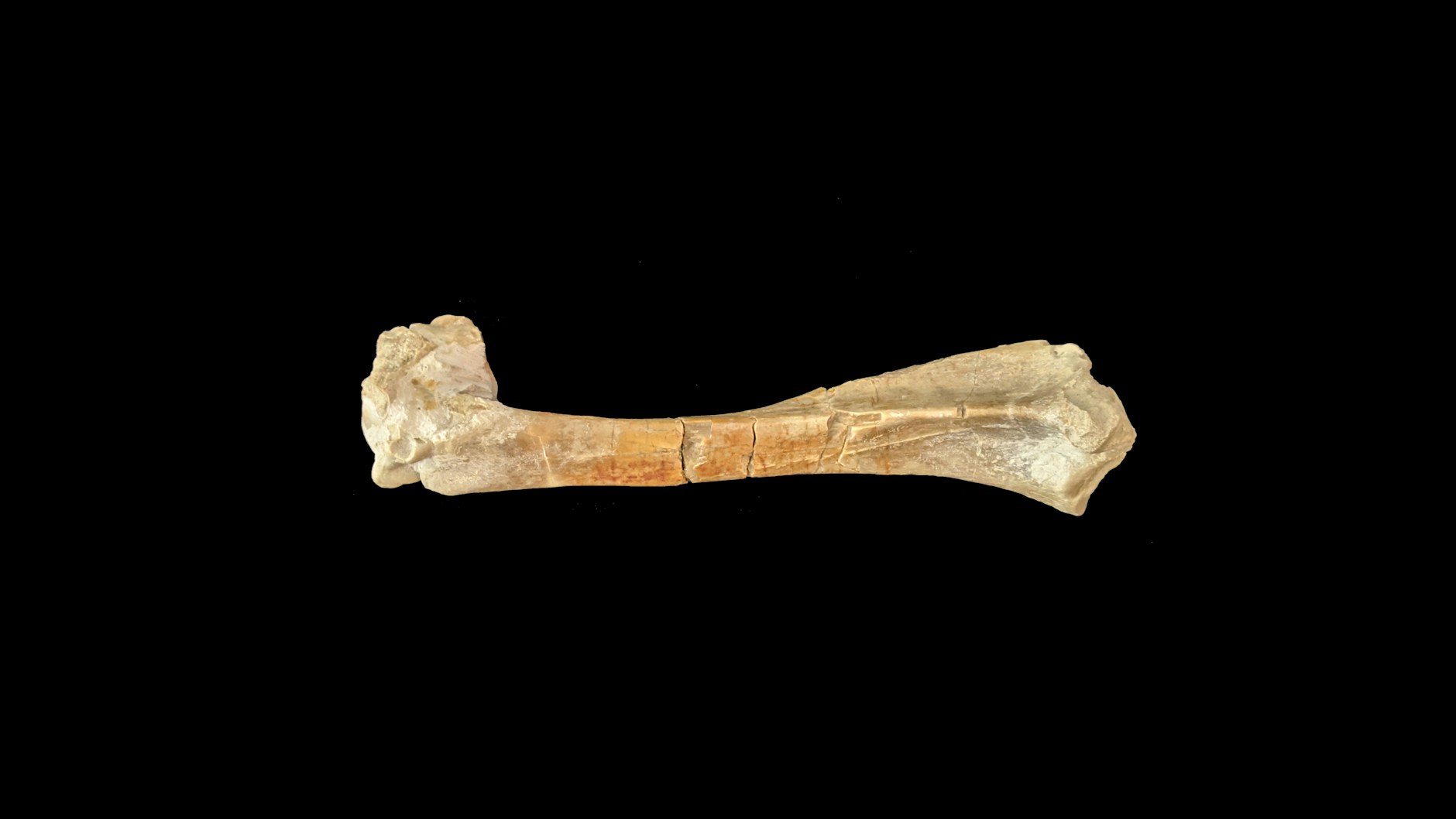
The molecule that carries oxygen in blood has been detected in a dinosaur bone that is 115 million years old. A team led by Professor Kliti Grice of Curtin University in Western Australia reports the finding in the Proceedings of the National Academy of Sciences (PNAS). It is a claim, not yet a consensus. The molecule is better supported than the cells, and an outside expert doubts that the round structures are red blood cells.
What the team found
The bone comes from the hind leg of Aratasaurus, a small meat-eating dinosaur that lived in what is now north-eastern Brazil. It was found in a mine in 2008 and has been held since at the National Museum of Brazil, the Guardian reports. Electron microscope images showed small round structures in the fine channels where blood vessels once ran. The team says they resemble red blood cells.
Chemical tests then found heme, the compound that lets haemoglobin carry oxygen, together with its breakdown products. The tests also found amino acids that are building blocks of collagen. According to Grice, red blood cells with heme chemistry have never before been found in place in any fossil, let alone a dinosaur.
Why they might have survived
Biological tissue usually decays fast, so the survival of anything organic over 115 million years needs an explanation. The team proposes hausmannite, a manganese compound that formed in and around the structures. Grice says it may have stabilised them before fossilisation, and may have done the same for the amino acids.
| Line of evidence | What the team reports | Open question |
|---|---|---|
| Shape | Round structures inside vessel channels | Shape may not mean cells |
| Chemistry | Heme and breakdown products detected | Strongest result, per an outside expert |
| Protein clues | Collagen amino acids detected | Building blocks only, not whole protein |
| Preservation | Hausmannite may have stabilised them | A proposal, not yet tested elsewhere |
Summary: GoodBad, from the PNAS paper and Guardian reporting, 2 November 2026.
The disagreement
Professor Mary Schweitzer of North Carolina State University, who has herself found remnants of blood vessels and soft tissue in dinosaur fossils, is not persuaded these are red blood cells. A dinosaur red cell should carry a nuclear bulge, which would make it look domed on both sides. The structures in this bone are concave, so they might be something else. Schweitzer was more persuaded by the heme and collagen amino acids, the Guardian says.
Grice also urges caution about what the result does not show. It does not imply that large biological molecules such as whole proteins or DNA survive in ancient fossils. She told the Guardian that an extraordinary claim needs extraordinary analytical evidence.
Schweitzer’s wider view is more hopeful than her doubt about the cells. She said the old rule in palaeontology, that original organic material vanishes within about a million years, is being challenged routinely as better analytical methods are applied to fossils. The paper, titled “Heme signatures in mineralized red blood cells within vascular canals of a 115-million-year-old dinosaur bone”, appears in volume 123, issue 46 of PNAS.
What it could open up
If confirmed, heme in a fossil would give palaeontologists a chemical window on how dinosaur blood worked. Grice says it would allow researchers to investigate dinosaur blood, metabolism and even activity levels. It also raises a practical question for museums: what else sits in fossil collections that nobody has tested for it. The next step is for other laboratories to look for the same signals in other well-preserved bones, using the same methods, and to see whether the result holds.