Good news
A New Count Finds 107,356 Traded Species and a Practical Route to Tracking Them
A Science Advances study counts at least 107,356 species used and traded worldwide, twice the earlier estimate. Its authors say the gap can be closed with standard data rules and existing customs systems.

Read the bad side of this story
Wildlife Trade Spans 107,356 Species, Twice the Estimate, and Most Lack Any Data
Researchers have put a number on the world’s wildlife trade, and it is more than twice the figure used until now. The study, led by Alice Hughes at the University of Melbourne with colleagues including the University of Sheffield, counts at least 107,356 species of plants, animals and fungi that are used and traded. The earlier working estimate, from the biodiversity panel IPBES, was about 50,000. The paper, published in Science Advances, counts across plants, animals and fungi at once.
What the count includes
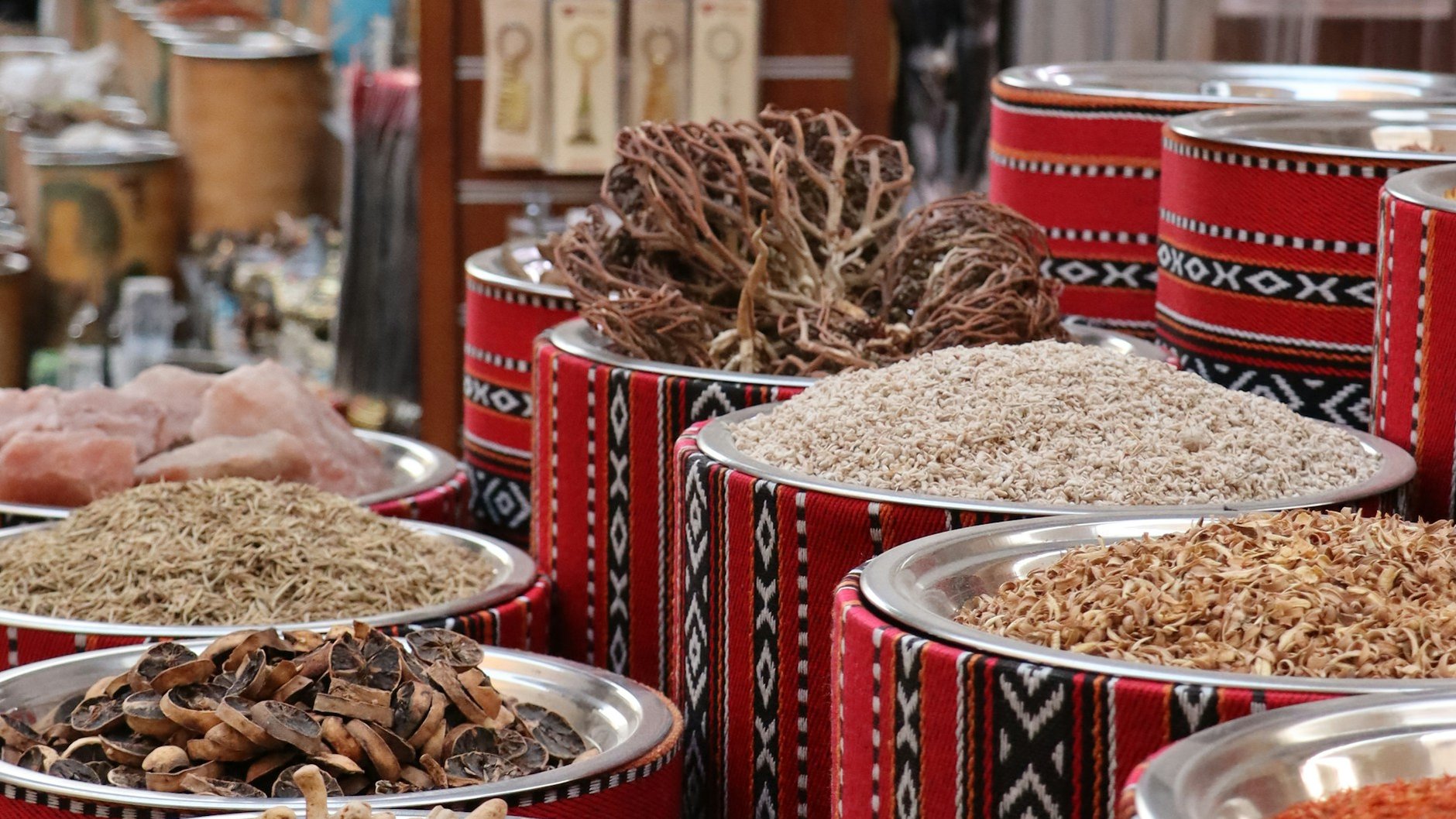
Over 20 researchers took part, according to the University of Sheffield. The figure is a floor, stated as “at least”, because for most traded species there is little or no data on quantity or origin. Of the total, 47,685 are animal species. The rest are plants and fungi, which a count of elephants and pangolins would never reach. Phys.org lists timber, seafood, medicinal plants, pets, cut flowers and ornamental fish among the goods.
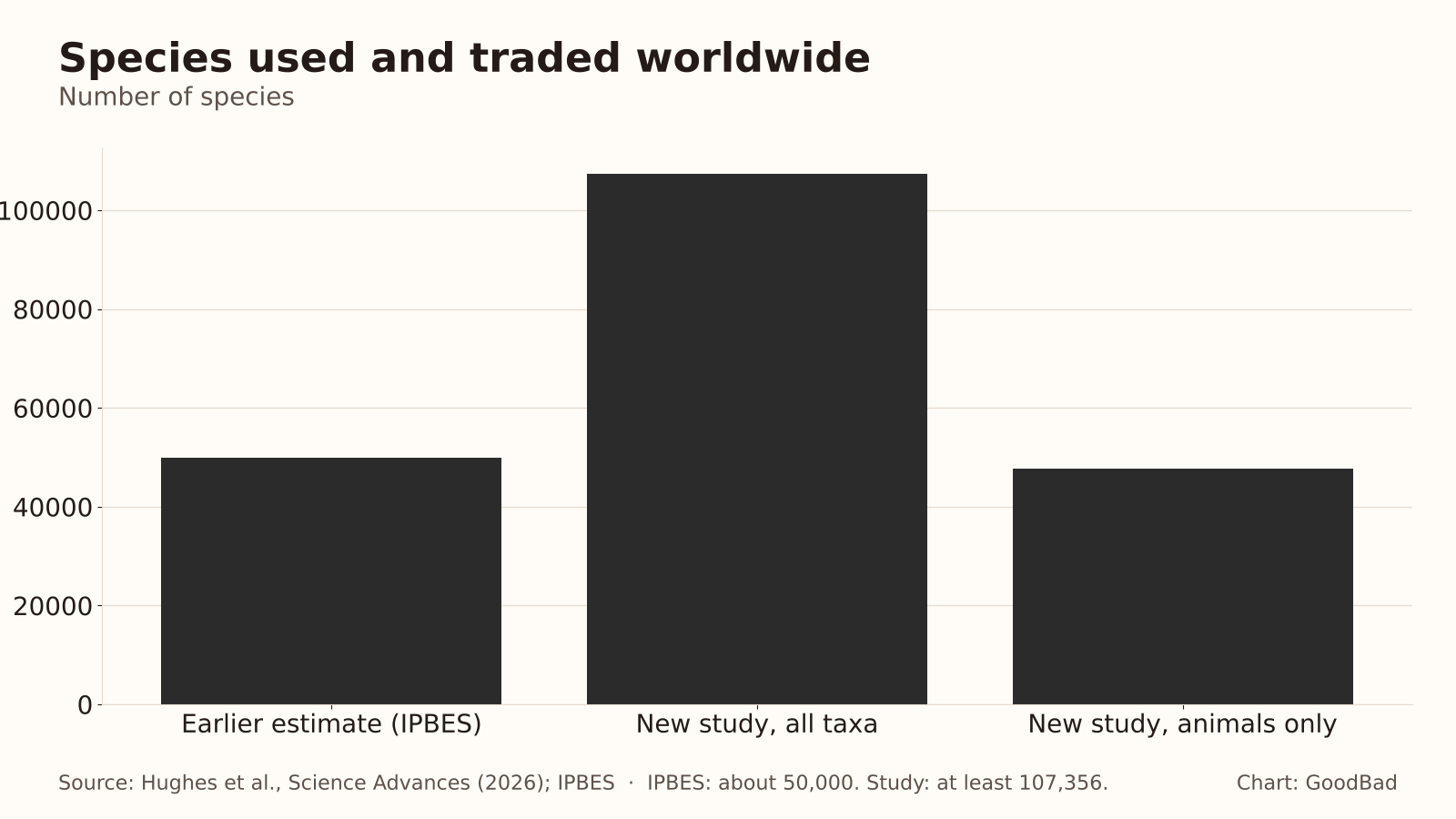 Chart: GoodBad. Data from Hughes et al., Science Advances (2026), as reported by the University of Sheffield and Phys.org, and IPBES.
Most of it is legal
The researchers say legal trade is worth about 10 times more than illegal trade. That matters for the fix, because most of the trade already passes through customs and licensing. The authors propose repurposing existing customs and zoosanitary processes into a monitoring system, which they say would need further engagement to carry out at scale.
Their second recommendation is to standardise how trade data is collected and reported. “Standardising how we collect data would give us the evidence we need to manage trade sustainably,” said co-author Oscar Morton in the Sheffield release. The release also asks governments to lead on measuring trade at national level.
Why the count changes the target
The global biodiversity framework includes a trade target, and Phys.org reports that it covers only about 2–3% of traded species, leaving roughly 97% outside it. A longer species list gives negotiators a more honest denominator to work from. Morton, a Leverhulme research fellow at Sheffield, said overexploitation of wildlife is one of the greatest threats to species survival. That is why the authors ask for better data first, so that rules can follow it.
A model already exists
The United States is the only country that systematically records and shares trade data for a wide range of species. For some groups, 75% of traded species appear in US datasets. The researchers say Europe’s trade may be comparable or higher, but its data is not openly available. A working national system therefore exists, even if it covers one country.
What it means, and what is still open
For a buyer of herbal medicine, timber or fish, the study does not say any product is unsafe. It says trade is wider than the records show. “The problem is we really don’t know because the data isn’t openly available,” Hughes said in the same release.
The study does not give a timetable for any country to adopt its proposals. It does not say how many of the 107,356 species are threatened. Those are the two numbers that would turn a better count into a plan. The less welcome side of the same finding, including how little of the trade global targets cover, is in the bad rendering of this story.