Bad news
Wildlife Trade Spans 107,356 Species, Twice the Estimate, and Most Lack Any Data
A Science Advances study finds at least 107,356 species are traded, double the earlier figure. For most there is little or no record of quantity or origin, and the global target covers about 2–3% of them.

Read the good side of this story
A New Count Finds 107,356 Traded Species and a Practical Route to Tracking Them
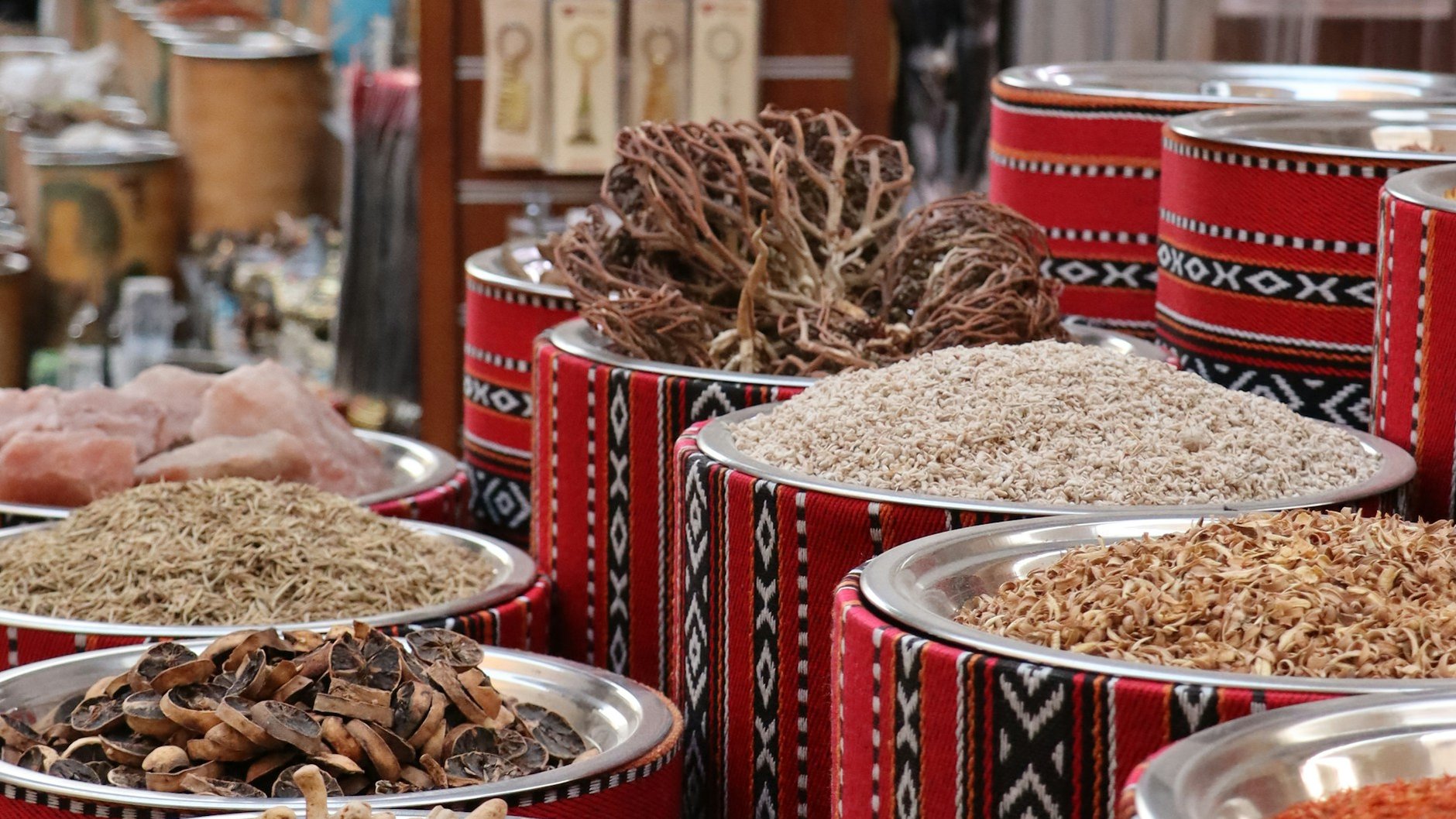
For most of the species in the global wildlife trade, nobody knows how many are taken or where from. That is the central finding of a Science Advances study led by Alice Hughes at the University of Melbourne. It counts at least 107,356 species of plants, animals and fungi that are used and traded, against an earlier IPBES estimate of about 50,000. The count is a floor, not a total, and the authors present it as a minimum because the records behind it are patchy. A species missing from the data is not necessarily absent from the market.
How little is recorded
Phys.org reports that for most traded species there is little or no data on quantity or origin. Without population figures, the authors say, the risk trade poses to a species cannot be assessed. Only the United States systematically records and publicly shares trade data across a wide range of species. For some groups, 75% of traded species appear in US datasets, and Europe’s trade may be comparable or higher, but its data is not open.
The University of Sheffield, which co-authored the work with over 20 researchers across both universities, adds that few programmes record trade outside the CITES treaty and sectors such as fisheries. Fewer still note whether an animal was wild or bred in captivity, or whether the trade is sustainable. “The problem is we really don’t know because the data isn’t openly available,” Hughes said in the release.
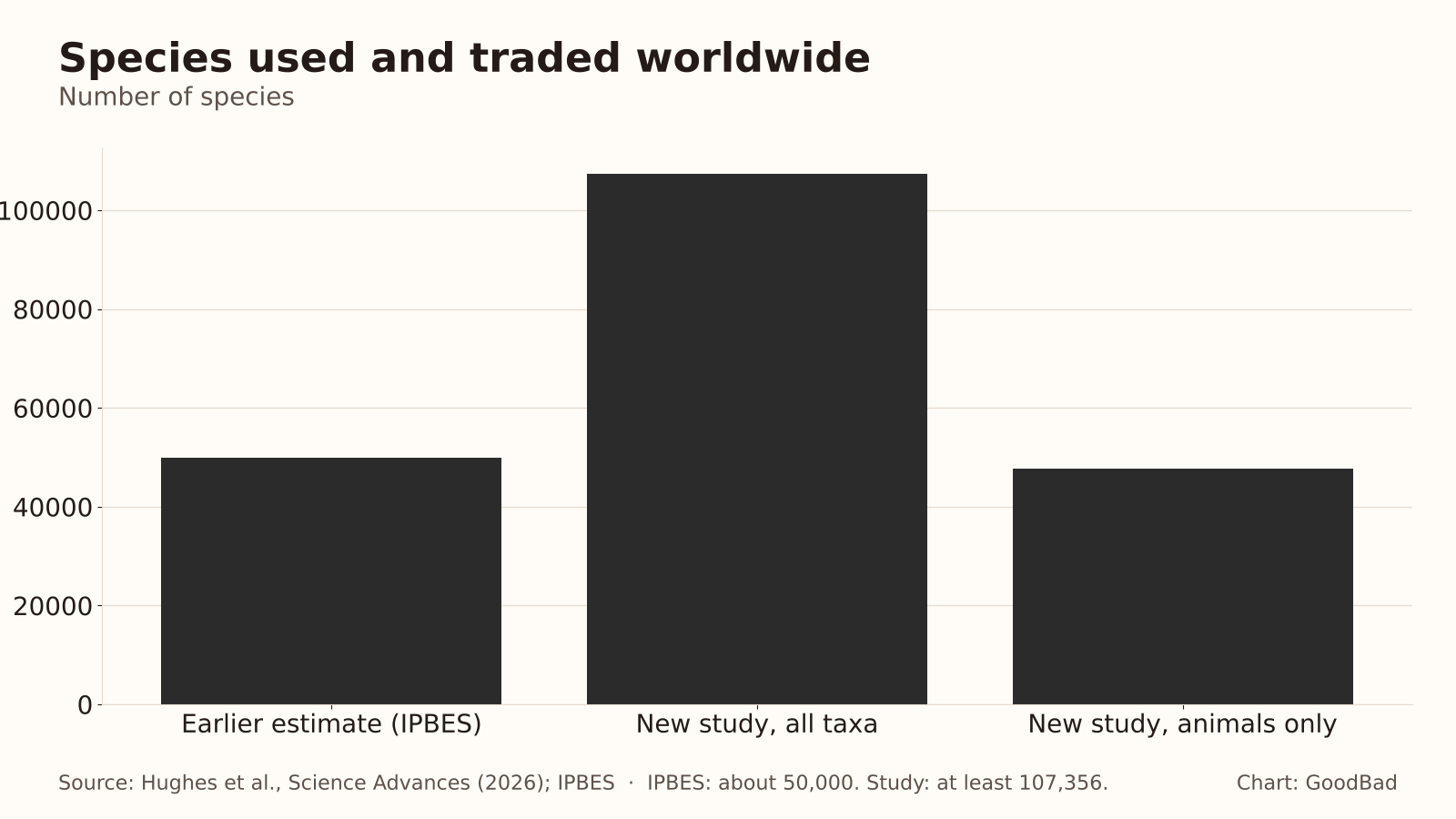 Chart: GoodBad. Data from Hughes et al., Science Advances (2026), as reported by the University of Sheffield and Phys.org, and IPBES.
The target that misses most of it
The global biodiversity framework’s trade target covers only about 2–3% of traded species, Phys.org says, which leaves roughly 97% outside it. The count includes 47,685 animal species, and the rest are plants and fungi that rarely appear in conservation debates. Timber, seafood, medicinal plants, pets, cut flowers and ornamental fish are all part of it.
“Overexploitation of wildlife is one of the greatest threats to species survival,” said co-author Oscar Morton in the release. The study does not say how many of the 107,356 species are threatened, so the scale of the harm is itself unmeasured. No source gives a figure for how much of the trade is sustainable.
It is mostly legal trade
Most of this trade is lawful. The researchers put legal trade at about 10 times the value of illegal trade, so the gap sits in ordinary commerce rather than in smuggling alone. A reader who buys herbal remedies, timber or fish is already inside the trade the study describes, though the study does not say any product is unsafe.
What would change it
The authors name two fixes. One is a standard way of collecting and reporting trade data, adopted widely. “Standardising how we collect data would give us the evidence we need to manage trade sustainably,” Morton said in the release. The other is to repurpose existing customs and zoosanitary processes into a monitoring system, which they say would need further engagement to carry out at scale. They ask governments to lead nationally. None of the sources gives a date by which any country plans to do so, and the good rendering of this story covers why the authors think the fix is within reach.