 Bad news
NASA’s Swift Telescope Will Fall Uncontrolled After a Failed Private Rescue
A private robot sent to lift NASA’s Swift Observatory never got closer than 7 to 9 miles and fell back to Earth. Swift is now shut down and due to re-enter on 4 November, with a 1 in 2,100 risk of harm.

Read the good side of this story
Swift Logged More Than 2,000 Gamma-Ray Bursts in a 22-Year Run Built for Two
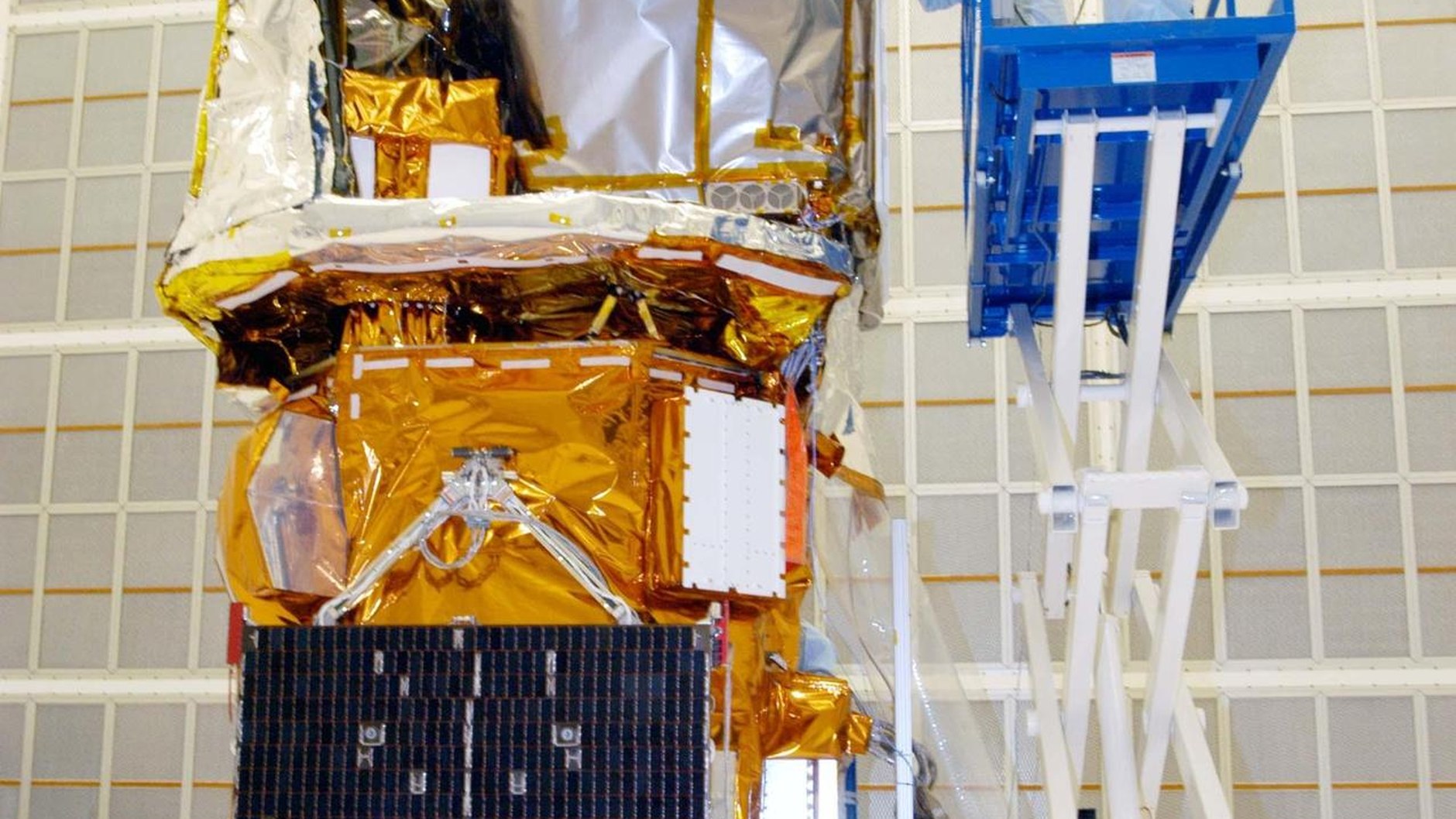
A private spacecraft sent to lift NASA’s Swift Observatory into a higher orbit never got closer than 7 to 9 miles, and Swift is now falling without any means of steering it. The US Space Force predicts re-entry at about 3:30 a.m. Eastern time on Wednesday 4 November, with an uncertainty of 11 hours. NASA puts the risk of harm to anyone on Earth at roughly 1 in 2,100. The telescope that found more than 2,000 gamma-ray bursts has already been switched off.
The rescue that never arrived
NASA hired Katalyst Space about a year ago to push Swift back up. CBS News reports that the company’s robot, called Link, launched in July and never came closer than 7 to 9 miles to the telescope. Link fell back to Earth in September and the rescue was called off. None of the sources read for this story gives the cost of the attempt or explains in detail why the approach failed.
The reason a rescue was needed at all is slow, steady drag. Swift has no engines of its own to hold its altitude, and CBS reports that intense solar activity over the past few years pulled it down faster than expected. By late October it was too low to hold steady for observations, so its systems were shut down. Its science ended there.
What happens when it comes down
The spacecraft weighs roughly 3,200 pounds. NASA expects most of it to burn up but says some components should survive, and CBS reports that tungsten pieces and mirror parts are the likeliest. Because Swift’s orbit is inclined at a low angle, any fragments can land only between 20.6 degrees south and 20.6 degrees north of the equator. CBS lists parts of Africa, Australia, India, Southeast Asia and Central and South America inside that zone, and says surviving debris would most likely fall into the ocean.
A window of 11 hours on either side of the forecast means nobody can say yet which orbits will be the last. The risk figure is NASA’s own estimate, and a 1 in 2,100 chance is small, but it is a number NASA and the Space Force will keep re-checking. NASA and the Space Force say they will keep monitoring and will update the prediction.
| Swift in numbers | Figure | Source |
|---|---|---|
| Launch | 20 November 2004 | CBS News |
| Planned prime mission | Two years | NASA |
| Time in orbit | Almost 22 years | NASA |
| Gamma-ray bursts detected | More than 2,000 | CBS News |
| Exploding stars detected | About 1,400 | CBS News |
| Forecast re-entry | About 3:30 a.m. EST, 4 November, give or take 11 hours | NASA, citing US Space Force |
| Risk of harm to anyone | About 1 in 2,100 | NASA |
What is lost
Swift was a rapid-response instrument. NASA says it could point quickly at short-lived outbursts and send alerts so other facilities could follow up. That role ends with the shutdown. The sources do not name a dedicated replacement, and they do not say what NASA intends to do about the gap. John Nousek led the control team and is an astronomer at Pennsylvania State University. He told CBS the end had been expected since before launch.
What would change the outcome now is limited. The fall cannot be steered, so the only open variables are the date and the debris footprint, and both are in the hands of the Space Force’s tracking. The next useful figures are the updated prediction in the coming days and, later, an account of what went wrong with Link and what it cost.