Good news
India Backs 92 GWh of Grid Storage, Equal to 170% of Today's Capacity
India's cabinet has approved a 14,500 crore rupee subsidy, about $1.5 billion, to build 92 gigawatt-hours of grid storage by 2031, mostly pumped hydro and batteries, with a 40% local-content rule for battery projects.
This story runs on the good side only. The biggest stories of the day are told on both sides.
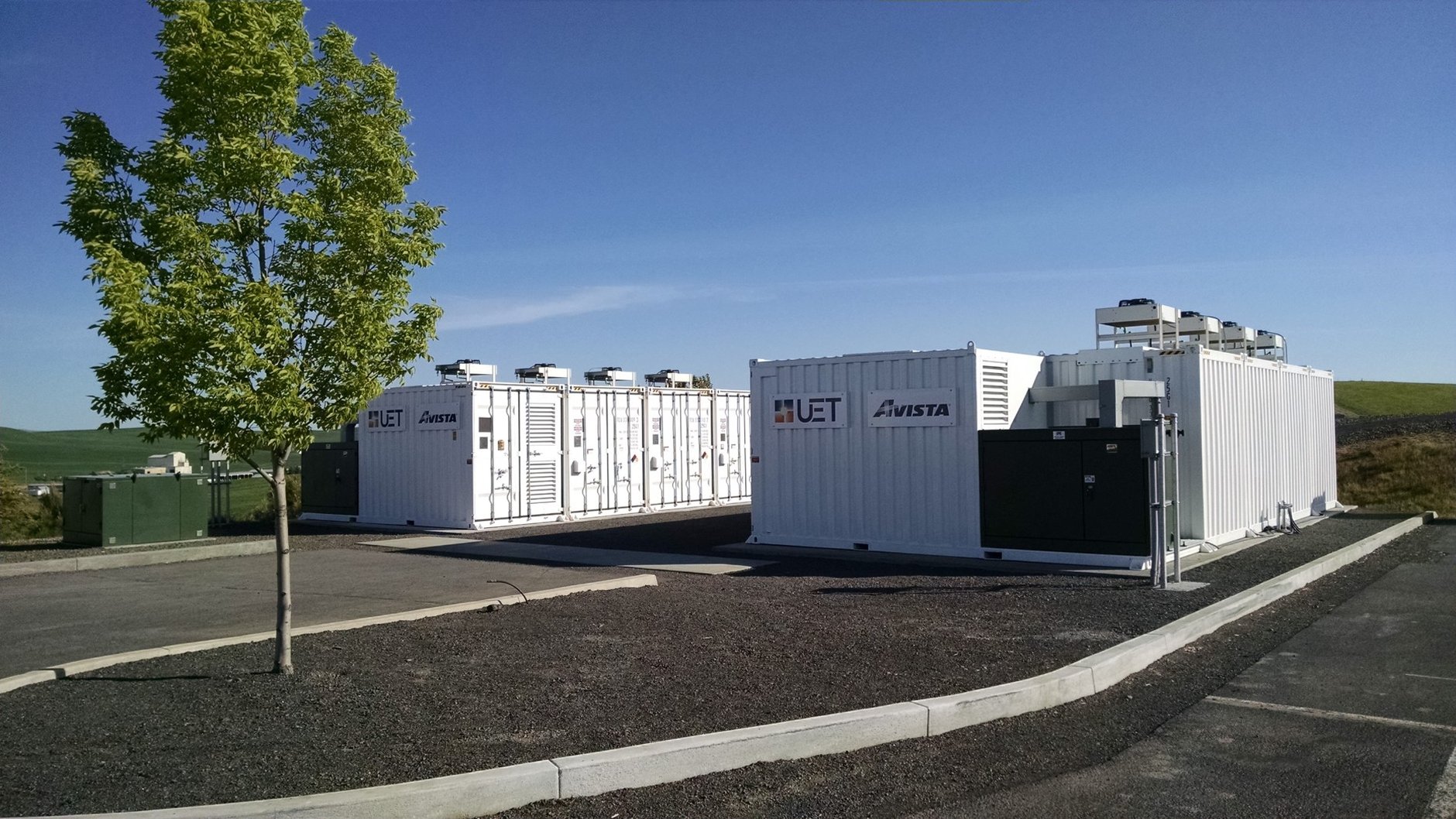
Solar panels make power when the sun shines, and grids need it after dark. India’s cabinet addressed that gap on 4 November with a viability gap funding scheme worth 14,500 crore rupees for 2026-27 to 2030-31. AFP puts that at about $1.5 billion. The money is meant to support 92 gigawatt-hours of storage that has not yet been built.
The government says that is equal to 170% of the grid-scale storage India has today. The same release says the country will need 411 gigawatt-hours by 2031-32, so the scheme closes part of the distance, not all of it.
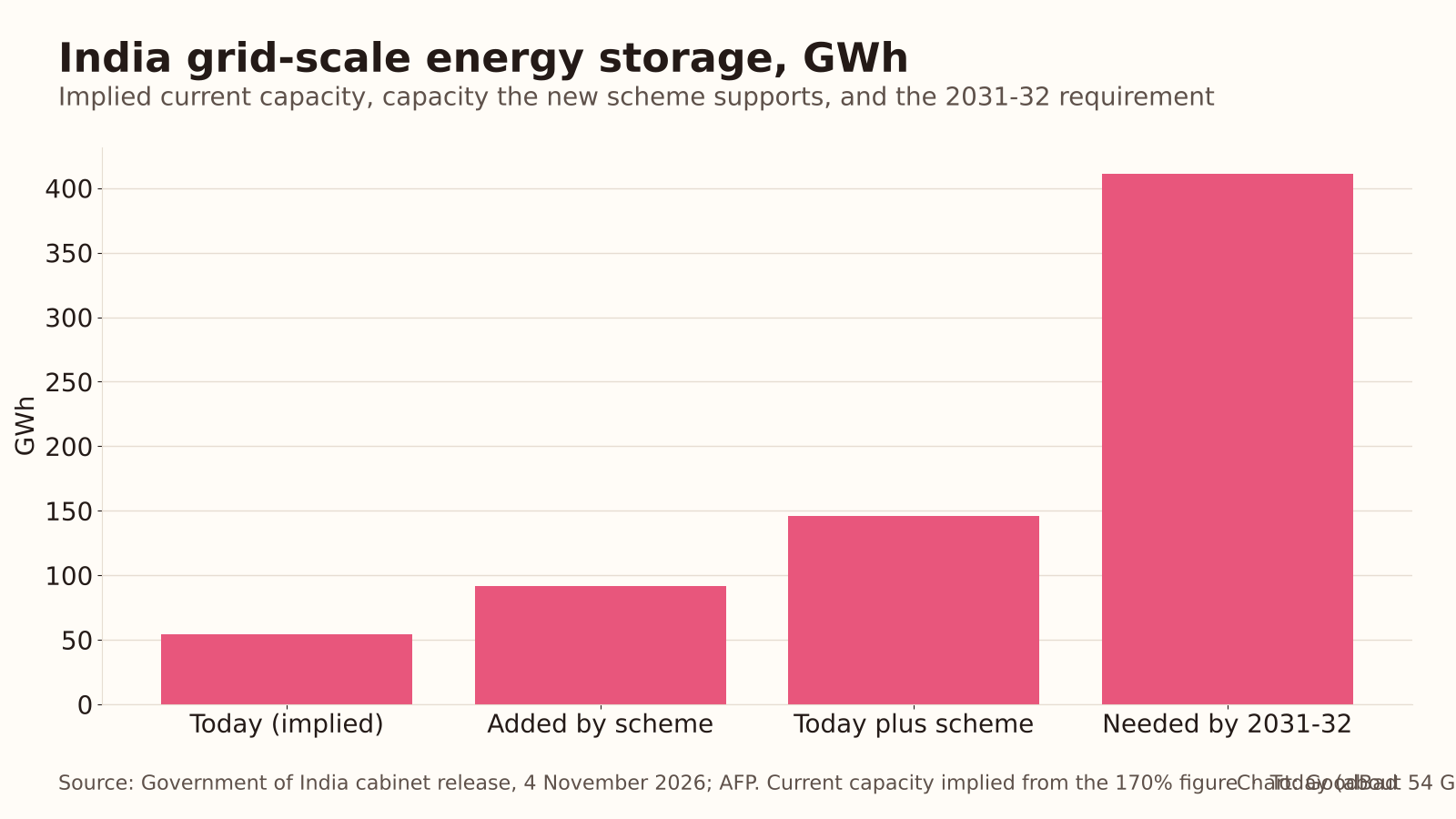 Chart: GoodBad. Data from the Government of India cabinet release, 4 November 2026, and AFP. Today’s capacity is implied by the 170% figure.
What gets built
The government splits the 92 gigawatt-hours into three parts: 60 gigawatt-hours of pumped hydro, 30 gigawatt-hours of battery storage and 2 gigawatt-hours of other technologies. Pumped hydro moves water uphill when power is cheap and releases it through turbines when power is scarce. Batteries do the same job faster, with less civil engineering.
Total investment is put at 97,600 crore rupees, which means the subsidy covers about 15% of the cost, by our calculation from the two government figures. AFP reports that India’s incentives would support an estimated $10 billion of investment over five years. The rest has to come from developers and distribution companies.
How the money is allocated
Storage capacity will be awarded through competitive bidding on tariffs, so bidders compete on price. Public and private electricity distribution companies can claim support for battery and pumped hydro projects. Projects using other storage technologies can be built by public or private entities.
Battery projects face a minimum domestic content requirement of 40%. The government says this is meant to build local manufacturing and cut dependence on imported components. Neither source says what the rule will do to prices. It is the government’s stated aim, not a demonstrated result.
Why it matters outside India
India is the world’s third-biggest emitter of greenhouse gases and still leans heavily on coal to meet rising demand, AFP notes, and it has a net-zero goal for 2070. Storage is one of the tools that lets a grid take more wind and solar without keeping coal plants running to cover the evenings. Prime Minister Narendra Modi said the scheme would bring more reliable power, greater integration of renewables and stronger energy security.
The cabinet also approved a separate scheme on 4 November worth about $300 million, AFP reports, to back four domestic plants that process lithium and nickel. Those metals go into batteries, and India says it is substantially dependent on imports of them. Together the two decisions link where storage is installed to where its materials are made.
What to watch
Three questions decide whether the figure on paper becomes power on the grid. First, whether bidders come forward at tariffs that distribution companies can afford. Second, whether pumped hydro can deliver 60 gigawatt-hours by the end of the scheme in 2030-31. Third, whether the 40% local-content rule can be met without delays.
None of the sources says what storage capacity India is adding outside this scheme, or what the tariffs will be. The 146 gigawatt-hour total in the chart is our sum of the implied present capacity and the new target, not an official forecast. The gap to 411 gigawatt-hours remains, and the next bidding rounds will show how quickly it closes.