Good news
Spain Passes Eviction Protections for Tenants in a 35–34 Vote
A day after Spain's first general strike in 14 years, a parliamentary committee voted 35–34 to extend protections for tenants at risk of eviction. Rents near half of average pay drove the walkout.

Read the bad side of this story
Rents Near Half of Pay Drive Spain’s First General Strike in 14 Years
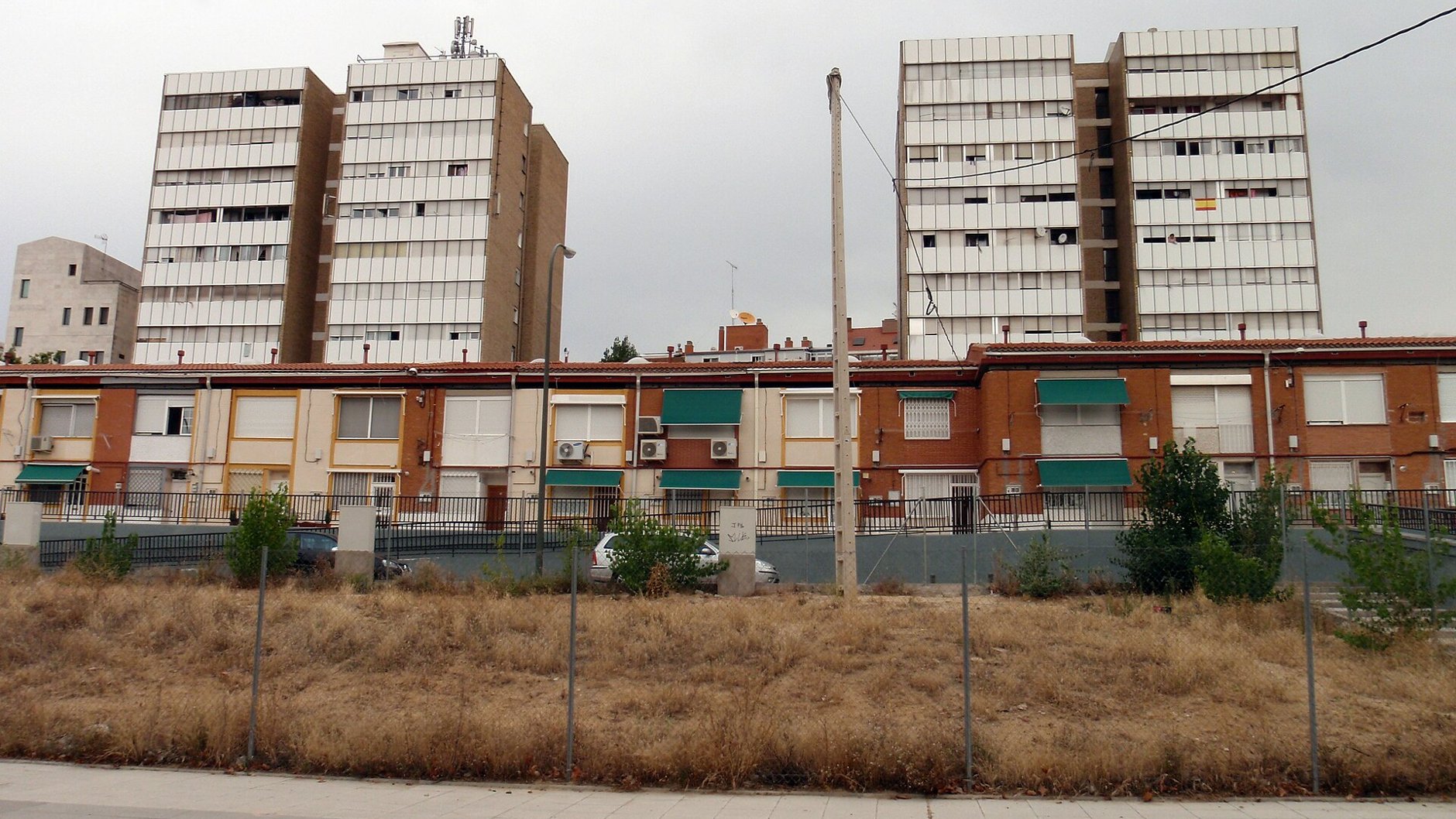
Spain’s tenants won a vote on Thursday 12 November, one day after the country’s first general strike in 14 years. A committee that stands in for the lower house of parliament ratified a housing decree by 35 votes to 34, Al Jazeera reports. The decree extends protection from eviction for tenants whom social services judge to be in a precarious financial or social position, as long as regional authorities cannot offer them another home.
The margin is thin and the rules may not last. A second decree was rejected by the mirror-image score of 34–35, and the measures that passed will live or die with a snap election on 29 November. The conservative Popular Party, which leads opinion polls, says it will repeal them if it takes power. Both facts matter, but so does the first one: for the households covered, the protection is now law.
What the strike was about
The 24-hour walkout on 11 November was called by the UGT and CCOO unions under the slogan “Salaries. Housing. Prices.” DW reports that the strike halted much of the economy of Europe’s fourth-largest economy, and that some airlines reported disruption. The unions said participation reached 90% in the automotive and port sectors in the first hours, according to Al Jazeera.
The employers’ federation CEOE disagrees. It said the impact varied by region and sector, with low participation in most of them. Business groups called the strike an election-season protest. Nobody has published a single, agreed turnout figure, so the unions’ numbers and the employers’ are best read as two claims.
The number behind the anger
Housing costs explain why the unions chose this fight. Al Jazeera says the average rent in Spain has almost doubled in ten years. Renting a 50-square-metre flat in Madrid cost an average of €1,170 a month in October, according to the property portal Idealista. Average gross pay is about €2,460 a month, so that rent takes nearly half of it.
For the young the picture is harsher. The Youth Council of Spain puts rent at 98.7% of the average young person’s income, against the 30% that housing experts commonly advise. The Bank of Spain, DW says, estimates a shortfall of about 750,000 homes, a gap it expects to pass a million by 2028.
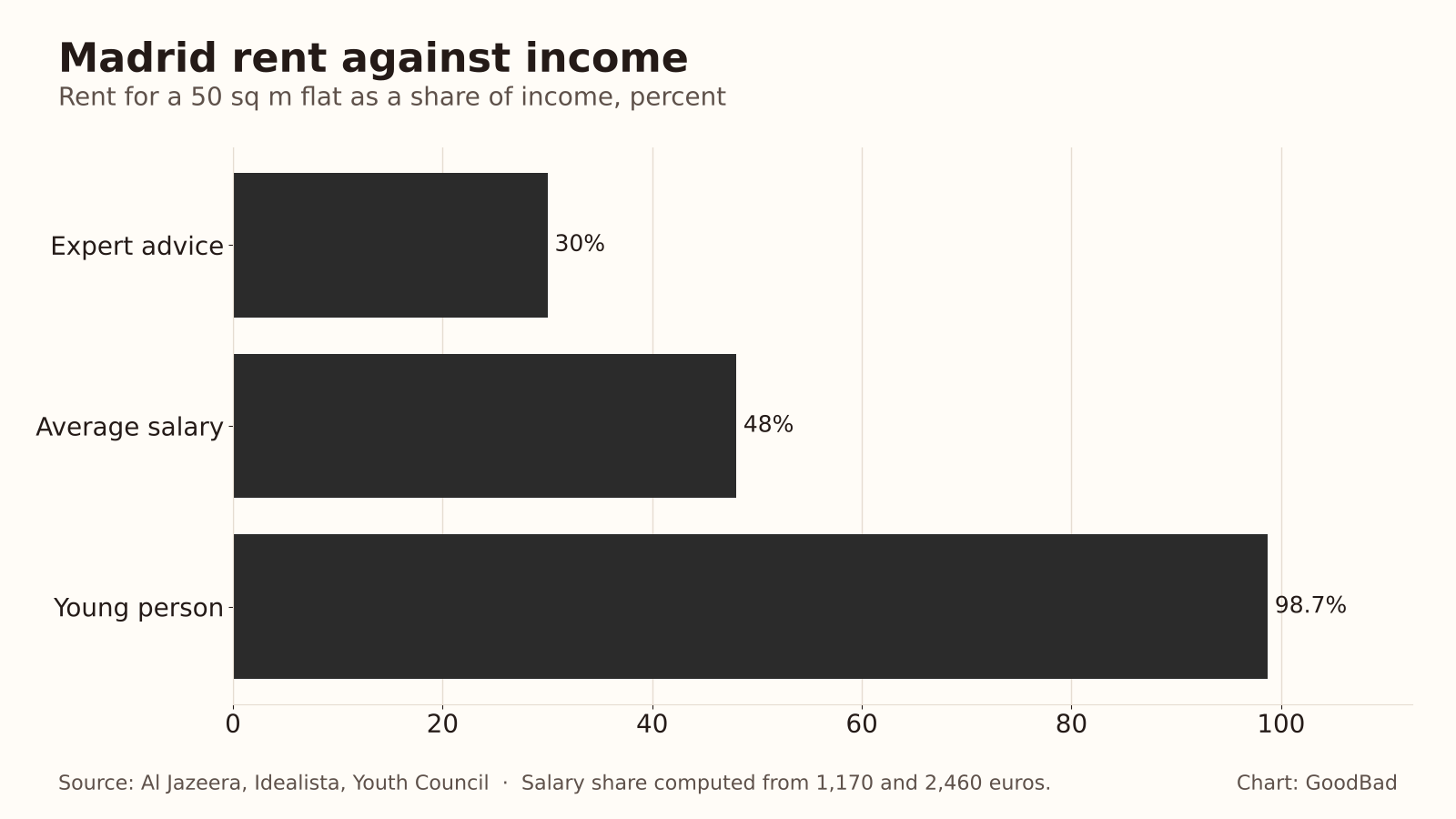 Chart: GoodBad. Data from Al Jazeera, Idealista and the Youth Council of Spain, November 2026. The salary share is our calculation from €1,170 and €2,460.
How the vote came about
The path to Thursday’s vote started in September, when televised images of the eviction of an 87-year-old Madrid pensioner known as Maricarmen shocked the country. She died in October. Protesters then occupied Madrid’s Puerta del Sol for five weeks, and the government of Prime Minister Pedro Sánchez rushed out two housing decrees.
Parliament’s full lower house failed to approve them. Sánchez responded by calling the election, which had been due in 2027, and brought back two near-identical decrees. They went to the smaller committee on Thursday, where the balance of votes was different. The Basque party PNV backed the first decree but voted with the right-wing bloc against the second. Al Jazeera says its reason was that the second measure could lead owners to withdraw homes from the rental market, cutting supply.
What the protest produced on the street
Most of the demonstrations were peaceful. Madrid authorities estimated 120,000 people marched on Wednesday evening, DW reports. Barcelona officials counted 55,000, while housing activists there claimed 400,000. The two counts differ by a factor of seven and neither can be checked here.
Some of the day was less orderly. DW says small groups smashed shop windows and burned bins in Barcelona, and that police used pepper spray at the Mercamadrid wholesale market, leaving at least 13 people seeking medical attention. The strike’s supporters and critics both pointed to the disorder, in opposite directions.
The politics around it
The strike was also a political event, and each side read it that way. Sánchez’s government backed it, saying it was held in favour of rights rather than against anyone. Alberto Núñez Feijóo, the Popular Party leader, called it a serious mistake and warned that the unions risked being tied to Sánchez “forever”, according to Al Jazeera. A spokesperson for the Madrid Tenants’ Union told DW the movement will not stop until the housing model changes. Public transport, factories and shops cut back or closed on the day, and roadblocks with burning tyres appeared in Barcelona in the first hours.
What happens next
The 29 November election is the real deadline. The Popular Party and other conservative parties argue that the measures would hurt the housing market and that Spain needs a building programme instead. Sánchez calls the strike a push for a joint response from every level of government, according to Al Jazeera, rather than a protest against anyone.
If the committee’s decree survives, tenants in precarious situations keep their protection from eviction until a court or regional authority finds them another home. If a new government repeals it, they lose it. Either way, the underlying numbers stay put: a country about 750,000 homes short, with rents that take nearly half of an average salary.