Good news
US Monthly Inflation Slows to 0.4% as Energy Price Rise Eases
US consumer prices rose 0.4% in October, down from 0.6% in September, as the energy index rose 0.7% after a 5.2% jump. Core prices rose 0.3%. Analysts had expected a smaller rise overall.

Read the bad side of this story
US Inflation Tops Forecast at 0.4% in October as December Fed Rise Looks Likelier
US consumer prices rose 0.4% in October, a slower pace than September’s 0.6%, according to the Bureau of Labor Statistics (BLS). The biggest change was in energy. The energy index rose 0.7%, after a 5.2% jump the month before, so the shock that drove September’s figure has largely faded from the monthly numbers.
The monthly pace is still above what analysts expected, which was 0.3%, as the BBC reports. That is the honest caveat. This is a story about a hot month cooling, not about prices falling.
What slowed, and what held
Energy is the clear improvement. Electricity rose 0.9% in October, but natural gas fell 0.8%. Gasoline rose 1.0% after seasonal adjustment, yet it fell 0.7% before adjustment. Seasonal adjustment smooths out the regular rises and falls of the calendar, so the two figures can point in different directions in a single month.
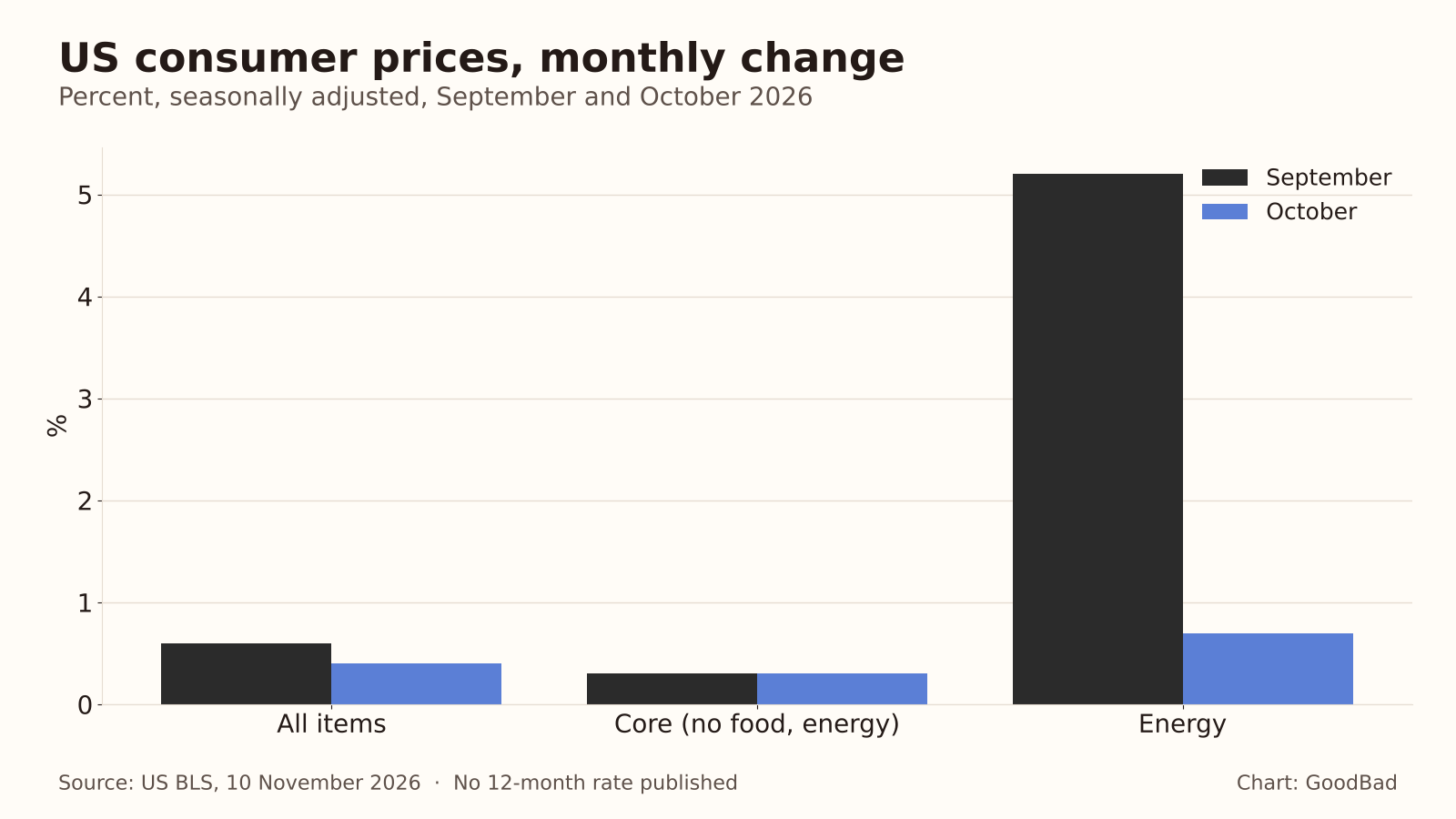 Chart: GoodBad. Data from the US Bureau of Labor Statistics, CPI release of 10 November 2026.
Core prices, which leave out food and energy, rose 0.3%. BLS says that matches the pace in August and September. A steady core is not a falling one, but it shows the October rise did not come from a new broad surge.
Where prices still rose
Food rose 0.5% on the month. Food bought for the home rose 0.4% and food eaten out rose 0.5%. Shelter, the largest part of the index, rose 0.3% after 0.4% in September, and BLS says it accounted for more than 30% of the monthly increase.
Why there is no annual figure
BLS did not publish a 12-month inflation rate for October. It did not collect data in October 2025 because of a lapse in appropriations, so it cannot calculate the usual comparison for indexes that lack that base month. The last annual rate was 3.7%, for the 12 months to September, the BBC says.
That gap matters for readers. The headline number most households recognise is missing this month, and the monthly figures are the best guide. Treat any outlet’s “annual rate” for October as an estimate, not a BLS number.
Reading the numbers
The BLS figures in this story are seasonally adjusted unless stated. Before adjustment, the all-items index rose 0.2% to 337.511 (1982–84 = 100). Both views show a smaller rise than the 0.6% recorded for September, which is why the month reads as a cooling even though it beat the forecast.
The index covers hundreds of everyday items, from fresh food and gasoline to medical services, the BBC explains. The bureau updates the basket as spending habits change. For a household, the most useful comparison is its own bills against these monthly moves, since the average hides large differences between renters, drivers and families who spend more on food.
What it means for interest rates
The Federal Reserve targets 2% annual inflation. The BBC says October’s above-forecast reading adds to the case for a rate increase at the Fed’s December meeting. Governor Christopher Waller, speaking before the data came out, said he leaned towards one. A higher rate is not good news for borrowers, but it is the tool the Fed uses when it judges that prices are rising too fast.
The cooling in energy is the argument on the other side, and neither of our sources says which way the Fed will go. The decision comes in December.
What tariffs add
The BBC notes that most of the extra global tariffs were struck down by the Supreme Court in February, and the president announced a new 10% global tariff at once. It cites New York Fed research finding that exporters cut their prices very little, so US-based businesses absorbed nearly 90% of the cost of the added tax. The same research finds that each percentage point rise in average tariffs lifted consumer goods prices by nearly 0.25% after a year.
That research looks at the past, and it does not say how much of October’s 0.4% came from tariffs. It does show why tariffs are part of the price story.
How it compares
The BBC says supply-chain problems during the pandemic and the oil surge after Russia’s invasion of Ukraine in 2022 helped push annual inflation to a peak of about 9%. The last published annual rate, 3.7%, is well below that, and still well above the Fed’s 2% target. The slower monthly pace also matters for retirees: the Social Security Administration announced a 3.6% cost-of-living rise for 2027, worth an average of $75 a month, to about 72 million people from January. Increased payments for the 7.2 million people receiving supplemental security income begin on 31 December. The adjustment is tied to inflation, so it protects those households from the faster months, though the BBC does not say whether it covers the full rise in what they pay.
The broader point is simple. Rising at a slower rate does not mean prices are going down, as the BBC puts it. But a month in which energy stopped driving the index and core held steady is a sign that the September shock is passing, with the caveat that one month is not a trend.