Bad news
Antarctic Ozone Hole Reaches Its Largest in a Decade, Covering 27 Million Square Kilometres
NOAA and NASA say the 2026 Antarctic ozone hole peaked at 27.1 million square kilometres, about 90% of the record, and grew larger than any in a decade. Full recovery is not expected until the 2070s.

Read the good side of this story
Ozone Layer Is Healing as Antarctic Hole Stays Smaller Than It Would Have Been
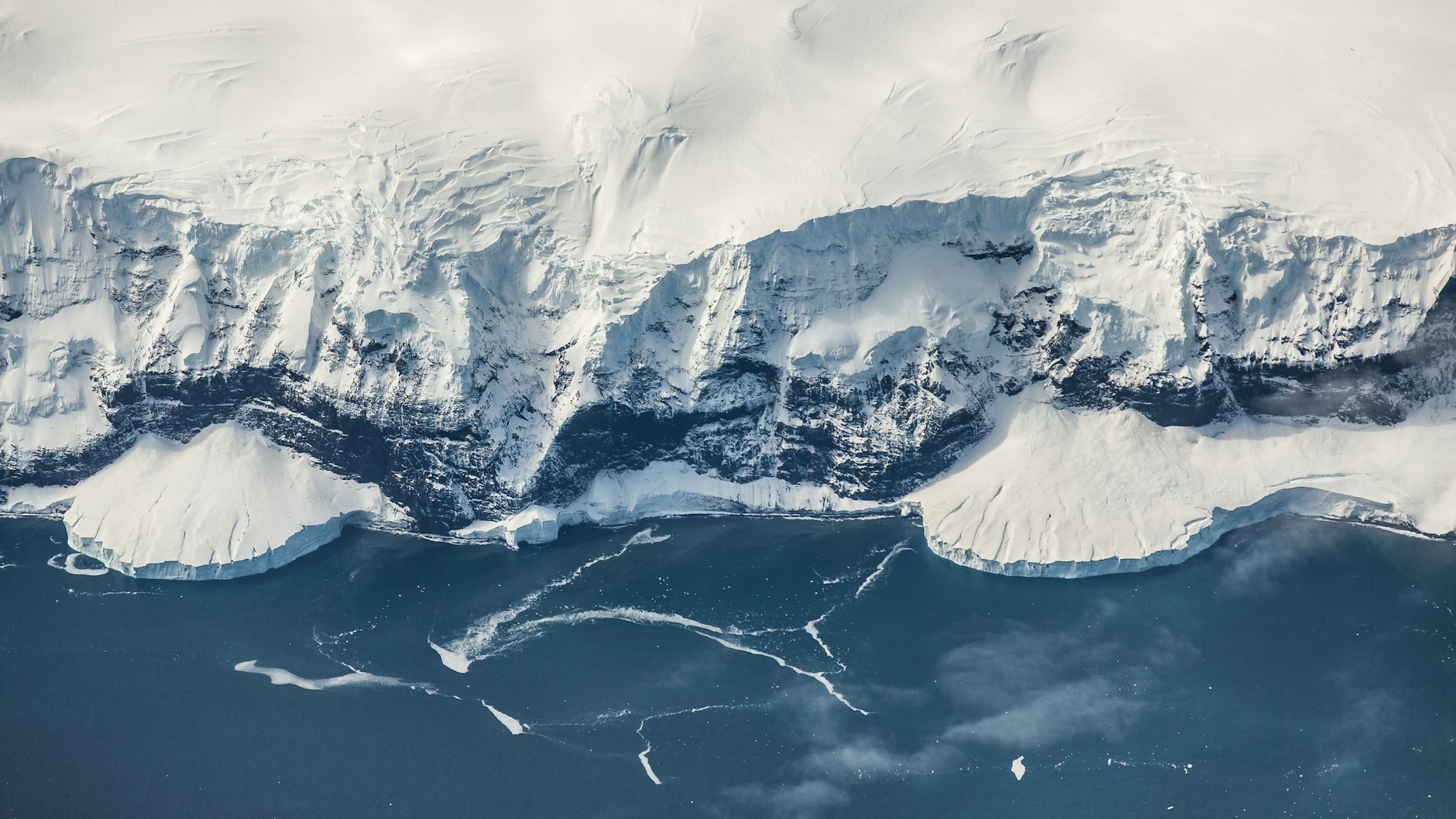
The Antarctic ozone hole grew this year to a size not seen in a decade. NOAA and NASA reported on 4 November that it peaked on 18 September at 10.5 million square miles (27.1 million square kilometres). That is about 90% as large as the biggest hole ever observed, in September 2000, and about three times the size of the United States.
Over the peak season, 7 September to 13 October, the hole averaged about 9.6 million square miles (25 million square kilometres), more than twice the area of the United States. By seasonal mean area it ranks seventh in 48 years of monitoring. The agencies add a caveat that belongs beside the bad news: it would have been larger still without the international ban on ozone-depleting chemicals, and the layer is still on track to recover.
The numbers
| Measure | 2026 | Reference point |
|---|---|---|
| Seasonal mean area, 7 Sept to 13 Oct | about 25 million km² | seventh largest in 48 years |
| Peak area | 27.1 million km² (18 Sept) | about 90% of the 2000 peak (9 Sept 2000) |
| Lowest ozone over the South Pole | 105 Dobson units (17 Oct) | record low 92 (October 2006) |
| Antarctic chlorine from banned chemicals | down about a third | relative to the 1980s peak |
Table: GoodBad. Figures from NOAA and NASA, published 4 November 2026.
A hole that stayed open longer
Paul Newman, who leads NASA’s ozone research team, said an unusually powerful polar vortex had extended ozone depletion this season. It let the hole reach proportions “we haven’t seen in a decade”. The vortex is the ring of winds that corrals the frigid air in which polar stratospheric clouds form. Those clouds let chlorine and bromine atoms destroy ozone.
Amy Butler, a NOAA research scientist, says the vortex was large partly because weather systems that normally break it up were weak in August and September. The strongest winds stayed several degrees of latitude from the pole. That left a bigger area where conditions favoured ozone loss.
What the agencies say is improving
Newman is clear that the long trend is not the problem. The hole has been forming later in the season in recent years, which he says tells scientists the layer is healing. He pairs that with the warning that this year’s vortex ran strong enough to push the hole to a decade high.
Both statements are in the release, and both are true at once. A healing layer can still produce a large hole in a year when the weather cooperates with the chemistry. The question for readers is how many such years the recovery period, nearly half a century long, will contain.
How thin it got
Over the South Pole, ozone reached its yearly low of 105 Dobson units on 17 October, measured with balloon-borne instruments and confirmed by a Dobson spectrophotometer. One hundred units would make a layer about 1 millimetre deep if compressed to sea-level conditions. The lowest value ever recorded is 92, in October 2006. NOAA says this year’s hole was not as deep as the record-breaking ones of 10 and 20 years ago.
The gap between large and deep matters. A hole can cover a huge area without being as depleted at its centre. Still, the layer acts as Earth’s sunscreen, shielding life from harmful ultraviolet radiation and a hole this large is a reminder of how much of it is still at stake.
Why the fix is slow
Chlorine in the Antarctic stratosphere from ozone-depleting substances has fallen by only about a third from its 1980s peak, according to Stephen Montzka of NOAA’s Global Monitoring Laboratory. Two-thirds of it is still up there. The chemicals were once used in refrigerators, air conditioners and building insulation, and they linger for decades in the atmosphere and leach out of old products and landfills.
Scientists estimate the hole will not recover until the 2070s, so a hole will open every Antarctic spring for decades to come. The agencies do not say how large future holes will be, and they do not say whether weak weather mixing like this year’s will recur. Nobody has published figures on extra ultraviolet exposure from this season either.
What would change the outcome
The agencies credit the Montreal Protocol of 1987 with the long-term recovery. Newman estimates this year’s hole could have been 1 to 2 million square miles larger, about 3.5 million square kilometres, if the chemicals were as common as in 2000. The remedy is therefore the existing one: keep the controls in force while old stocks in appliances and landfills run down.
The CIRES researchers who maintain the South Pole record say the observations provide the baseline for detecting recovery. Their data will show whether the hole starts closing again next year or whether the weather keeps it open. For now, the record shows a hole that is large, slow to heal and dependent on a treaty that has to keep holding.