Bad news
Brazil’s Fossil Fuel Roadmap Sets No Deadlines as Forest Funding Trails Need
Brazil’s COP30 roadmaps, published on 3 November, are voluntary, name no countries and set no deadlines for cutting fossil fuels. The forest plan says $300bn a year is needed by 2030, against about $85bn now.

Read the good side of this story
Brazil Publishes First Global Roadmaps for Phasing Out Fossil Fuels and Deforestation
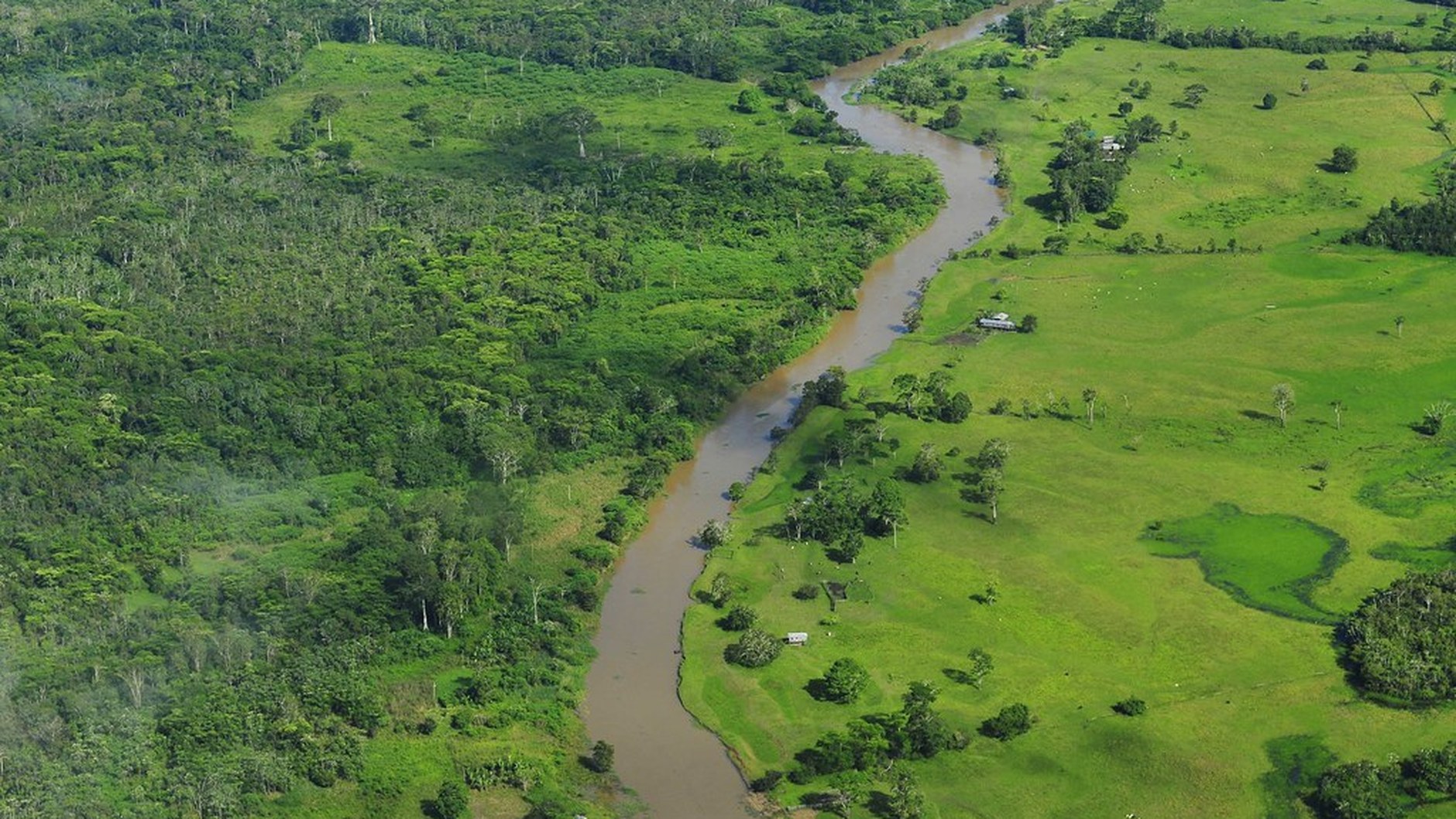
A year after the UN climate summit in Belém failed to agree any wording on fossil fuels, the host has delivered the promised substitute. It is voluntary. Brazil’s COP30 presidency published two roadmaps on Tuesday 3 November, one on fossil fuels and one on deforestation, and neither contains a deadline, a milestone or a binding commitment, the Guardian reports.
The next summit, COP31, opens in Antalya, Turkey, later this month. Nobody has said how the roadmaps will reach its agenda.
What was promised, and what arrived
At Belém, a dispute over whether the final text should commit countries to a fossil fuel phase-out ended with no such pledge. About 80 countries had wanted work on a roadmap to begin inside the formal talks, Climate Home News reports, and some fossil fuel producers blocked it. The presidency offered to write the documents itself instead, as the UN climate secretariat records.
What arrived is a 182-page menu. It sets out three stages to 2033 and asks each country to assess its own dependence on fossil fuels, then pick steps from 12 suggested archetypes. It does not name any country and sets no end dates for winding down production.
The first stage, 2026 to 2028, asks only for national transition plans in time for the next five-yearly UN stocktake. Cuts to fossil fuel supply start in the third stage, 2031 to 2033. Climate Home says the roadmap itself acknowledges that demand must fall substantially faster to keep warming to 1.5°C, yet it warns that cutting supply too early could raise prices and weaken public support.
Criticism from researchers
Joeri Rogelj, a climate policy professor at Imperial College London, told the Guardian the roadmaps are a step forward but leave out any timeline or benchmarks. That leaves open what the Paris agreement’s goals, well below 2C and preferably 1.5C, demand in practice, he said.
Romain Ioualalen of Oil Change International said pushing supply cuts into the 2030s would be a grave mistake that could guarantee a chaotic transition, Climate Home reports. The horizon stops at 2033, and the presidency did not model 2050 or 2060.
The more specific plans are elsewhere. In April, nearly 60 countries met in Santa Marta, Colombia. They formed a coalition outside the UN process to write national phase-out plans, and the Guardian says Germany, France and the Netherlands have published theirs. Those plans are written by the governments responsible for carrying them out. Brazil’s documents leave the diagnosis and the choice of steps to each country.
The forest bill
The deforestation roadmap carries the clearest number. Citing UN figures, it says about $300bn a year will be needed for forests by 2030 and $500bn a year by 2050. Current funding is about $85bn a year, which leaves a gap of roughly $215bn a year against the 2030 estimate.
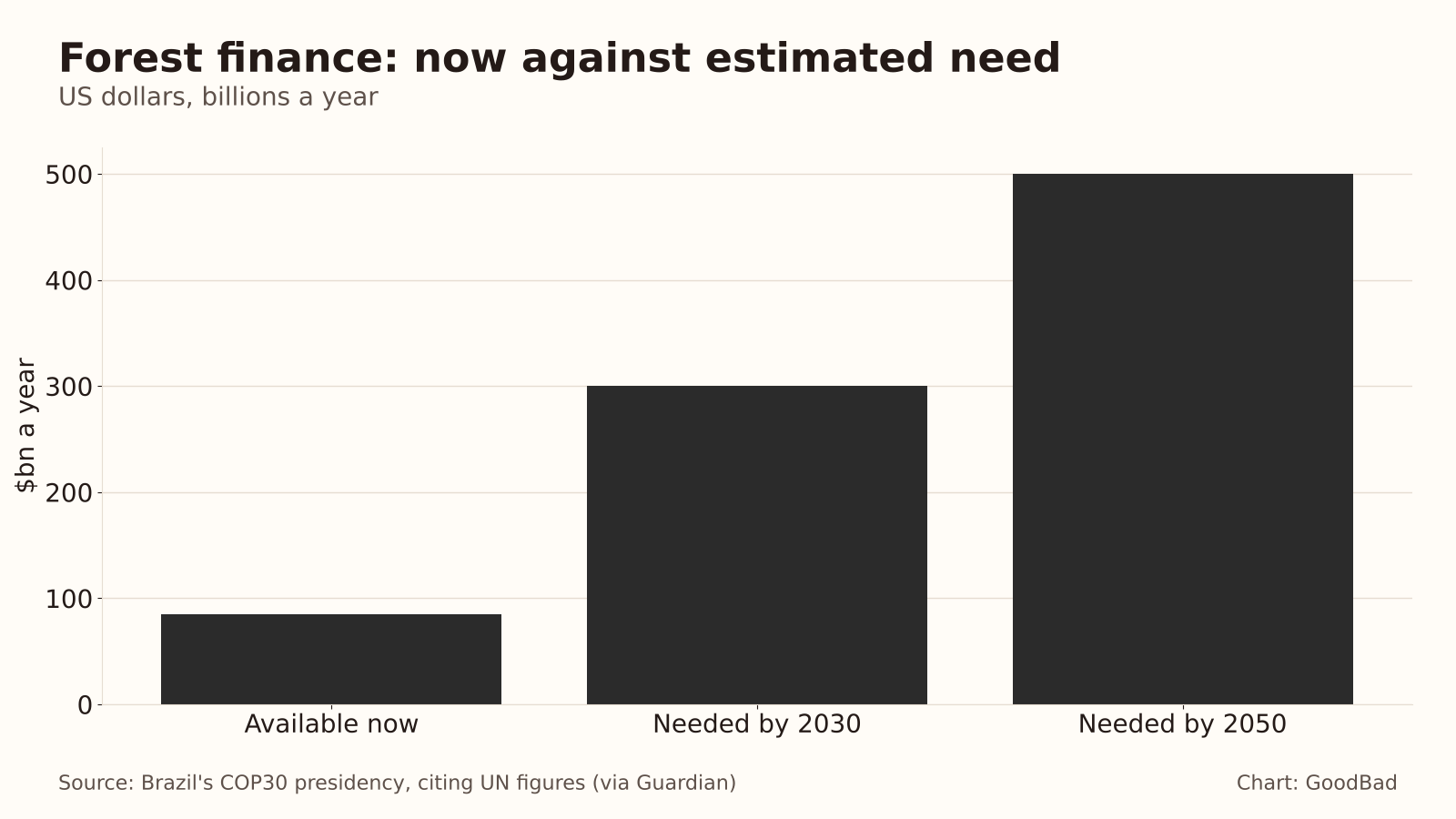 Chart: GoodBad. Data from Brazil’s COP30 presidency roadmap, citing UN figures, as reported by the Guardian, 3 November 2026.
Brazil launched the Tropical Forest Forever Facility at COP30 to close part of that gap. It has raised about $7bn from several countries, including a £400m loan from the UK, the Guardian says. That is a small fraction of the annual shortfall. The roadmap also notes that few trade checks stop goods grown on cleared land from reaching consumer countries.
In Indonesia, civil society groups are suing the government for gross negligence over record fires in recent months that cleared swathes of forest, the Guardian reports. The roadmap is voluntary, so it cannot be enforced against anyone.
Brazil’s own position
Brazil has not yet published its own national fossil fuel plan, Climate Home says, and officials said it still awaits approval from President Luiz Inácio Lula da Silva. Lula won a fourth term just over a week ago. He has backed expanding oil and gas exploration. After Petrobras struck oil off the mouth of the Amazon River, he called drilling along the northern coast a possible passport to the country’s future.
His government can point to a drop in deforestation of about 70% over his last four years, according to the Guardian. The fossil fuel side is different: the government that wrote a global exit guide has not yet published its own and backs more drilling at home.
What would change the outcome
The roadmap’s own logic points to the answer: national plans. The first stage asks every country to produce one by 2028. If governments publish them with dates and funding, the voluntary document gains teeth. If they do not, the 2031 start of supply cuts arrives with nothing built to replace the oil and gas it is meant to displace.
Brazilian officials say the roadmaps are for implementation, not for adoption in the negotiations, and that delivery will run through existing institutions. Neither Turkey, which hosts COP31, nor Australia, which will preside over the talks, has said whether or how it will take the roadmaps forward, Climate Home reports. The Guardian adds that the presidency wants finance, energy, transport and infrastructure ministries to carry the work, not climate negotiators. That is a different audience from the one meeting in Antalya.