 Good news
Brazil Publishes First Global Roadmaps for Phasing Out Fossil Fuels and Deforestation
Brazil’s COP30 presidency released two roadmaps on 3 November, a menu of steps any country can start now to leave coal, oil and gas behind and stop forest loss. Both are voluntary, and COP31 opens this month.

Read the bad side of this story
Brazil’s Fossil Fuel Roadmap Sets No Deadlines as Forest Funding Trails Need
For the first time, the world has a written, step-by-step guide to leaving fossil fuels. Brazil, which hosted last year’s UN climate summit in Belém, published two roadmaps on Tuesday 3 November: one on moving away from coal, oil and gas, the other on halting and reversing deforestation. The timing is deliberate. The next summit, COP31, opens in Antalya, Turkey, later this month.
The roadmaps exist because of a compromise. At COP30 a bitter dispute over whether the final text should mention fossil fuels ended without a pledge. Brazil’s presidency promised instead to produce the two documents, as the UN climate secretariat records on its page for the presidency’s work. A year later, it has.
A timetable to 2033
The fossil fuel document is long, at 182 pages according to Climate Home News, and it is built around three stages. From 2026 to 2028, countries are encouraged to draw up national transition plans in time for the UN’s next five-yearly stocktake of climate progress. Early steps include cutting fossil fuel subsidies and stopping methane leaks at oil and gas sites.
From 2029 to 2030 the focus moves to building the replacement system: clean power, electric transport and heating, efficiency, and the grids and batteries that hold it together. From 2031 to 2033 the push to reduce fossil fuel production begins in earnest, as falling demand lets producers adjust supply. The document itself concedes that demand must fall substantially faster than now to meet the 1.5°C limit, and it warns that cutting supply too early could raise prices and cost public support.
The practical tool is a self-assessment. Each country can score how dependent it is on fossil fuels and how able it is to move, then place itself in one of 12 “archetypes”, each with suggested first steps. A fast-growing economy that still runs mostly on fossil fuels is urged to meet new demand with low-emission options rather than new fossil infrastructure. A major producer with strong institutions and good renewable resources is advised to manage production down in an orderly way while building clean industries.
André Corrêa do Lago, the president of COP30, told the Guardian the roadmaps are meant for implementation, not negotiation. He wants finance, energy, transport and infrastructure ministries to pick them up, rather than leaving the subject to climate negotiators.
The steps that act fastest
Some of the suggestions need no new technology. The Guardian reports that one step is for producers to cut the flaring and venting of gas at extraction sites urgently. Methane is a greenhouse gas many times more potent than carbon dioxide, so stopping leaks cuts warming quickly. Cutting subsidies for fossil fuel use or production and building renewable generation are the others it highlights.
The government’s message is that countries can start now without waiting for new technology or an economic change. It argues that economies can grow and people can leave poverty while the link to coal, oil and gas is broken.
Forests get a price tag
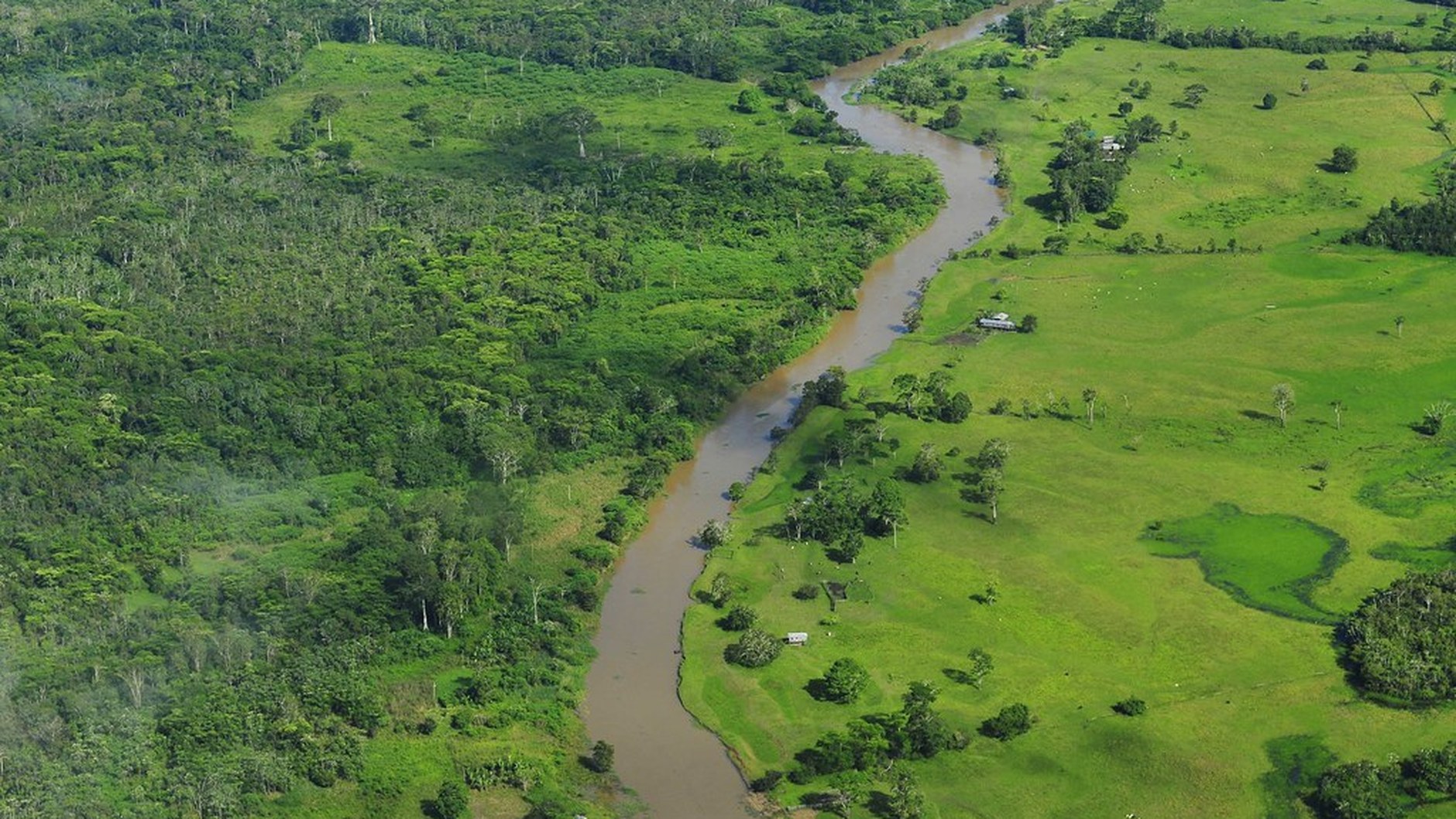
The deforestation roadmap puts numbers on what protecting tropical forests costs. Citing UN figures, it says about $300bn a year will be needed for forests by 2030 and $500bn a year by 2050. Today’s funding is about $85bn a year.
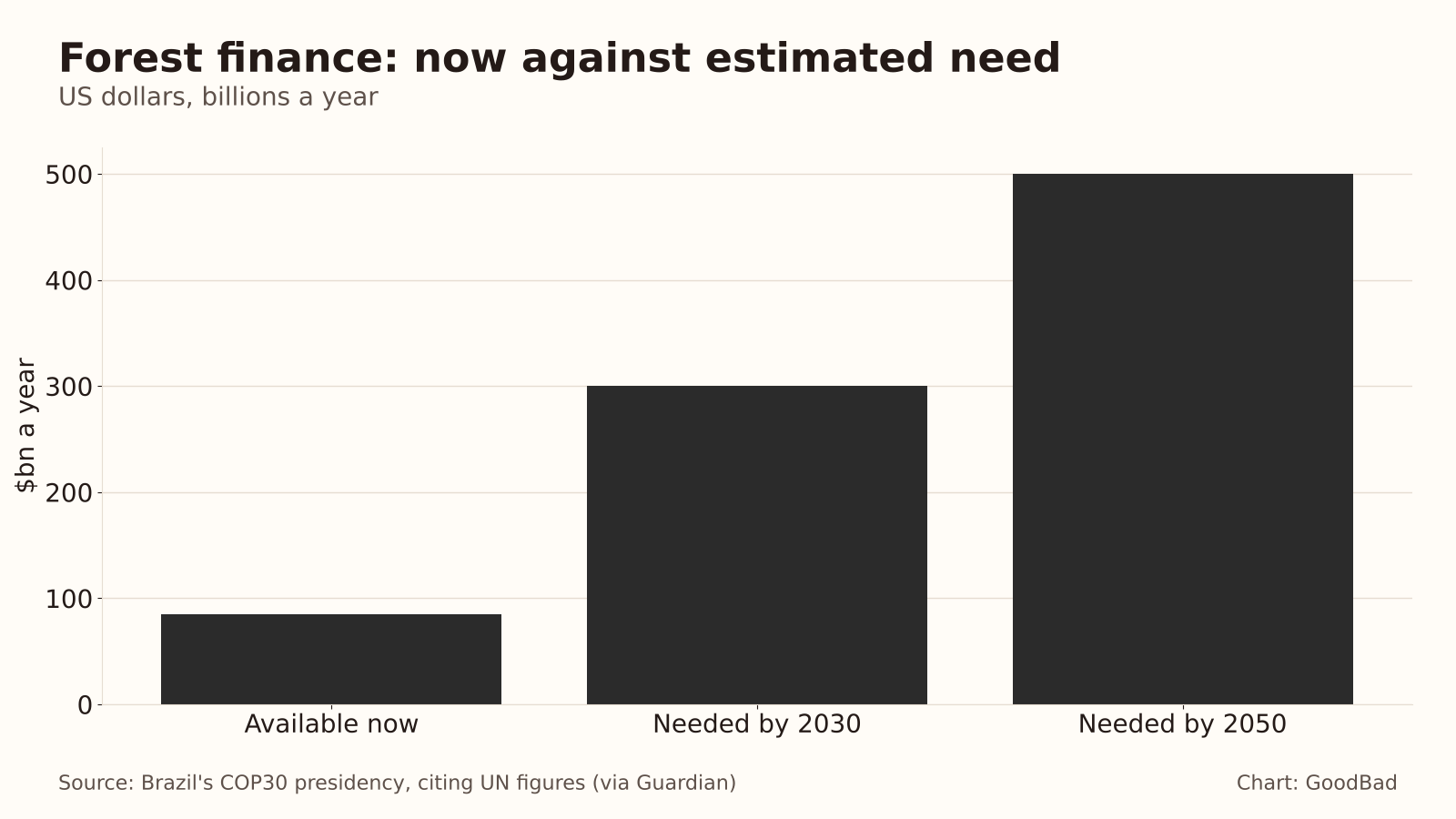 Chart: GoodBad. Data from Brazil’s COP30 presidency roadmap, citing UN figures, as reported by the Guardian, 3 November 2026.
The same Guardian report says Brazil set up the Tropical Forest Forever Facility at COP30, and it has raised about $7bn from several countries, including a £400m loan from the UK. The roadmap also stresses trade rules between forested countries and the consumers of their timber, beef and palm oil, because few checks currently stop goods from cleared land reaching shops.
Brazil can point to its own record here. Deforestation rates have fallen by about 70% over Luiz Inácio Lula da Silva’s last four years as president, the Guardian says. Lula won a fourth term just over a week ago, and his defeated opponent had been expected to return to the policies of his father, the jailed former president Jair Bolsonaro.
How it differs from other plans
These are not the only roadmaps. In April, nearly 60 countries met in Santa Marta, Colombia, and formed a coalition outside the UN process to write their own national plans for phasing out fossil fuels. Germany, France and the Netherlands have since published theirs. Those are more specific, because each is written by the government that will carry it out.
Brazil’s documents are deliberately broader. They name no countries, and they offer a common language and a toolkit that a government of any size can borrow. The presidency says the point is to move the annual summits from arguing over wording to doing the work.
What happens next
Nothing in the roadmaps is binding, and Brazil says they are not meant to be adopted in the negotiations. Neither Turkey, which hosts COP31, nor Australia, which will preside over the talks, has said how it will take them forward, according to Climate Home. Brazil has also not yet published its own national plan for fossil fuels.
The test of whether the roadmaps work will be national plans. The first stage asks countries to produce them by 2028. If governments use the self-assessment and the 12 archetypes as intended, that deadline is when this month’s documents turn into policy.
Researchers see value and limits. Joeri Rogelj, a climate policy professor at Imperial College London, calls the roadmaps valuable but says they lack a timeline or key benchmarks. Romain Ioualalen of Oil Change International calls the document a valuable blueprint, but says waiting until the 2030s to cut supply would be a grave mistake. Both views are worth holding at once: there is now a shared map, and the pace is still up to each government.