 Bad news
China's Emissions Fell 3.1% With Help From a Fuel Shock and Weak Growth
China's CO2 output fell 3.1% in the third quarter, but the analysis credits the Hormuz oil crisis, mild weather and a slowing economy alongside clean power, and says coal plants are still being built at near-record rates.

Read the good side of this story
China's Emissions Fall 3.1% in a Quarter as Clean Power Outgrows Demand
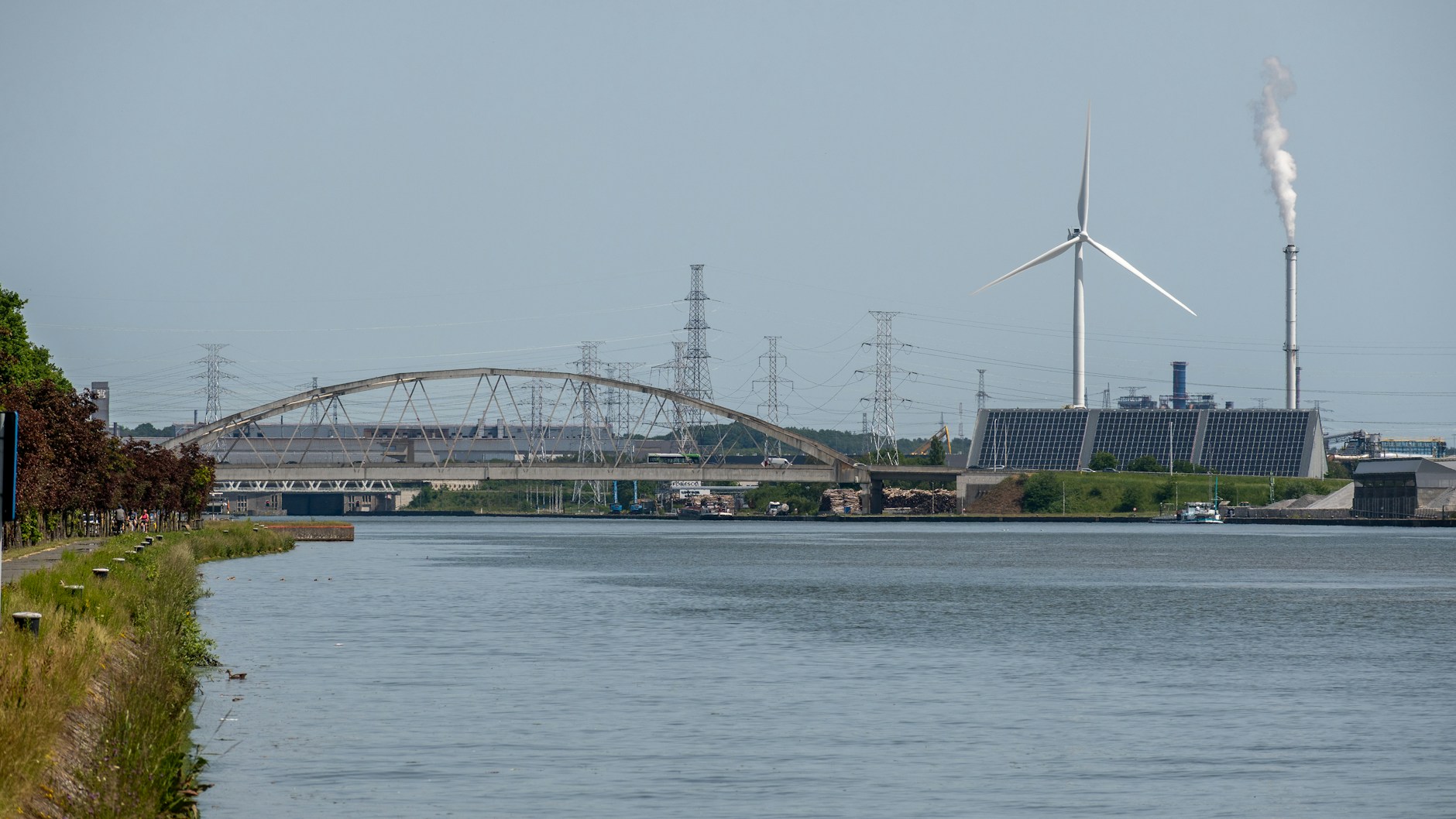
China’s carbon dioxide emissions fell 3.1% in the third quarter of 2026, but a good part of the drop has causes that are unlikely to last. A CREA analysis for Carbon Brief, published on 6 November, ties it to the Hormuz crisis, which cut oil supply, plus mild weather and weaker growth. CREA is the Centre for Research on Energy and Clean Air. Reuters reported the same findings. The quarterly drop is the largest since the 2022 Covid lockdowns.
A fall helped by a shock
Oil use fell 4% in the quarter and transport oil 9%, according to the analysis. It says the Hormuz crisis continued to hit oil demand, as it did in the second quarter. In that quarter, the earlier analysis said structural factors such as electric vehicles could not account for the size of the fall. It pointed to behaviour change as the other explanation. That earlier piece called it the first time oil cuts, rather than coal cuts, had driven an overall fall.
The analysis also says the slowdown in energy demand growth is partly, but not fully, explained by exceptionally mild weather in the third quarter. Weaker GDP growth is another key factor. Cement and steel emissions fell as construction contracted faster, and high coal prices slowed growth in the coal-to-chemicals industry.
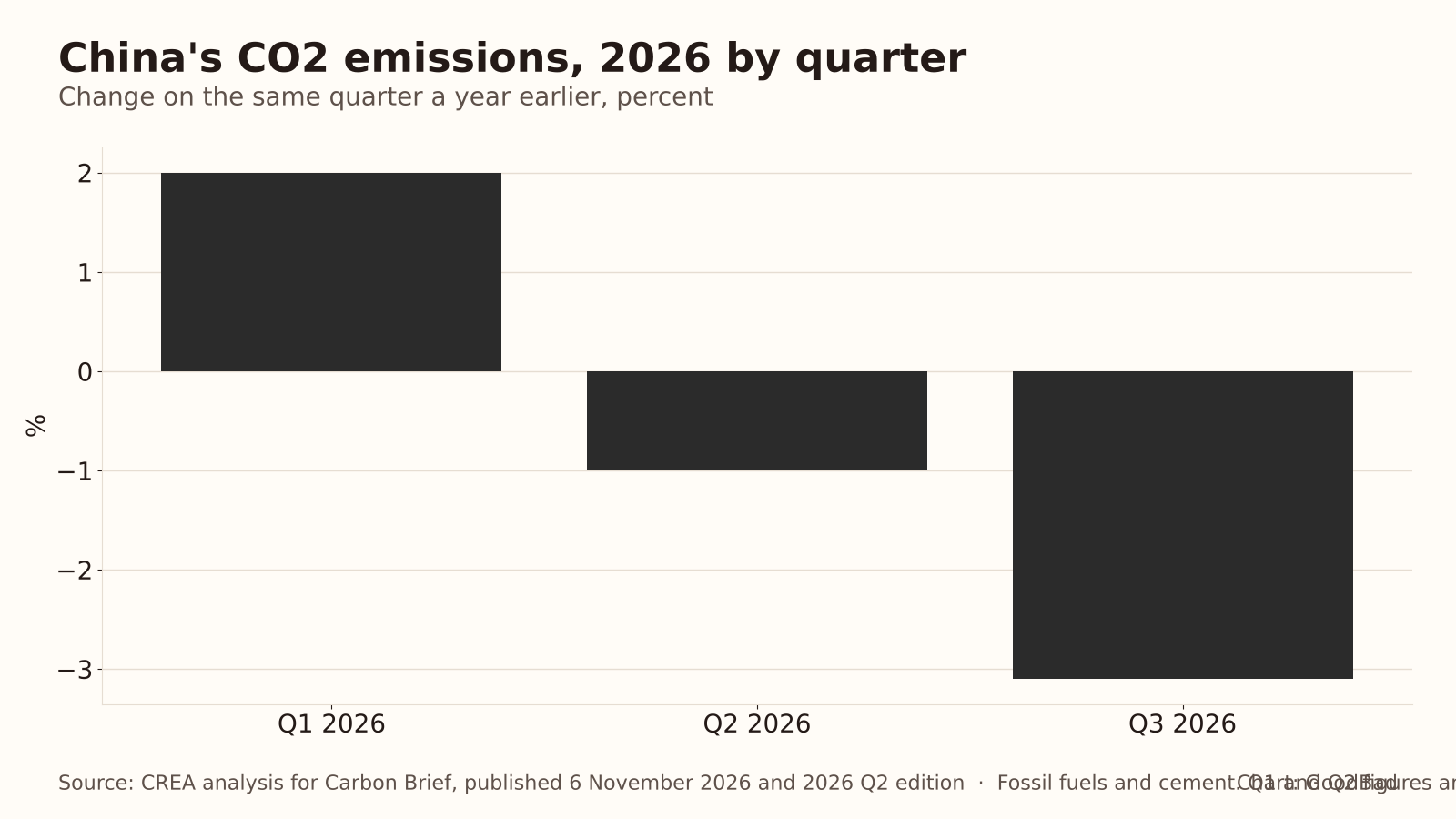 Chart: GoodBad. Data from CREA analyses for Carbon Brief, 2026. Q1 and Q2 are rounded in the source.
Coal is still being built
Coal use fell 3% in the quarter and coal-fired generation fell 3.3%, but China continues to build new coal power capacity at near-record rates. The analysis says average running hours for coal plants are falling faster than generation, which erodes their profits. In the second quarter, coal power actually rose as wasted wind and solar pushed grid operators back to coal.
That points to the weak spot. The recent drop in wasted renewables is welcome, but the analysis says the outlook depends on removing barriers that stop new wind and solar from reaching the grid. Reuters reports that the trend could hold for the full year, though emissions are down only an estimated 0.5% in the first nine months, after a 2% rise in the first quarter.
Not everything in the fall is temporary. Electric vehicles reached a record 67% of passenger car sales in September, and the analysis says EV electricity use grew 53%, faster than the fleet itself. Those gains persist if oil returns to normal, which is why the analysis still treats the two-year plateau as real. What it cannot say is how much of the third-quarter drop is structural and how much will reverse.
What would keep it falling
The analysis lists three things. Clean power growth has to keep exceeding demand growth: solar, wind and nuclear added 110 terawatt-hours in the quarter, more than twice demand growth. Grid barriers have to come down. And the government response to a slowing economy matters: its stimulus focuses on “six networks”, including the power grid and transport, that already carry green policies.
Emissions have been flat or falling since March 2024, a plateau of more than two years, but the analysis calls the outlook a race between energy demand growth and clean energy growth. Both slowed this year. If oil supply normalises and the economy rebounds, demand could grow faster than clean supply again. For other countries the stake is shared: China is the world’s biggest emitter, so what happens next to its output moves the global total more than any other single country.