Bad news
Moon Base Contracts Grow While the Spacesuits Astronauts Need Run Behind
On 7 November NASA set a $10 billion ceiling for a new lunar delivery contract and opened astronaut hiring. Its inspector general says the spacesuits crews need are at least 18 months late, with one supplier left.

Read the good side of this story
NASA Opens Astronaut Hiring and Funds a Nuclear Moon Rover for 2028
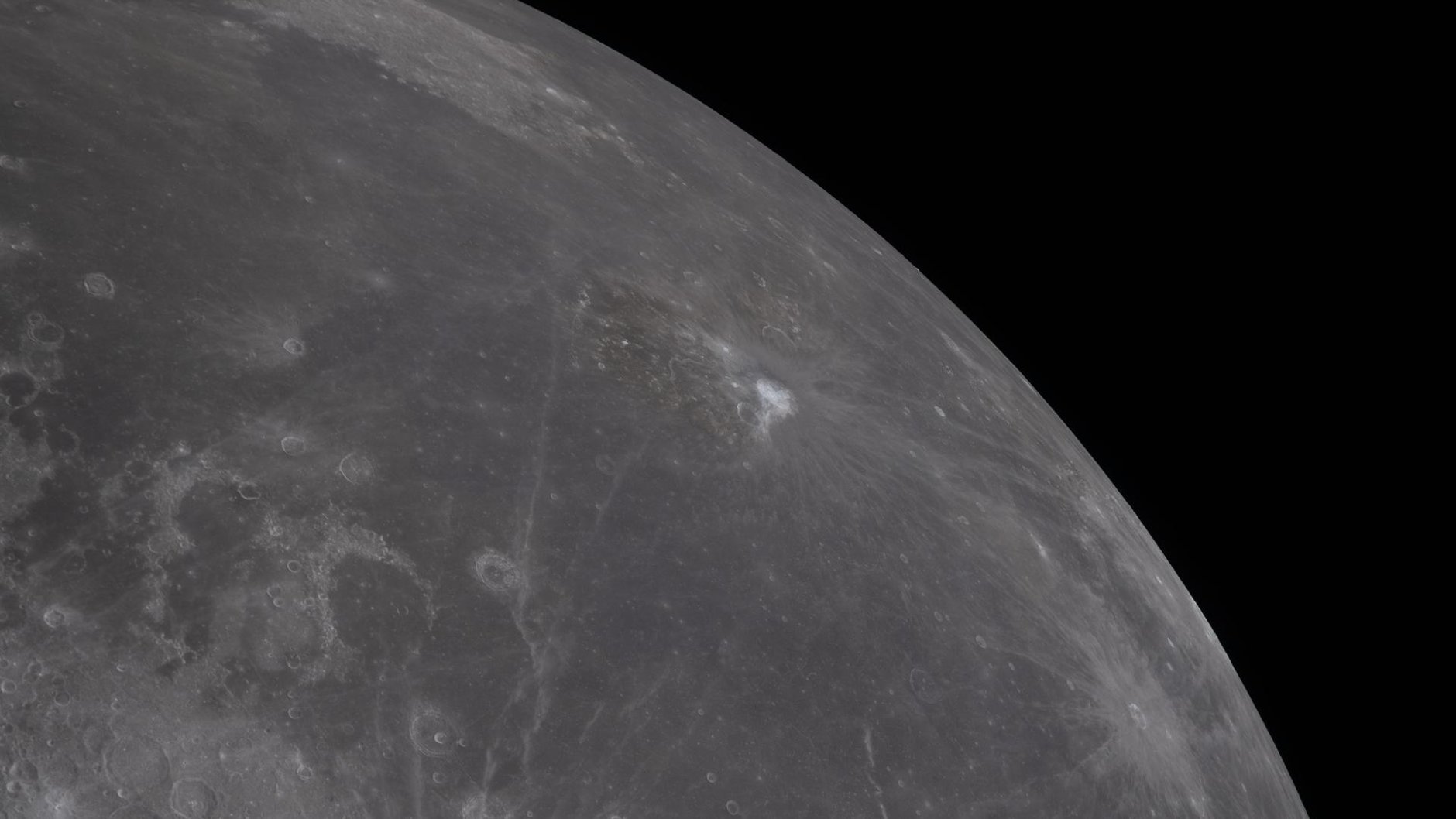
NASA can now order more Moon Base cargo than ever, and it has opened a search for the astronauts who would ride with it. What it cannot yet do is dress them. The agency’s own inspector general reported in April that the next-generation suits for the Moon and the space station are at least a year and a half behind schedule. Nothing in NASA’s 7 November announcements changes that.
On that Saturday, at an air show at Kennedy Space Center, NASA announced Moon Base awards and opened applications for a new astronaut class. The agency says it aims to return Americans to the Moon in 2028. The suit problem sits directly on that schedule. A crew can only walk on the Moon in a suit that has been built, tested and certified, and the report says Axiom is not planning a demonstration before late 2027. The astronauts who would wear one are the ones NASA is recruiting now, which makes the delay a question for applicants as well as for engineers.
The suit schedule
NASA wants to buy spacewalking as a service, essentially renting suits from contractors after a first demonstration. It signed two contracts in 2022, now worth up to $3.1 billion. One supplier, Collins, left in 2024 after saying it could not meet the agreed schedule, when NASA had already spent $37 million on its work. Axiom Space is now the only company left to deliver both the lunar suit and the replacement for the ageing space-station suits.
The inspector general found that NASA’s original goals of demonstrating the lunar suit in 2025 and the station suit in 2026 were “overly optimistic and unrealistic”. Axiom is now planning for demonstration readiness in late 2027. If its testing follows historical averages, the demonstrations would not happen until 2031. The report also says NASA made risky management decisions to promote competition between its two suppliers, and that fixed-price service contracts are poorly suited to developmental work like a new spacesuit.
NASA told the watchdog that adding another provider would not help its immediate Artemis and station goals, though the report identified several companies that could compete. If Axiom cannot meet its contract terms in time or at reasonable cost, the inspector general warns, the agency could have to change its lunar and space-station spacewalking plans significantly.
Ceilings keep rising
Meanwhile the contract ceilings are moving the other way. NASA has raised the maximum value of its first Commercial Lunar Payload Services contract, CLPS 1.0, from $2.6 billion to $4.2 billion. It has also created CLPS 2, a ten-year contract shared by eight companies with a combined maximum of $10 billion. Those are ceilings, not commitments, and companies compete for each mission. They still show how much of the Moon Base plan rests on commercial deliveries.
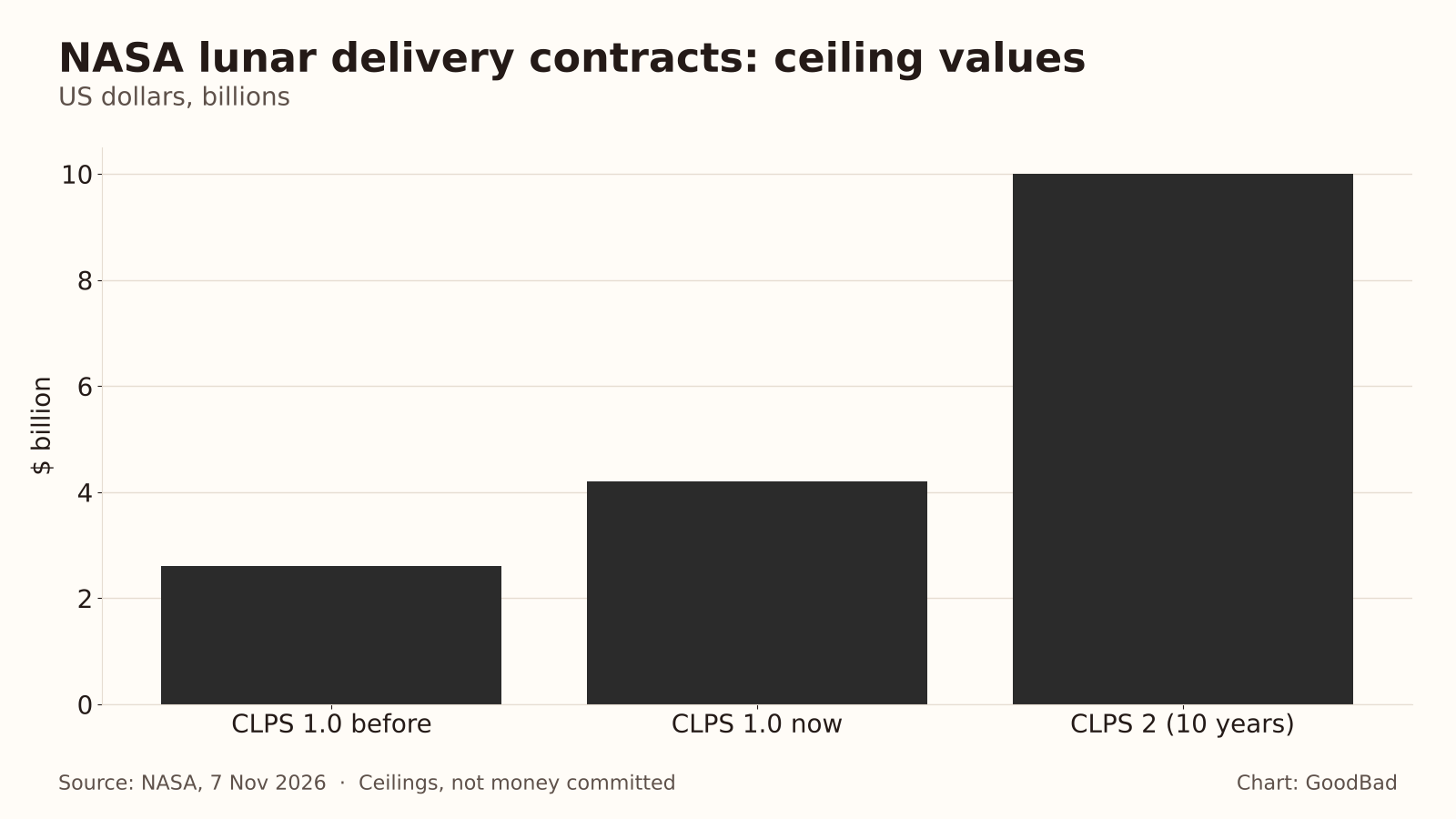 Chart: GoodBad. Data from NASA, 7 November 2026. Ceilings are the most NASA can order, not money committed.
The suits are not the only dependency, and the cargo side has its own long timeline. The original CLPS contract stays in force until November 2028, with five more years to complete deliveries already awarded, through November 2033. NASA is funding a nuclear-powered rover, PROMISE, targeted for a late 2028 launch. Blue Origin holds a $94 million base contract, with a $140 million option, to land it on a Mark 1 lander. That puts the rover on the same calendar as the first crewed landing, and its ride depends on a lander that has to work first. NASA says the rover will be built from spare Mars rover parts to save time, which helps, but the schedule still has little slack.
A narrow door
The astronaut call is open only to US citizens, until 11.59pm Eastern time on Thursday 3 December. NASA’s last call drew more than 8,000 applications and produced 10 candidates, about 0.1 percent of those who applied. The agency has 32 active astronauts and has selected 370 people since the 1960s. The new class will be chosen in late 2027, which is the same period in which Axiom hopes to have suit demonstrations ready.
That overlap matters. Candidates chosen then would begin training for a mission whose key equipment has not yet been shown to work. NASA Administrator Jared Isaacman said the people selected could walk on the Moon and live and work at the Moon Base. Both SpaceX and Blue Origin intend to support a crewed landing.
What would change it
The inspector general made two recommendations to improve how NASA manages the suit contracts, and it noted that other companies could compete for the work. NASA is taking proactive steps to help Axiom succeed, the report says. Until a suit has been demonstrated, though, the schedule risk stays with the agency, and so does the cost if the contract has to change.
The dates to watch are late 2027 for Axiom’s demonstration readiness, the 2028 target for a crewed landing, and 2031, the year the watchdog says historical delays could push the suits. NASA’s announcements this week add cargo, a rover and applicants. None of them adds a suit.