Good news
Rescuers Saved 200 to 300 in New Mexico Floods as Reservoir Held Back Runoff
A week of rain pushed the San Juan River toward its 1927 record, yet crews rescued 200 to 300 people in one New Mexico county, phone alerts went out early and a reservoir contained most of the runoff. One flood death is reported.

Read the bad side of this story
Four Corners Floods Leave Thousands Displaced or Digging Out as New Mexico Counts Costs
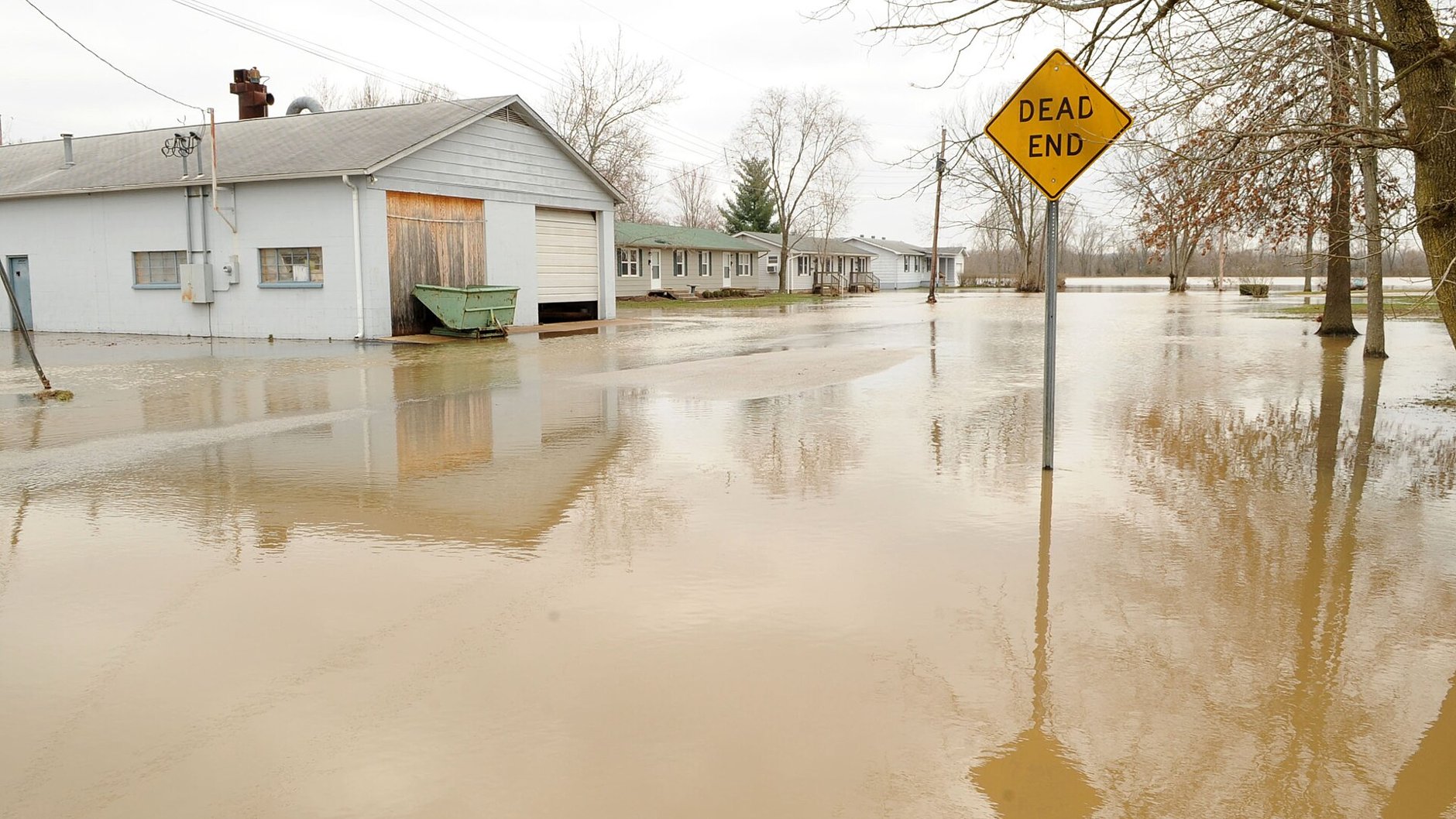
The San Juan River is expected to crest at 31 feet on Monday, a stage the National Weather Service compares with a record of 32 feet set on 10 September 1927. Yet in San Juan County, New Mexico, the worst-hit county, NPR reports that fire crews, police, National Guard troops and out-of-state swift-water teams rescued between 200 and 300 residents. The county’s information officer, Devin Neeley, says people were lifted off rooftops by helicopter and out of stuck vehicles by amphibious trucks. One flood-related death has been reported across the region.
Warnings that reached phones
The rain began on Wednesday evening, according to the Colorado Department of Transportation. Farmington, a city of about 46,000 on the river, started sending evacuation notices to residents’ phones that same night, NPR says. A woman there told the broadcaster her sister was told to leave on Thursday and got out before the water reached the house.
The river rose fast. A National Weather Service gauge at Farmington showed it growing 13 times larger in 36 hours, from about 3.5 feet early on Thursday to 14 feet by Friday. Despite that, the Associated Press reports that by Monday morning the river sat 1.5 feet above its 23-foot flood stage and was forecast to fall back below it by Tuesday.
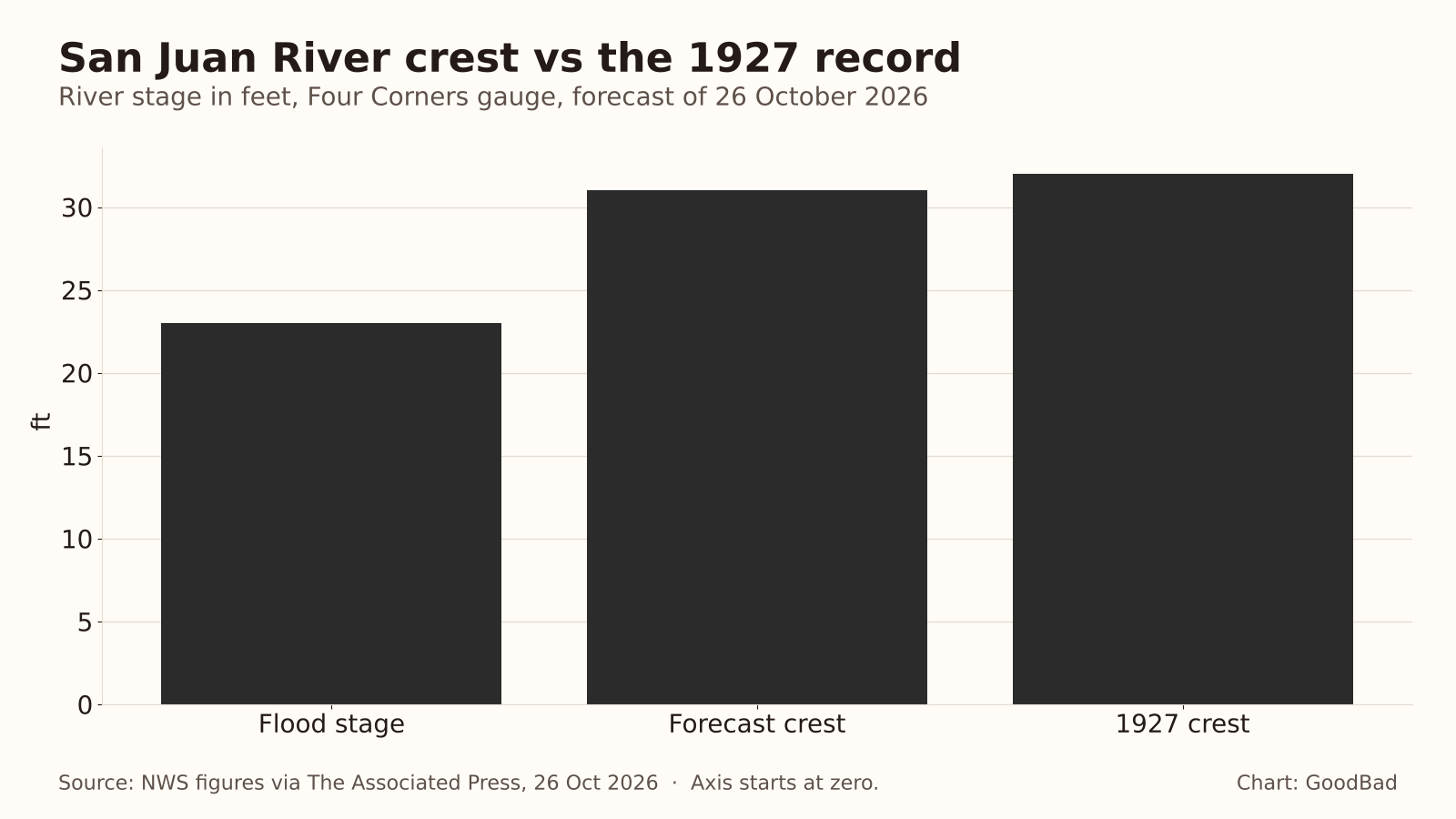 Chart: GoodBad. Data from National Weather Service figures as reported by the Associated Press, 26 October 2026.
What held
Upstream, the Navajo Reservoir was able to contain most of the water rushing down from the San Juan mountains, NPR reports. The surges that reached Farmington came instead from two normally dry tributaries, Gobernador Canyon and Cañon Largo. In Bluff, Utah, residents evacuated over the weekend were allowed back early on Monday, county officials said.
The single death reported so far was in Santa Fe on Saturday. The county sheriff’s office said a family tried to drive across a flooded arroyo. A father and child reached land, but a woman was swept away and found a mile downstream, according to the AP. A tornado also touched down in Santa Fe that night. San Juan County officials say they are not aware of any deaths there.
Cleanup and money
By Sunday the rain had eased and some residents began returning to assess damage. Officials asked thousands of evacuated people to stay out for now because of raw sewage, damaged gas lines and live power lines. New Mexico Governor Michelle Lujan Grisham signed executive orders releasing another $8.25 million in state funding. She also announced that the federal government has granted the state’s request for an emergency declaration only in part, NPR reports.
Damage will cost far more than that. The governor said infrastructure damage alone could reach $200 million to $300 million, well above the $30 million to $40 million county manager Mike Stark first estimated. In Colorado, the transportation department listed three major road closures on Sunday, including a 33-mile stretch of US 160 over Wolf Creek Pass. It has begun planning emergency reconstruction of a washed-out section of Colorado 151. Colorado responders are lifting the last evacuation orders as water recedes and are testing well water along the Rio Grande, NPR says.
For residents, the sequence to watch is the order in which things reopen: evacuation zones first, then power and water testing, then the roads. Officials have not yet given dates for any of them.