Good news
A $40-a-Year Generic of the Twice-Yearly HIV Shot Wins Tentative US Approval
The US Food and Drug Administration has given tentative approval to India’s Dr. Reddy’s for a generic lenacapavir priced at $40 per person per year in 120 countries, against about $28,000 for Gilead’s version in the United States.

Read the bad side of this story
1.2 Million Acquired HIV in 2025 and the Cheap Shot Has No Launch Date
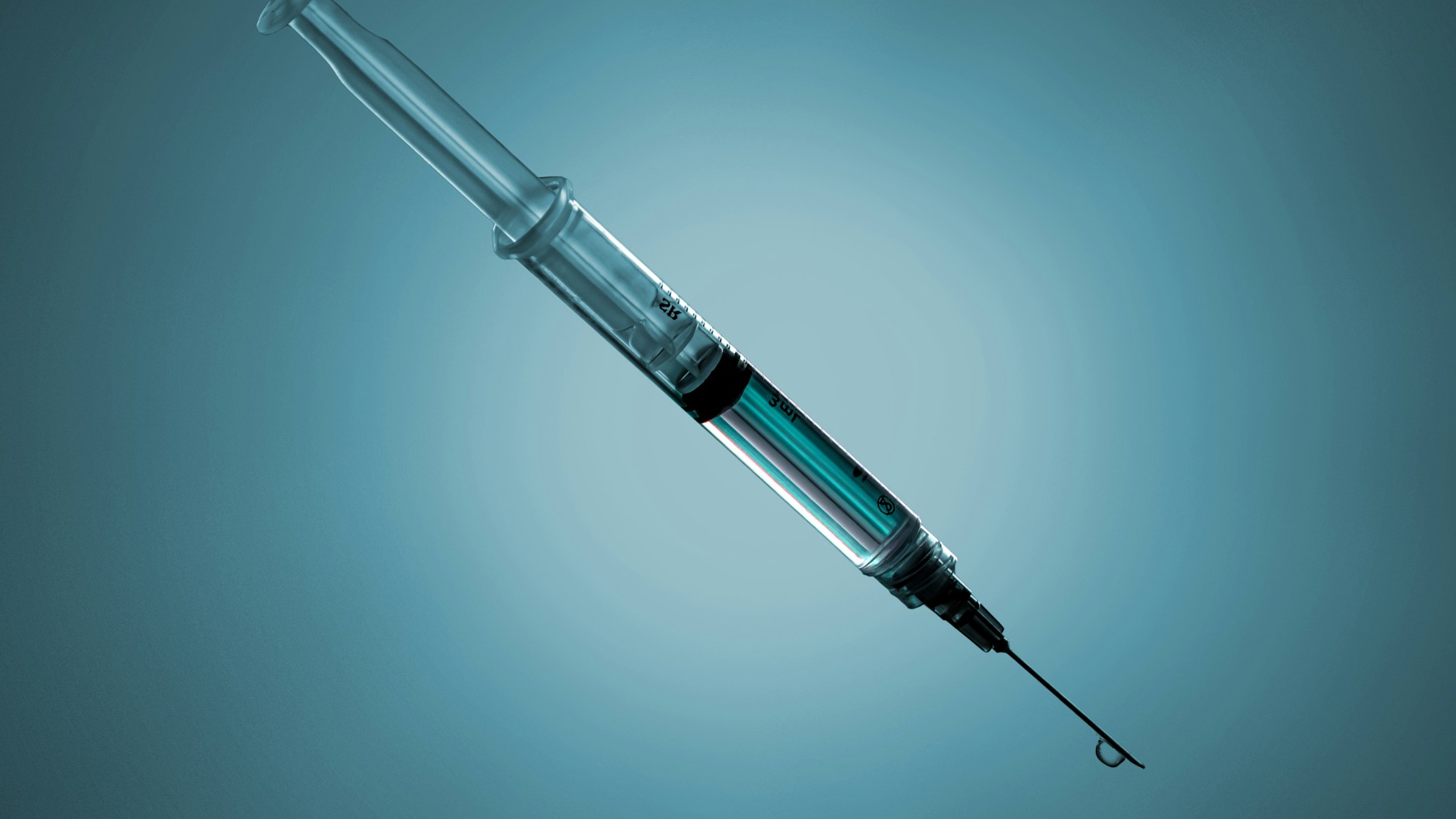
A twice-yearly injection that stops HIV infection is about to get a price most health systems can pay. On Monday 2 November the US Food and Drug Administration gave tentative approval to a generic version of lenacapavir made by India’s Dr. Reddy’s Laboratories, according to AFP. The generic is priced at $40 per person per year and is meant for 120 countries. Gilead Sciences’ branded version costs roughly $28,000 a year in the United States before insurance.
How the price fell by 99.9%
The $40 figure is not a discount from the list price so much as a different deal. It comes from an agreement announced in September 2025 between Dr. Reddy’s, the global health agency Unitaid, the research institute Wits RHI and the Clinton Health Access Initiative. In late 2024, Gilead had already granted voluntary licences to six generic manufacturers, Dr. Reddy’s among them, which is what allowed generic production at all. Unitaid’s executive director, Philippe Duneton, said in a statement carried by France 24 that early risk-taking by Unitaid is shortening the gap between a scientific result and access in countries.
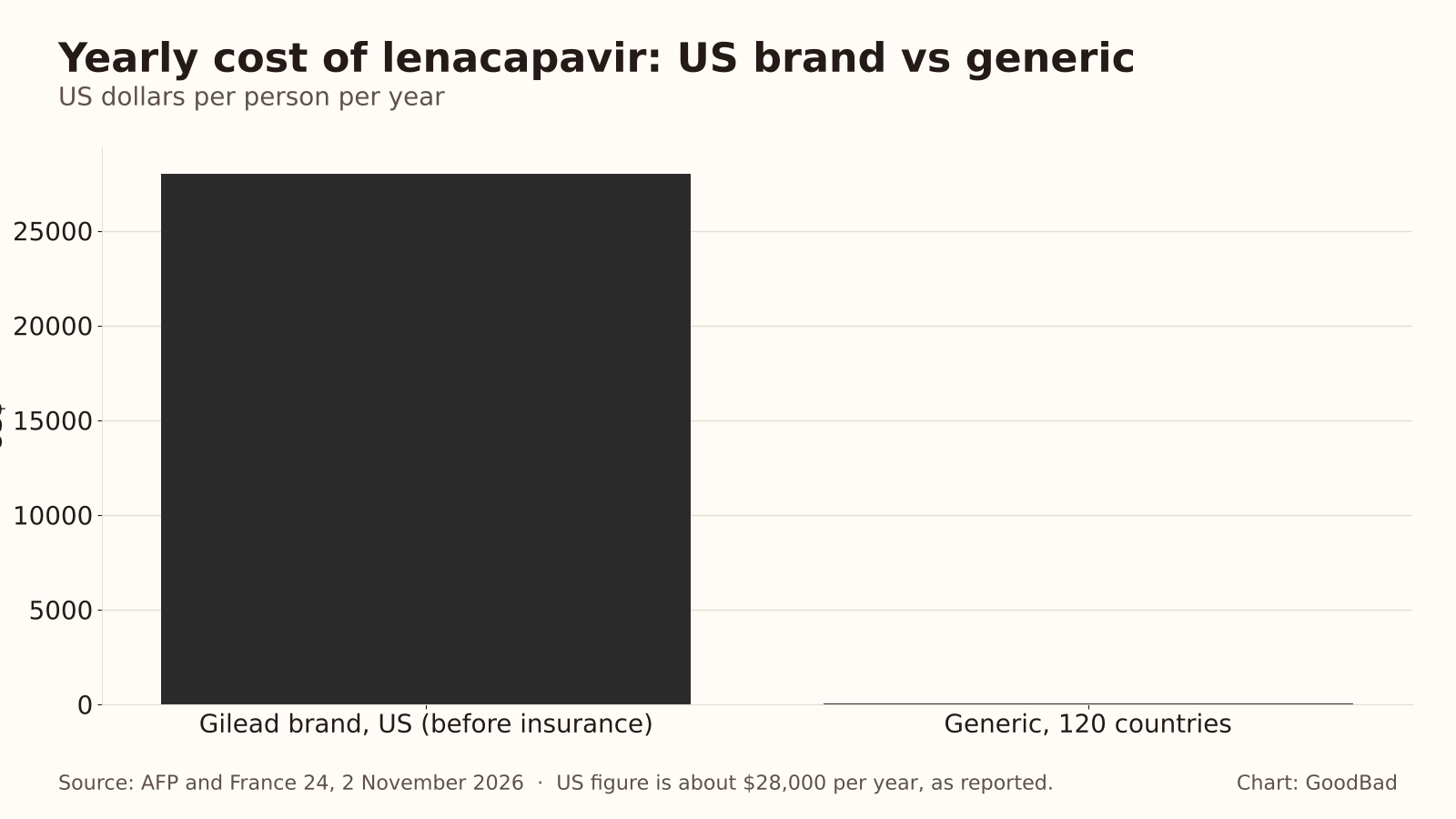 Chart: GoodBad. Data from AFP and France 24 reports of 2 November 2026. The US figure is before insurance.
What the shot does
Lenacapavir was approved in the United States in June 2025 and, in large clinical trials, was more than 99.9% effective at preventing HIV, according to the reports. The comparison matters because earlier options need more effort from the patient. Daily oral pills won US approval in 2012, and the injectable cabotegravir, approved in 2021, needs a shot every two months. Lenacapavir needs two a year. The World Health Organization lists long-acting injectable lenacapavir among the prevention methods it recommends.
Who it could reach
The need is large. WHO estimates that 41.0 million people were living with HIV at the end of 2025, 64% of them in its African Region. An estimated 1.2 million people acquired HIV in 2025 and 570,000 died of HIV-related causes. More than 125,000 people in 10 early-adopter African countries have already started Gilead’s version, so the demand does not have to be created. Dr. Reddy’s says the approval was granted under PEPFAR, the US President’s Emergency Plan for AIDS Relief. HIV has killed more than 40 million people in four decades, according to AFP, and WHO says 89% of the people who knew their status were on antiretroviral treatment in 2025. Treatment has scaled up; prevention is the lever for the 1.2 million new infections.
The arithmetic of the price is simple. At $40 a year, protecting one million people for a year costs $40 million in drug alone, before clinics, staff and delivery. At the US price it would cost about $28 billion.
A price of $40 a year is comparable to daily HIV prevention pills, Unitaid’s Carmen Perez-Casas said, according to AFP. She added that demand is high and that momentum must not be lost.
| Question | What the reports say |
|---|---|
| Who approved it? | US FDA, tentatively, on 2 November 2026 |
| Who makes it? | Dr. Reddy’s Laboratories, India |
| Price | $40 per person per year |
| Where | 120 countries, not listed in the reports |
| Brand price in the US | About $28,000 a year before insurance |
| Already in use | More than 125,000 people in 10 African countries (Gilead’s version) |
What is still open
Tentative approval is not full approval, and the reports say the agreement does not set a launch date. They do not list the 120 countries, and the figures and quotes come from the manufacturer and Unitaid rather than independent sources. The next things to watch are the date the first doses ship, the list of countries and the first deliveries to clinics. For a reader outside those countries, the practical answer today is that nothing changes yet; for the clinics that already give Gilead’s shot, the price of the next order may.