Good news
237-Million-Year-Old Fossils Reveal the First Known Amphibian to Live Fully in the Sea
Two nearly complete skeletons from southern China show Gerrothorax maritimus, an armoured amphibian about 74 cm long, lived in the open sea 237 million years ago. None of the 8,000-plus living amphibian species does.
This story runs on the good side only. The biggest stories of the day are told on both sides.
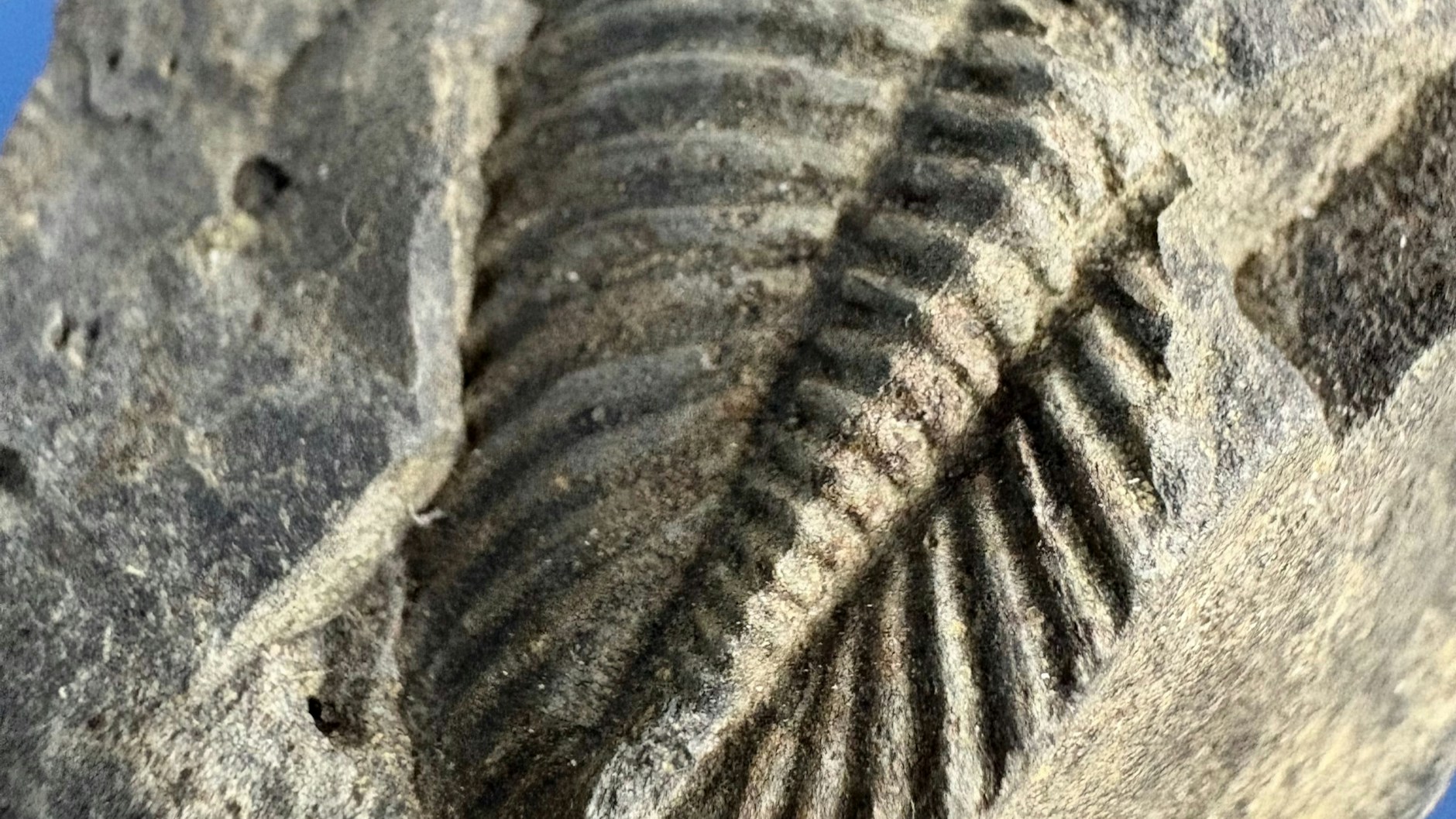
Mammals, reptiles and birds have all sent species into the sea. Amphibians were the exception, and a paper published on Monday in Nature Ecology & Evolution gives the first fossil case that they once joined in. The authors describe Gerrothorax maritimus, a stem amphibian that lived about 237 million years ago in what is now China, from two nearly complete skeletons. The study is peer reviewed, and the lead author is L. Diao.
What was found?
The two skeletons come from Guizhou province. Sci.News reports that the animal measured 73.7 cm, with a flattened, heavily armoured body and gills. Ryosuke Motani, a paleontologist at the University of California, Davis, said it is about as heavy as a giant salamander but far chunkier, since giant salamanders are elongated. The team also includes researchers from Peking University and the Geological Museum of Guizhou, according to Discover. Motani said the team has been reconstructing this ecosystem for some time, working mostly on marine reptiles and fish. The amphibian is a surprise addition to that cast, and he called it a very unusual member of its lineage.
How do they know it lived in salt water?
Two clues, both from the rock. The skeletons were found complete and articulated, in sediment that formed far from any large landmass. And the strontium isotope signature in the rock matched what is expected of Late Triassic seawater, Sci.News says. Together, the authors say, these suggest life in a fully marine setting.
Why had no amphibian done this before?
Living amphibians have permeable skin that they use to breathe and to manage water, which salt wrecks. Discover reports that fewer than 2% of the more than 8,000 living species tolerate any salt at all, and none lives in the ocean. That makes the finding hard to predict from today’s animals, because the usual route to the sea is closed to them. The authors argue that Gerrothorax came from a lineage with full body armour. Armour would have limited the exchange of water, gases and salt through the skin, pushing the animal to rely on gills and gut, which can become more salt tolerant. They say this probably prepared the lineage for the sea.
| Gerrothorax maritimus | Living amphibians | |
|---|---|---|
| Habitat | Open sea, per the study | Freshwater or land; none fully marine |
| Skin | Covered in bony armour | Permeable |
| Length | 73.7 cm | Varies; giant salamander similar in mass |
| Feeding | Likely a bottom-dwelling suction feeder | Varies |
How did it live?
Motani and colleagues propose that it lay on the seabed and sucked in prey that came close, much as the modern wobbegong, a bottom-dwelling carpet shark, does. The armour may also have protected it from predators such as ichthyosaurs, according to Discover.
What is still open?
The lifestyle is inferred from skeleton shape and rock chemistry, and the discovery rests on two specimens. The authors’ own wording is cautious: they say the finds suggest life in a fully marine setting, not that they prove it. Further specimens from other sites would test the claim. Sci.News words it as paleontologists describing what they say is the first fully marine species of stem amphibian, and Discover says it may be the first. Neither outlet reports how many other armoured relatives might also have taken to the sea, which is the obvious next question. What the fossils change is the starting point. Before this paper, no amphibian was known from the open ocean in the fossil record.