Good news
Police Seize 235 Servers and Secure 6.4 Million Stolen Logins
Europol and the US Justice Department say a joint action took down servers behind three malware kits and secured millions of stolen credentials, with lookup services alerting victims. No arrests were announced, and the tools can be rebuilt.
This story runs on the good side only. The biggest stories of the day are told on both sides.
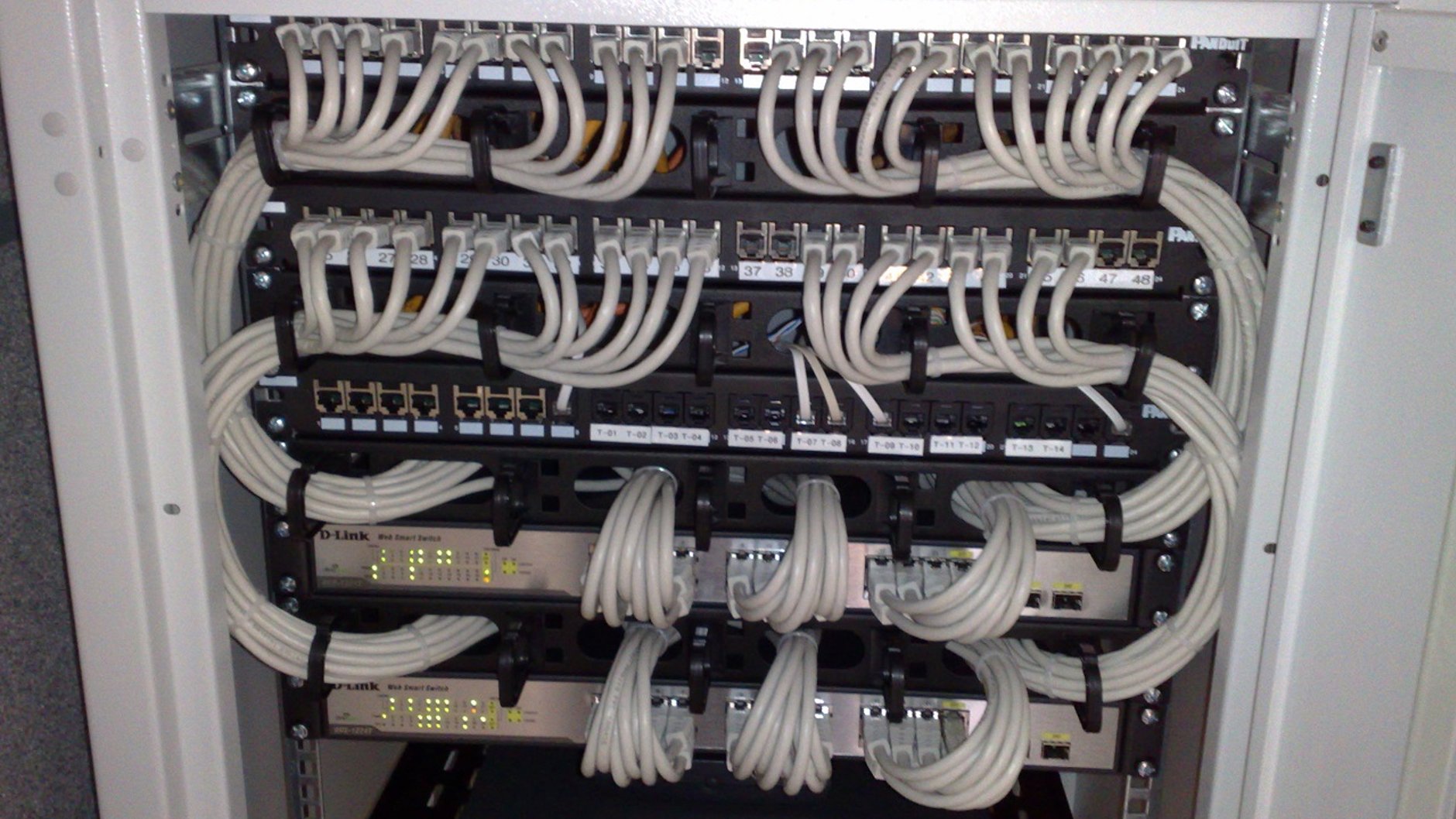
Police in nine countries took down the servers behind three malware kits on 12 November, and secured a stash of stolen passwords before the thieves could sell it on. Europol says law enforcement and private partners acted against 235 servers and 257 domains. Its headline figure is 6.4 million victim datasets secured.
The kits are Gootloader, CastleRAT and StealC. Each does a different job in the chain that ends in ransomware or fraud, and each lost infrastructure this week. The action is part of Operation Endgame, which Europol calls the largest international effort against ransomware enablers.
What was taken down
The three tools are sold or rented as a service. One group builds and maintains the malware, and other criminals pay to use it. Cutting the servers cuts the service for every customer at once, which is why police target the supply side.
| Toolkit | What it does | Servers | Domains |
|---|---|---|---|
| CastleRAT | Remote access trojan that lets attackers control a computer | 120 | 39 |
| StealC | Steals passwords and stored access data | 102 | not stated |
| Gootloader | Delivers other malware through fake legal documents on hacked sites | 14 | 218 |
The mechanism matters for anyone who runs a website. Europol says Gootloader spread fake legal documents through hacked sites, often built on WordPress, and that people who downloaded them were infected. The Justice Department says the infected machines were joined into a botnet, and that access to them was then sold to ransomware gangs. A takedown therefore protects two groups at once: the people who would have downloaded the files, and the companies that would later have been held to ransom.
Europol also reports that 681 infected websites were cleaned. The Justice Department says Gootloader was removed from more than 100 servers, including compromised WordPress sites, and that US domain names used to run it were seized. The two bodies count different things, so those figures are not directly comparable.
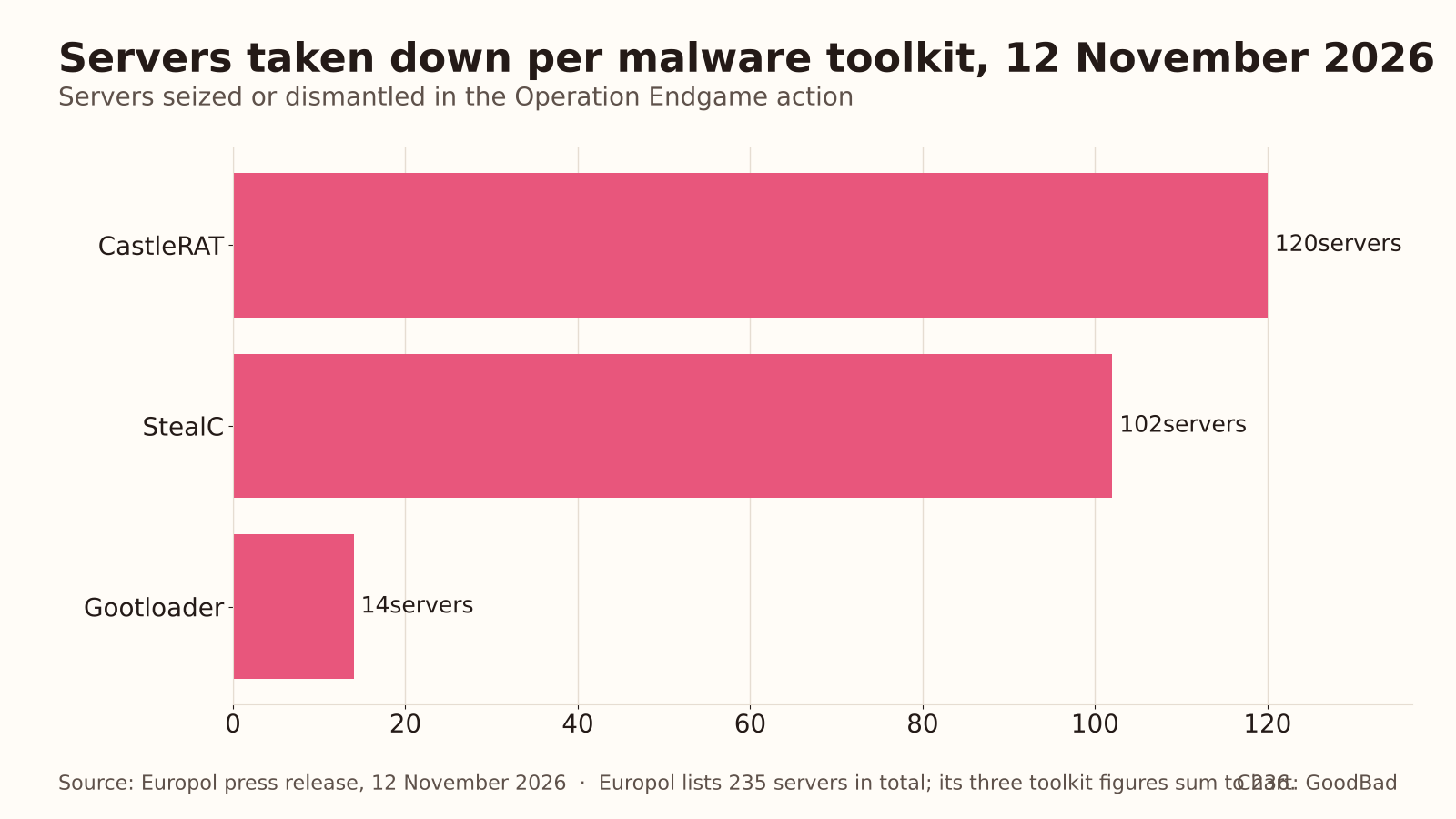 Chart: GoodBad. Data from Europol, 12 November 2026.
Who gets their data back
The most practical part is what happens to the stolen records. Europol says that more than 6 million credentials were found in infrastructure the suspects controlled. They were taking passwords from infected machines to sell, and to use in later attacks such as ransomware.
Victim data will be passed to HaveIBeenPwned, DIVD, CheckjeHack, NoMoreLeaks, Sekoia, the Shadowserver Foundation and the Dutch National Cyber Security Centre. These services let people and organisations find out whether their details were taken. Europol says the alerts cover credentials stolen by CastleRAT. The Justice Department adds that Shadowserver worked with internet providers and national response teams to identify infected systems and notify victims.
For a reader, that means one concrete step. Search your email address on a breach-lookup service such as HaveIBeenPwned, and change any password you reuse. If you run a WordPress site, Europol advises updating credentials, switching on multi-factor authentication and patching known vulnerabilities.
The scale of the harm stopped
The US figures show how much damage one of the three kits did. The Justice Department says Gootloader has infected at least 25,000 computers worldwide since 2018. It says the malware has been used in ransomware attacks on at least 44 US victims, with losses of about $28.8 million.
Those are the department’s own counts, and they cover only US victims of ransomware. They are a floor for the real cost, not a total. FBI cyber branch director Brett Leatherman said the agencies “disrupted the Gootloader botnet through coordinated technical operations, victim notifications, and remediation.”
The partnership list is long. The US side was led by the Defense Criminal Investigative Service, the FBI’s Denver office and Army criminal investigators. Police from Bulgaria, Canada, Denmark, Germany, Moldova, the Netherlands, Poland and the United Kingdom took part, with Eurojust helping courts and prosecutors exchange information. The Justice Department also lists private partners, including Fraunhofer FKIE and the Shadowserver Foundation, which supplied technical help.
What this does not settle
The honest limit is that malware tools are cheap to rebuild. Neither release reports arrests. The StealC action is described by Europol as continuing efforts from June 2026, which means the kit had already been hit once this year and its operators were still working. Seized servers slow criminals down. They do not remove the people who wrote the code.
There is also a gap in what the public can check. Europol says “over 6 million” credentials in the body of its release and 6.4 million in its headline, and the releases do not break the total down by toolkit or country. Europol lists 235 servers as the total, while its three toolkit figures add up to 236. We report both as Europol gave them.
Two further things are not stated in either release. One is how many of the victims are individuals rather than companies. The other is how many stolen logins were still valid on the day of the seizure, which decides how many people the alerts actually protect.
What to watch next
Operation Endgame has been running since 2024, and Europol presents this week as another step rather than an end. The practical test is whether the infected-site clean-up holds. If the 681 cleaned WordPress sites stay clean and the lookup services reach the people named in the data, the action will have done what police intended. The next public check is the next Endgame announcement, for which neither Europol nor the Justice Department has given a date.