Good news
Tesla Opens Cybercab Orders at $29,990, Meeting Musk's Under-$30,000 Promise
Tesla has begun inviting select customers to order its steering-wheel-free Cybercab for personal use at $29,990. Delivery is estimated for December 2026 in Texas, and the car needs a $299 monthly subscription to run.

Read the bad side of this story
Tesla's $29,990 Cybercab Needs a $299 Monthly Fee and Stays in Robotaxi Zones
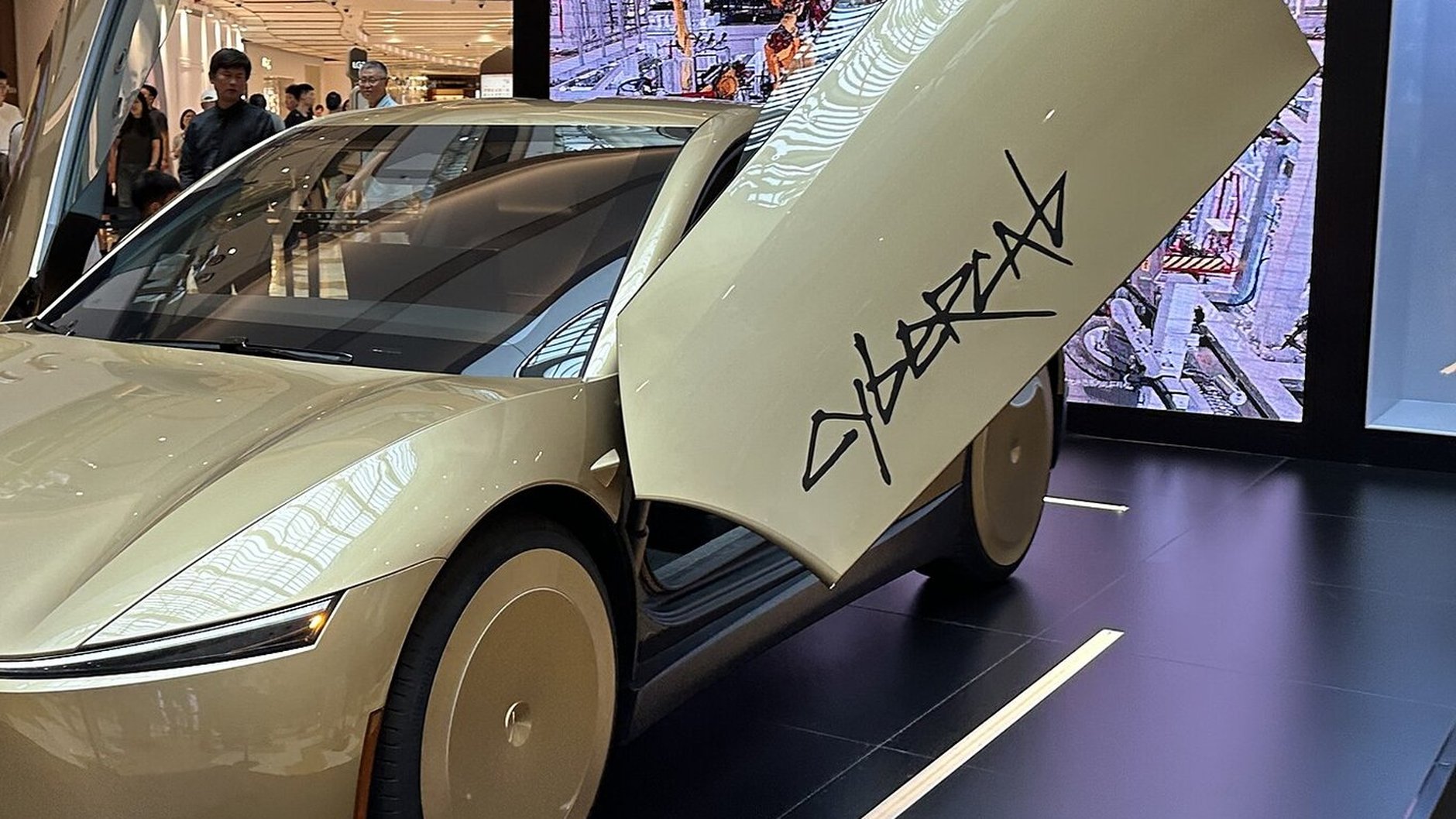
For the first time, an ordinary customer can put a deposit on a car with no steering wheel and no pedals. Tesla has started inviting select customers to order its Cybercab for personal use, at a price of $29,990. When Elon Musk unveiled the car in 2024 he promised a price below $30,000, and the sticker price meets that.
The offer comes with limits, and they are set out below. It is by invitation, it is for a handful of Texas cities, and the car needs a $299 monthly subscription to run. These are the company’s terms as shown on its order page and reported by TechCrunch and The Verge.
What a buyer gets
The Cybercab is a two-seat, fully autonomous car. Tesla says it will drive itself within the mapped areas where its Robotaxi service already runs. Ashok Elluswamy, the company’s AI chief, said it would work unsupervised there, serving the owner’s needs. That is Tesla’s claim about its own system, not an independent finding.
The order requires a $1,000 non-refundable deposit. The estimated delivery date is December 2026, and buyers must accept delivery in one of a handful of Texas cities, TechCrunch reports. The Verge notes that the invitation email says initial availability is limited, so December is an estimate and not a guarantee.
The Verge says the car has been carrying passengers in Tesla’s Robotaxi service in Austin since September. It cites the crowd-sourced Robotaxi Tracker, which counts 278 Cybercabs in operation, about 40% of Tesla’s fleet. That is a real, running service that buyers would be joining, though the count comes from a volunteer tracker and not from Tesla.
What the subscription covers
The $299 a month “Autonomy Subscription” is mandatory. The Verge says Tesla describes it as covering autonomous driving, maintenance and towing, and that insurance is excluded. The car has no manual controls, so it cannot be driven without the subscription.
Tesla already charges about $99 a month for its Full Self-Driving feature on other models, The Verge notes. Musk himself said on X that the Cybercab fee is too high and should be closer to $115 a month, TechCrunch reports. He has not said when or whether it will change, so the figure to plan around is $299.
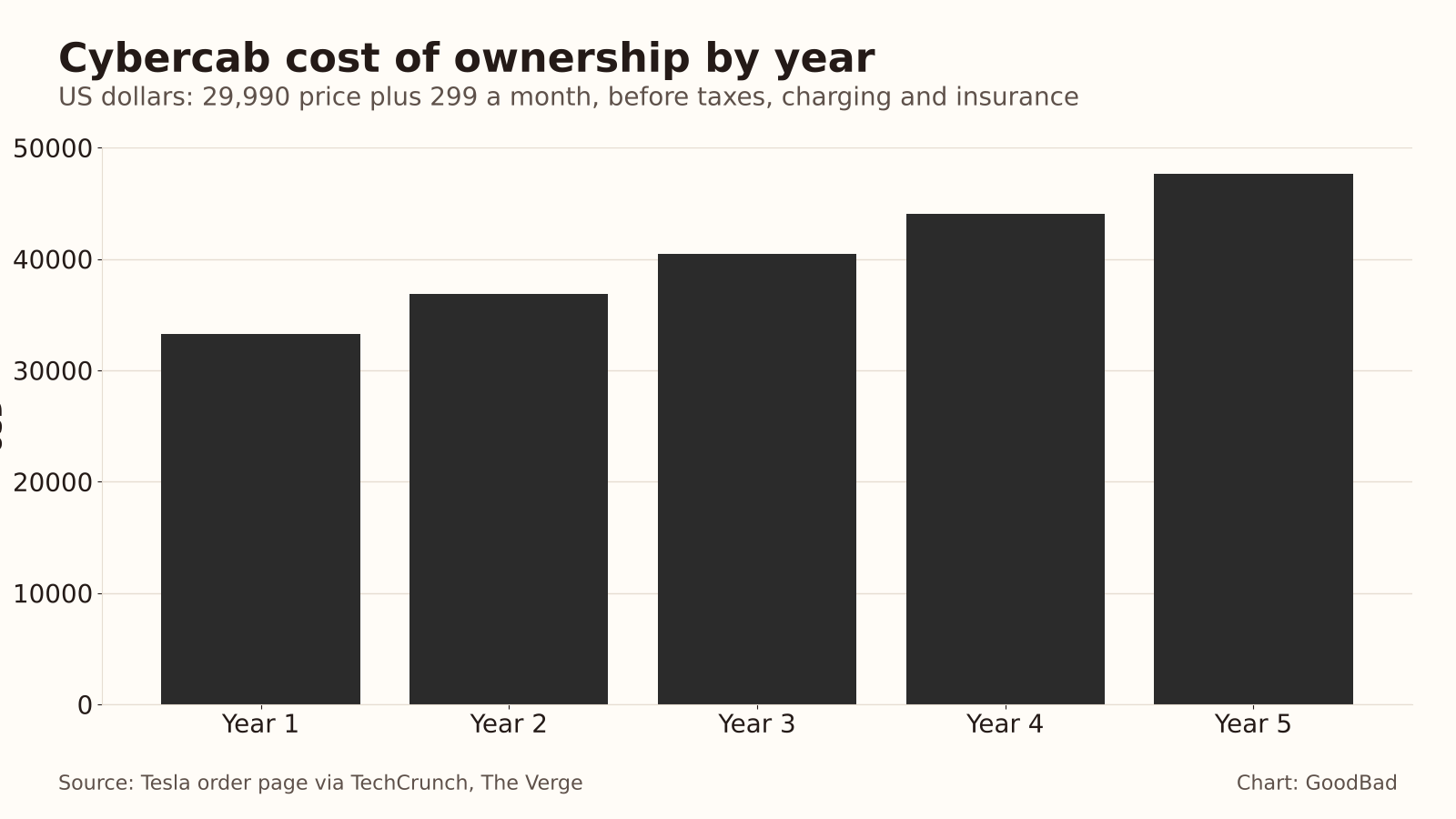 Chart: GoodBad. Data from Tesla’s order page as reported by TechCrunch and The Verge, 14 November 2026. Sums assume the fee stays at $299 and the first month is included.
Does this affect you?
For almost everyone, not yet. The offer is limited to invited customers in Robotaxi areas, and Tesla has not said how it selects them. Someone in Austin or another Texas service city could be among the first. Someone elsewhere cannot order a car that would work where they live.
The practical test for an invited buyer is simple. The car is useful only if most of the trips you need start and end inside the service area, because Tesla says it operates only there. A driver who regularly leaves the area would still need another car.
What it costs over five years
The sticker price is not the whole cost. Over five years the subscription adds about $17,600, which brings the total to roughly $47,600 before taxes, charging and insurance, in line with The Verge’s own estimate. That is more than a new Model 3 or Model Y, according to The Verge.
For some households the comparison is with transport spending, not with other cars. Someone who spends more than $300 a month on rides, lives and works inside a Robotaxi area, and does not want to drive could find the numbers close. No source has tested that case, and the answer depends on local fares and on how often the car sits unused.
Where it will work
The Cybercab will only operate inside Tesla’s supported service areas. Musk wrote that it will be available nationwide as the company receives regulatory approval, according to TechCrunch. That is a promise tied to an approval that Tesla does not control.
The Verge notes that federal safety rules require traditional controls such as a steering wheel and pedals. Tesla has not explained how a car without them is to be sold to private owners. Insurers have not said how they will underwrite a vehicle with no human driver. These are open questions, and the order page does not answer them.
What owners can and cannot do
The terms bar owners from using the car commercially, The Verge reports, so a Cybercab cannot yet earn money in Tesla’s own Robotaxi network. The company has said customers will be able to add their cars to the network next year. Tesla may raise the fee on 30 days’ notice, and there is no partial refund for the part of a month already paid.
Tesla has not said how many units are earmarked for private sale, or how it chooses invited buyers.
What happens next
December is the date to watch. If the first personal Cybercabs reach Texas owners then, it will show that a driverless car can be delivered and run as a consumer product at under $30,000 plus a fee. If delivery slips, the offer is still the first time the price of such a car has been published.