 Bad news
Food Tariff Cuts Save Up to £21 a Year as Carers Wait Until 2030
The Treasury's everyday fixes save households up to £21 a year on food, and the carer's allowance fix does not arrive until 2030. A reported 3.9% minimum wage rise would slow the push to equal pay for young adults.

Read the good side of this story
Carers Will Keep Allowance for Earning More as Treasury Drops Tariffs on 100 Foods
Households could save up to £21 a year on their food shop under the Treasury’s headline fix, which is about 40p a week. The figure comes from the government itself, which says it combines tariffs removed this week on more than 100 products with suspensions introduced in June. The BBC reports that Business Secretary Jonathan Reynolds put the total at around £500 million a year. Chancellor John Healey told the BBC that none of it changes the world.
Fixes with long fuses
The Carer’s Allowance cliff edge is the largest of the five fixes in the government’s release, and the slowest. Unpaid carers will stop losing the whole allowance for earning a penny over the weekly limit, which equals 16 hours at the National Living Wage. Instead £1 will taper away for every extra £1 earned. The BBC says this will not come in until 2030, so carers face the cliff edge for years more.
| Measure | What the Treasury says | When |
|---|---|---|
| Carer’s Allowance taper | £1 withdrawn per extra £1 earned | 2030, per the BBC |
| Tariff cuts | Up to £21 a year on food, with earlier suspensions | Full list due Wednesday |
| Parental pay | Two weeks, up to £194 a week, for 150,000+ more parents a year | No date in the release |
| Mileage rates | 55p for 10,000 miles made permanent; 35p above, up from 25p | No date in the release |
| Post Office | 1,000 drop boxes in total | No date in the release |
Young workers get a smaller rise
The wage decision lands on the group that has had the largest rises. Personnel Today says The Times has reported that both the National Living Wage and the 18-to-20 rate will rise by 3.9% from April 2027. That would take the 18-to-20 rate from £10.85 to around £11.27 and the living wage from £12.71 to around £13.20. The Treasury has not confirmed the figures. The Chancellor is due to set the rates on Wednesday, drawing on the Low Pay Commission.
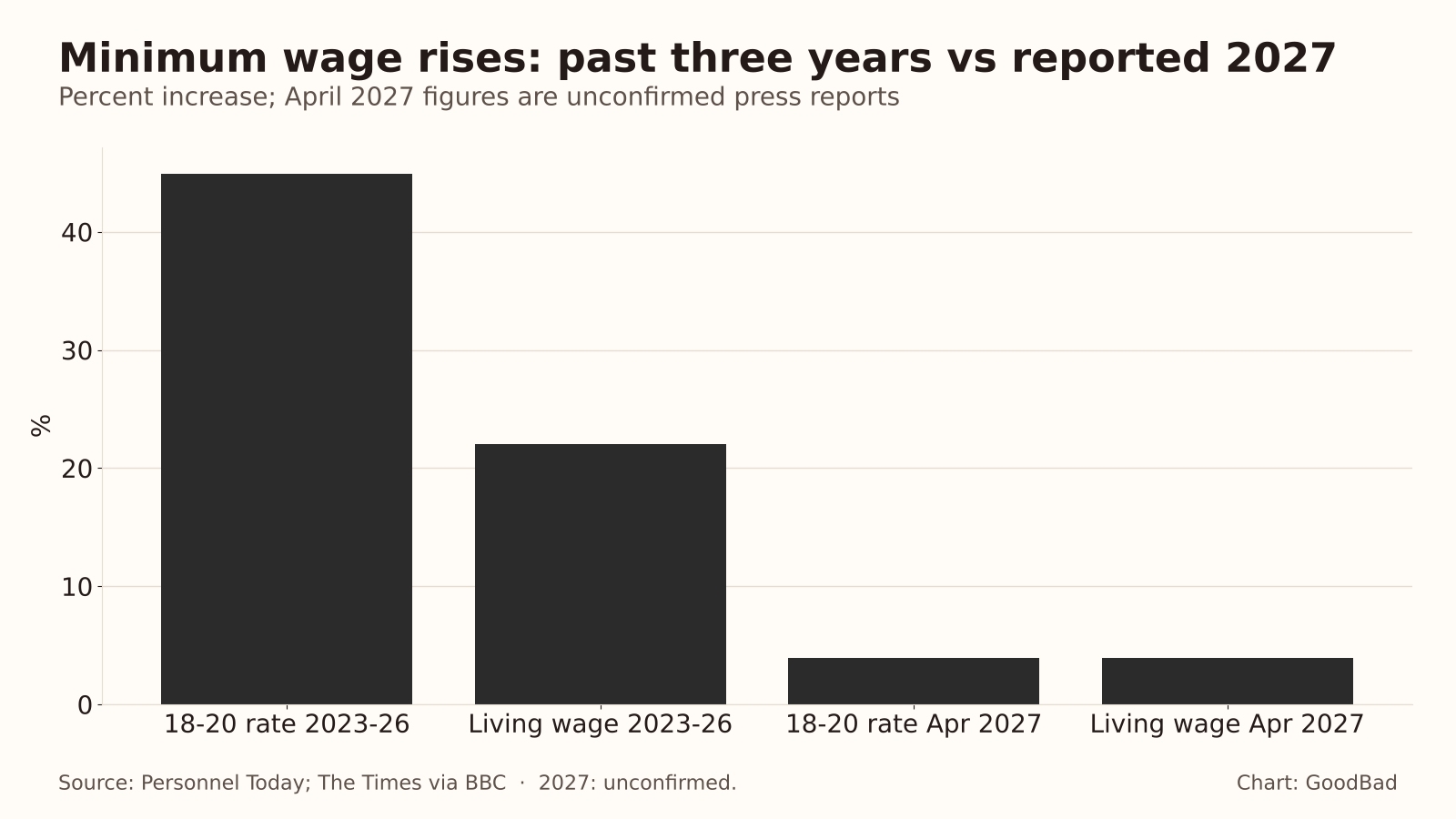 Chart: GoodBad. Data from Personnel Today (2023–2026 rises) and The Times as reported by the BBC and Personnel Today (April 2027, unconfirmed).
Because both rates rise by the same percentage, the 18-to-20 rate stays below the living wage by about £1.93 an hour, on the reported figures. Labour’s manifesto promised an end to what it called discriminatory age bands. Reynolds told the BBC that the pledge still applies but could happen over time. Unison’s general secretary, Andrea Egan, called the gap deeply unfair, saying a 20-year-old care worker does the same job as an older colleague. Employers see it differently. UKHospitality’s Kate Nicholls told The Times that stepping off the accelerator is welcome. The Low Pay Commission, for its part, found no robust evidence that higher youth rates caused falls in youth employment.
The tariff cut itself raises a question of who it helps. The BBC says Reynolds was asked why the government is making imports cheaper rather than cutting costs for UK businesses. He replied that where import costs can be reduced without harming domestic interests, the government will do so. The list also covers fertiliser, which the Treasury says is meant to ease farmers’ bills, and kerosene, aimed at households that heat with oil. At 40p a week, the food saving is small beside a weekly shop, and the Treasury’s own figure is a ceiling, not an average.
Other fixes reach narrower groups. Parental pay extends only to eligible parents who were previously excluded, including self-employed fathers and partners, and covers two weeks. Personnel Today quotes the Low Pay Commission as saying around 70% of 20-year-olds are already paid at or above the living wage. The reported youth rate therefore matters most to 18 and 19-year-olds and to sectors such as hospitality.
The reported rise, if confirmed, would mean 18-to-20-year-olds see 3.9% in April, against the 44.9% rise over the three years to 2026. For those workers and for carers, the date to watch is Wednesday for the wage rate, and 2030 for the allowance.