Bad news
Starship Booster Is Lost in the Gulf as SpaceX's Double Catch Falls Short
SpaceX planned to catch both Starship stages on Flight 15. The new Super Heavy booster aborted its approach and exploded over the Gulf of Mexico on 13 November, and the cause is still unexplained, though the ship was later caught.

Read the good side of this story
SpaceX Catches a Starship Upper Stage for the First Time
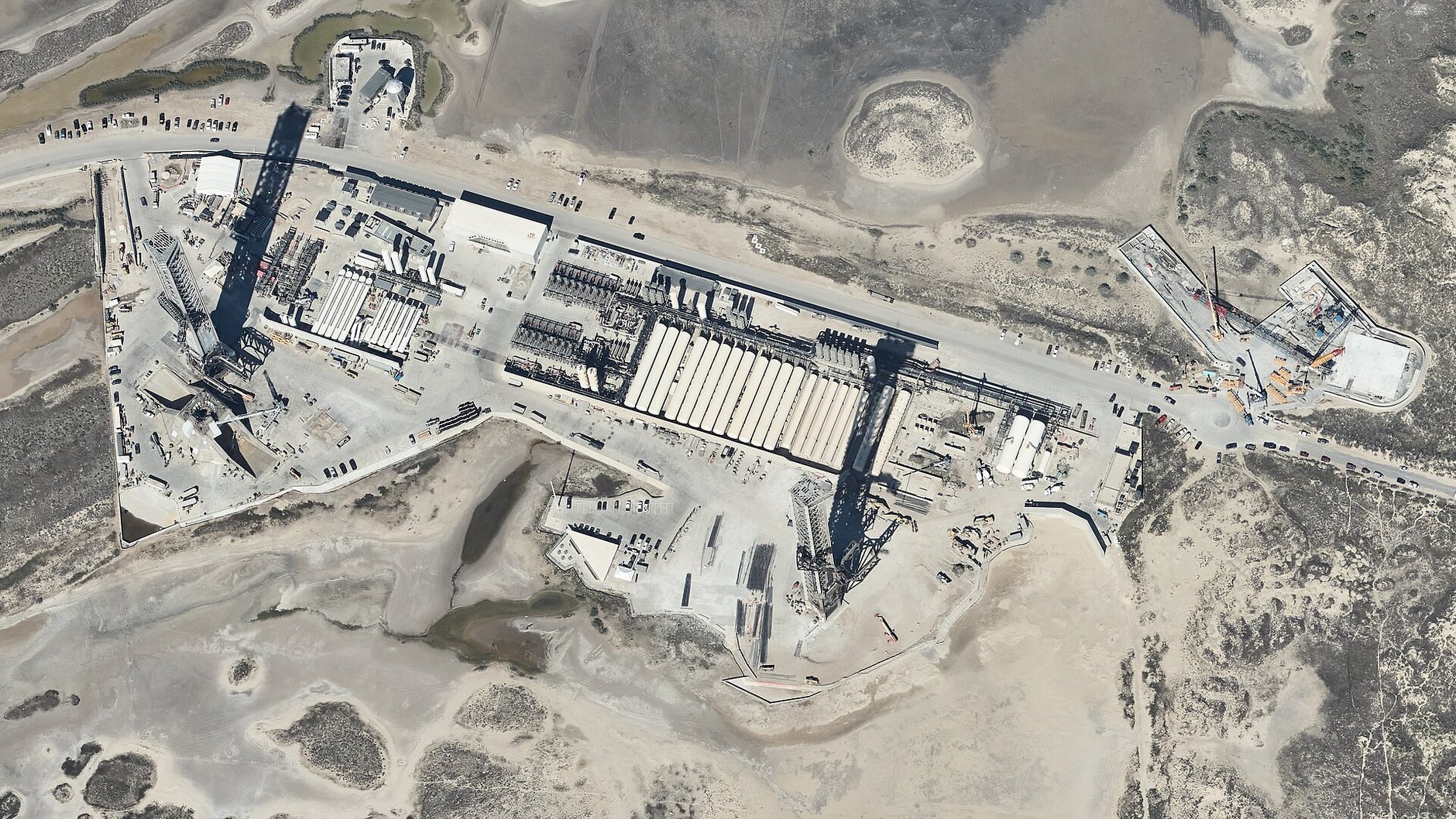
The first attempt to catch SpaceX’s upgraded Super Heavy booster ended in the Gulf of Mexico. On Friday 13 November, Booster 22 aborted its return to the Texas launch tower and exploded just above the water about 6.5 minutes after liftoff. SpaceX has not yet said why.
The company had planned the first double catch of a full Starship, with both stages returned to the tower. Only the ship made it: on Saturday 14 November, about 22 hours after launch, it was caught by the tower’s arms, a first for the upper stage. The booster loss is the part of Flight 15 that remains open.
An explanation that has already changed
The first account came from SpaceX spokesperson Dan Huot during Friday’s webcast. He said the booster aborted for a guidance, navigation and control problem. On Saturday he took that back, saying the guidance system had correctly detected that the booster was not where it needed to be and triggered the abort itself.
SpaceX engineer Kate Tice then said early indications are that the booster ended its return burn early because of a low fuel mass alarm. She said the team is still investigating the root cause, as Space.com reports. Huot also said that 32 of the booster’s 33 engines lit for the return burn, so one engine had dropped out after stage separation.
Three statements in two days is not unusual for a test programme, and none of them is a finding. A cause that SpaceX has not published cannot yet be checked against the flight data by anyone outside the company.
| When | What SpaceX said |
|---|---|
| Friday 13 November, during launch | Guidance issue forced a contingency landing offshore |
| Saturday 14 November | Guidance worked and triggered the abort; cause still being dug into |
| Saturday 14 November, later | Return burn ended early on a low fuel mass alarm; root cause under investigation |
Table: GoodBad. Statements by SpaceX staff on the Flight 15 webcast, as reported by Space.com, 13 to 14 November 2026.
What the booster was for
This was the first catch attempt for the upgraded booster, the 236-foot (72-metre) version intended for moon and Mars missions. Three earlier catches, the last in March 2025, were of the older design, according to NBC News, which carries a Reuters report. The Associated Press says the plan was to recover every piece of the rocket, something no one has yet achieved.
Losing the booster also means losing the hardware. SpaceX has not published a cost, and no source we found gives one. What is known is the scale of the programme. Reuters reports NASA has paid SpaceX about $3.2 billion since 2021 for the lunar-lander version, and that SpaceX has put at least $15 billion of its own money into the rocket.
What was delivered
The flight still did real work. The vehicle reached orbit about 27 minutes after launch and began releasing 26 Starlink V3 satellites about 36 minutes in. Engadget counts the satellite release and the ship catch among the flight’s main objectives met. That makes the booster the only one of the flight’s recovery goals that failed.
The schedule is where the loss matters. Elon Musk has said he expects weekly Starship launches in the first half of 2027, Reuters reports. SpaceX says it could begin launching from a new Florida pad by the end of 2026. Both depend on boosters that can be caught reliably, and Flight 15 has caught none of the new design.
What is known and what is not
Known: the booster aborted its approach on its own, the abort sent it to an offshore splashdown area, and it exploded just above the water. Space.com’s account of the webcast says this was the planned contingency, so the vehicle did not head back toward the Texas coast once it left the catch path.
Not known: why the booster was off its path. It is also unclear whether the early end to the return burn came from the lost engine or from a fuel problem. The fault may sit in the new design or in this one vehicle. SpaceX has not said, and none of the reports cited here carries a comment from the Federal Aviation Administration.
The business at stake is also larger than one booster. NBC’s Reuters report says Musk’s space and AI business sees Starship as key to expanding its Starlink network and, later, to orbital data centres. Every booster that cannot be reused leaves that plan more expensive than intended. SpaceX has not published a per-launch cost, so how much more is unknown.
What it does to the moon schedule
NASA and SpaceX expect astronauts to land on the moon by 2028, but Reuters says analysts and engineers think several testing goals will push that back. The biggest is a fuel transfer between two Starships in orbit, which has not been demonstrated. Artemis III next summer is planned as a docking test in Earth orbit, first with Blue Origin’s Blue Moon and then with Starship.
NASA expects to decide a year before the Artemis IV landing whether astronauts descend on Starship or on Blue Moon, the AP reports. A dependable booster is part of what that decision will weigh.
SpaceX has not said when Flight 16 will fly. What would change the picture is a published root cause for the aborted catch, and a second booster of the new design brought back to the tower. Until then the double catch SpaceX set out to achieve on this flight is half done.