Good news
SpaceX Catches a Starship Upper Stage for the First Time
After a day in orbit and 26 Starlink satellites released, Starship's upper stage returned to its Texas tower on 14 November and was caught by the launch arms. The booster catch was aborted the day before.

Read the bad side of this story
Starship Booster Is Lost in the Gulf as SpaceX's Double Catch Falls Short
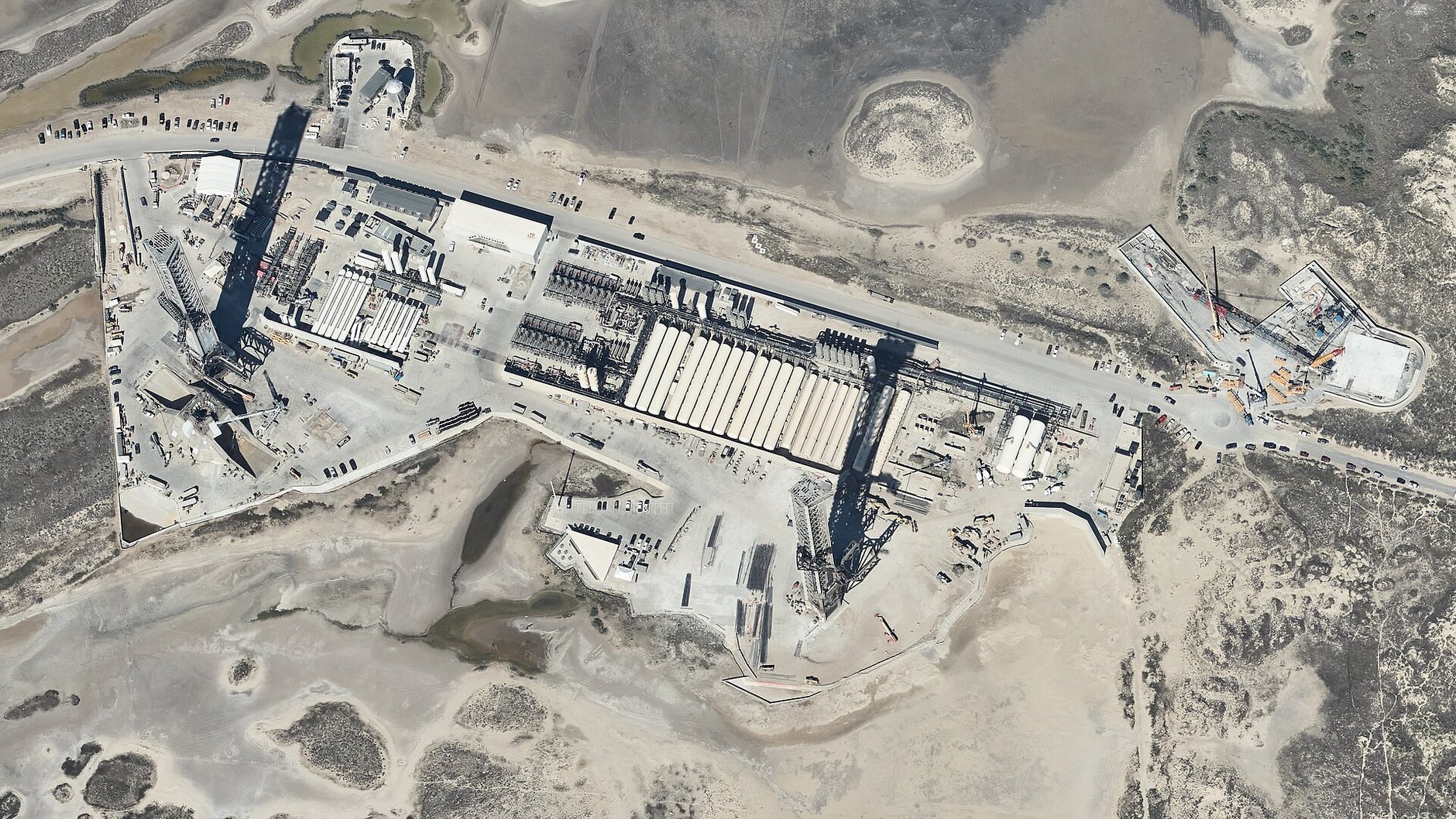
SpaceX has caught the upper stage of Starship for the first time. On Saturday 14 November, about 22 hours after launch, the 171-foot (52-metre) vehicle flew back to its Texas launch site and was caught by the tower’s mechanical arms, nicknamed “chopsticks”. Fourteen earlier Starship upper stages all ended in the ocean, according to the Associated Press.
The flight was the 15th Starship test since 2023. It also released 26 of the company’s newest Starlink V3 satellites, which makes it a working delivery as well as an experiment. The first-stage booster did not make it back: its catch was aborted on Friday and it was destroyed over the Gulf of Mexico. That part of the day is covered below, but the headline result is the ship.
What was caught
The launch came on Friday 13 November from SpaceX’s Starbase site near Brownsville. The vehicle reached orbit about 27 minutes after liftoff, SpaceX said, and began releasing its satellites about 36 minutes into the flight. The AP reports the plan was 15 laps of the Earth at roughly 170 miles (275 kilometres) before the ship steered back toward the pad.
Catching a spacecraft that size out of the air is the point of the design. A ship that lands on its tower, rather than on the sea or on legs, can be inspected and flown again with far less work. Engadget notes that SpaceX had caught and reflown earlier-generation boosters, but had never tried the ship until now.
| Flight 15 goal | Outcome |
|---|---|
| Reach orbit | Reached about 27 minutes after launch |
| Release 26 Starlink V3 satellites | Release began about 36 minutes in |
| Catch the Super Heavy booster | Aborted; booster lost in the Gulf |
| Catch the ship after about 22 hours | Caught at the tower on 14 November |
Table: GoodBad. Figures from SpaceX statements as reported by NBC News (Reuters), the Associated Press, Space.com and Engadget, 13 to 14 November 2026.
How a catch works
The ship does not land on legs. It descends toward the launch tower, and a pair of steel arms closes around it as it hovers, which is the same method SpaceX has used on three earlier boosters. Returning to the tower that launched it also means the ship comes back to the one site that can handle it.
For everyone who is not a rocket engineer, the practical question is whether this changes what launches cost. SpaceX has not published a price for a reflown Starship, so the saving is a company aim rather than a measured number. What the catch does show is that the upper stage can survive re-entry in a condition to be grabbed, which no earlier Starship ship had done.
Why it matters beyond the show
Reuse is the economic idea behind the whole programme. SpaceX’s launch vice president Kiko Dontchev told a NASA technology summit last week that Falcon rockets still throw away their second stage on every flight. The plan for Starship, the AP reports, is to catch both stages. A ship that can be recovered after a full trip to orbit is the missing piece of that plan.
Money from NASA rides on it too. According to the Reuters report carried by NBC, the agency has paid SpaceX roughly $3.2 billion since choosing Starship in 2021 as a lunar lander. The same report says SpaceX has put at least $15 billion of its own funds into the rocket.
NASA and SpaceX expect a crewed landing by 2028. The AP says the agency will decide a year before the Artemis IV landing whether astronauts go down on Starship or on Blue Origin’s Blue Moon.
The satellite release matters commercially. Reuters describes the flight as the second to carry operational Starlink satellites, so each flight that works now earns revenue for SpaceX’s connectivity business rather than only producing test data.
What went wrong with the booster
The Super Heavy v3 Booster 22 was supposed to return to the tower minutes after liftoff. Instead it aborted its approach and was diverted offshore, where it exploded just above the water about 6.5 minutes after launch, according to Space.com. SpaceX spokesperson Dan Huot said 32 of the booster’s 33 engines lit for the return burn, which means one had dropped out after stage separation.
The company’s explanation has already changed. Huot first blamed a guidance issue, then said on Saturday that the guidance system had done its job by detecting the booster was off course and triggering the abort. SpaceX engineer Kate Tice said early indications are that the return burn ended early because of a low fuel mass alarm, and that the root cause is still under investigation.
This is the first attempt to catch the upgraded, 236-foot (72-metre) booster, the version meant for lunar missions. Three earlier booster catches, the last in March 2025, used the older design, as NBC reports. A lost booster costs hardware, but the ship’s catch shows the second half of the sequence works.
What happens next
SpaceX has not said when Flight 16 will fly. Elon Musk has said he expects weekly Starship launches in the first half of 2027, according to Reuters. The company says it could start launching from a new Florida pad by the end of 2026. Both are company targets, not commitments from a regulator or from NASA.
For NASA, the next test is not a catch. It is a fuel transfer between two Starships in orbit, which analysts and engineers cited by Reuters say is a major remaining step before a moon landing. Artemis III next summer will practise docking in Earth orbit with Blue Moon and then Starship.
Until the booster investigation reports, the safest reading is narrow. One recovery of two worked, the satellites are in orbit, and the cause of the lost booster is unknown.