Good news
BepiColombo Enters Orbit Around Mercury After Eight Years, With Both Orbiters Intact
Europe and Japan’s BepiColombo has entered orbit around Mercury, only the second mission ever to do so. Both orbiters survived the journey, but the instruments will not start measuring until April 2027.
This story runs on the good side only. The biggest stories of the day are told on both sides.
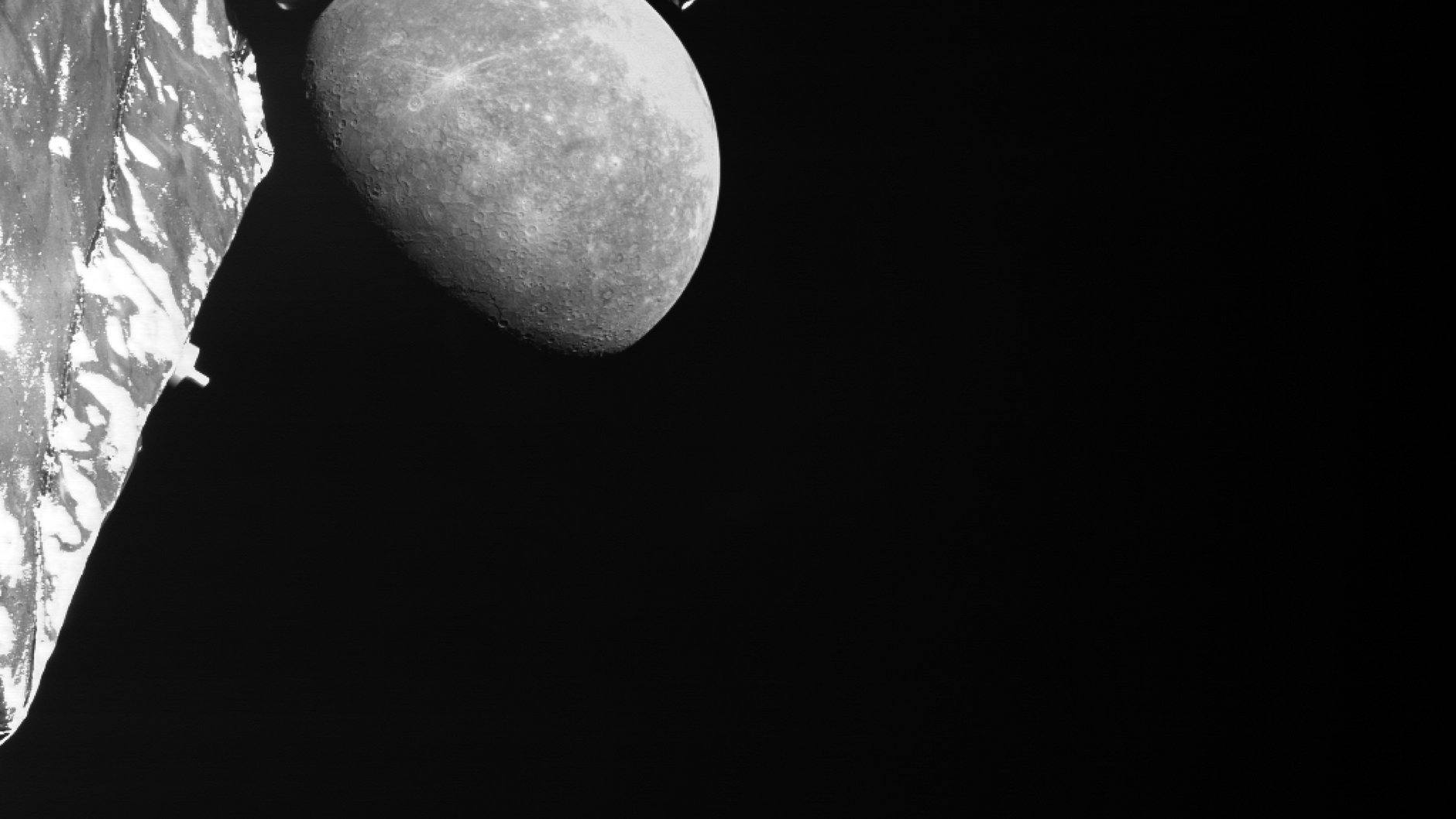
The European-Japanese BepiColombo mission has entered orbit around Mercury, more than eight years after it left Earth. Eos reports that the joint craft of the European Space Agency (ESA) and the Japan Aerospace Exploration Agency (JAXA) settled into an elliptical orbit on Saturday 21 November. It is only the second mission ever to orbit the planet, and the first to bring two spacecraft.
The arrival is a milestone for the craft, not yet for the science. According to ESA’s mission timeline, the instruments begin their main observations in April 2027, so the first measurements from orbit are about four months away.
Two orbiters, one planet
BepiColombo carries two separate science craft. ESA built the Mercury Planetary Orbiter (MPO), which will map the surface, measure the planet’s gravity and test the size of its core. JAXA supplied Mio, which studies the magnetic field and the charged particles around the planet. According to ESA’s factsheet, more than 35 companies in Europe, along with teams in the US and Japan, helped to build the mission.
Both orbiters are still bolted together. Space.com reports that the orbit-insertion burn was scheduled for 1824 GMT and was planned to last 37 minutes. The two craft separate on 9 and 10 December. Mio then takes a highly elliptical polar orbit, while MPO fires its engines several more times before reaching a tighter polar orbit, which Space.com dates to 10 March 2027.
The pairing is the point. Mercury’s magnetic field is offset from the planet’s centre, and Eos notes that scientists do not yet understand what sustains it. Two craft at different heights can measure the field and the surrounding plasma at the same moment, which one craft in one orbit cannot do.
Why it took eight years
Mercury is harder to reach than it looks. ESA operations editor Azul Pinochet-Barros said during the September livestream, as Eos reports, that it is harder than reaching Pluto. The craft must shed enough energy to match the planet’s path around the Sun rather than fall inward.
BepiColombo did that with nine planetary flybys, using each pass to brake. ESA’s factsheet lists the launch on an Ariane 5 on 20 October 2018, one Earth flyby, two Venus flybys and six Mercury flybys, the last on 8 January 2025.
| Milestone | Date |
|---|---|
| Launch | 20 October 2018 |
| Earth flyby | 10 April 2020 |
| Two Venus flybys | 15 October 2020, 11 August 2021 |
| Six Mercury flybys | 1 October 2021 to 8 January 2025 |
| Transfer module separates | 3 September 2026 |
| Enters Mercury orbit | 21 November 2026 |
| Orbiters separate | 9 to 10 December 2026 |
| Science operations begin | April 2027 |
Table: GoodBad. Dates from ESA’s BepiColombo factsheet and mission updates.
The trip did not go to plan the whole way. Eos reports that a thruster glitch in 2024 left the engines unable to run at full power. The team changed the trajectory, and arrival slipped from December 2025 to November 2026.
What the instruments have already shown
Since the transfer module separated on 3 September, ESA has switched on the orbiter’s instruments and reported the results in its mission updates. On 15 September, all MPO instruments ran together for the first time since the separation, and the first analyses show them in good health.
The BELA laser altimeter fired more than 700,000 pulses into open space over 21.5 hours. The last full test of the laser had been on Earth in 2016. The infrared spectrometer MERTIS showed little or no loss of sensitivity since its last low-temperature calibration on the ground in 2013, ESA says. The orbiter’s camera system, SIMBIO-SYS, also took its first image in space.
The craft also rehearsed the arrival sequence through five months of simulations. ESA says those rehearsals deliberately introduced faults, so the team had practised the failures as well as the plan.
What the planet can teach
Mercury is the least explored planet in the inner Solar System. The only earlier orbiter was NASA’s Messenger, which circled the planet from 2011 to 2015, and Mariner 10 made three flybys in 1974 and 1975, according to ESA. BepiColombo will study the surface, the interior with its large iron core, the magnetic field and the thin gas around the planet.
ESA says the data should help explain how a planet so close to its star formed and changed, and that this feeds into models of the Solar System as a whole. For most readers the payoff is knowledge rather than a product. None of the sources cited here gives a total cost for the mission, so this report does not estimate one.
The nominal mission lasts one year from the start of science, Eos reports, with an extended mission planned through 2029. Extensions depend on the craft staying healthy, and the spacecraft has already needed one re-plan. A year of data from two vantage points is the minimum the mission has promised. Anything beyond it is an extension that ESA and JAXA have planned, not a promise.
What comes next
The next dates are fixed. The orbiters separate on 9 and 10 December. A further separation of Mio’s sunshield structure from MPO is scheduled for 16 December, ESA says. After the engine burns that finish MPO’s orbit in March, the science phase opens in April 2027.
For now, the mission’s proof is simple: both orbiters reached Mercury working, after a journey that needed nine flybys and one rewritten arrival date.