Good news
Webb Finds Glassy Water Ice Around Beta Pictoris That Likely Predates the Star
Webb's infrared spectrograph found water and carbon dioxide ice in the dust disk of Beta Pictoris, 64 light-years away. The ice is mostly glassy, mixed like comet ice, and probably formed before the star did, a Science study reports.
This story runs on the good side only. The biggest stories of the day are told on both sides.
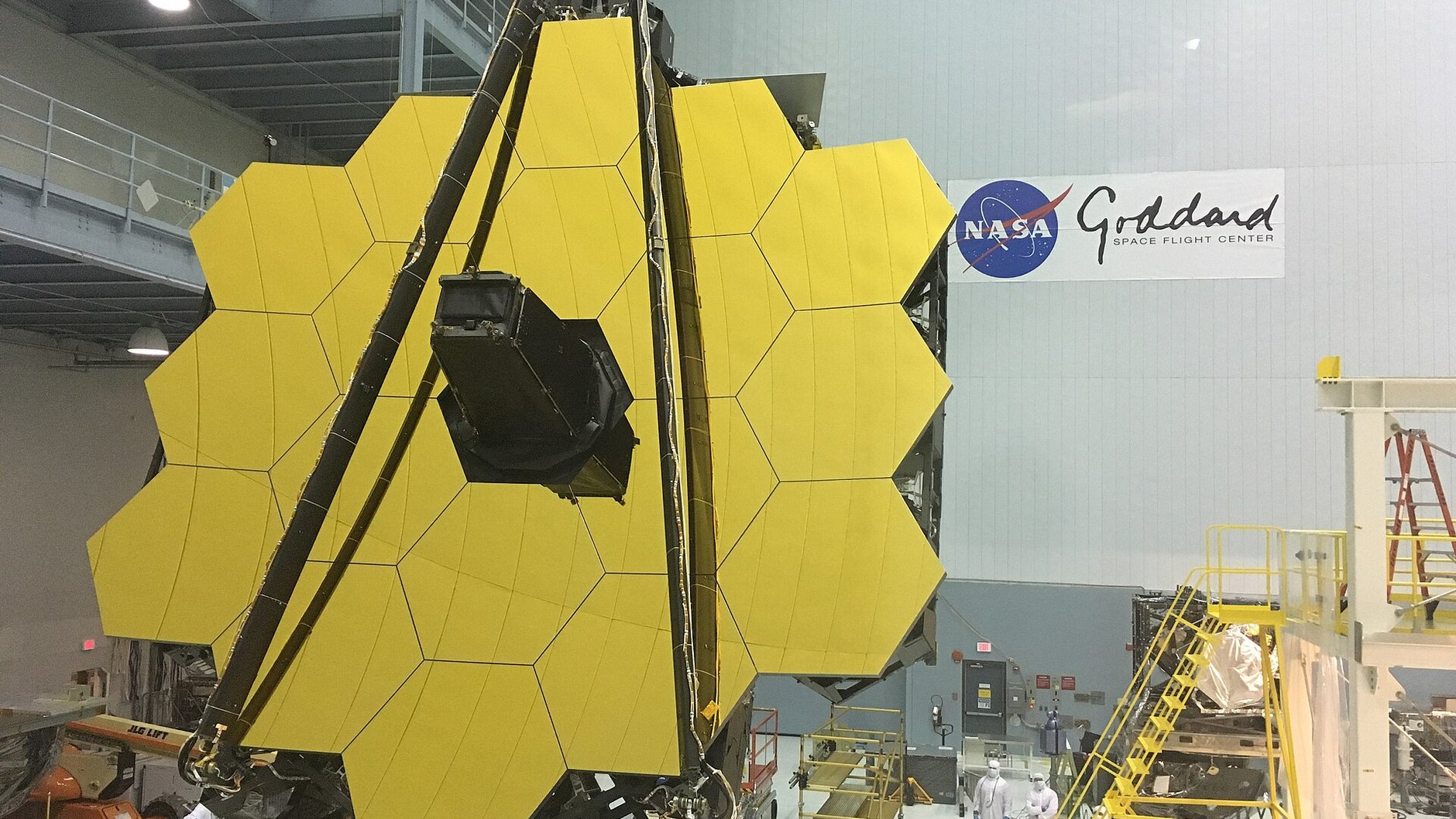
Astronomers have found water ice in the debris disk around Beta Pictoris, a young star 64 light-years away, and the ice looks older than the star itself. A team led by Sarah Betti of the Space Telescope Science Institute in Baltimore used the James Webb Space Telescope to detect water and carbon dioxide ice. That is according to Ars Technica’s report on the Science study. The result is observational: it comes from spectra of the disk, not from a model.
The star is about 20 million years old and is surrounded by a vast disk of dust and rubble in which three planets have already been found. Finding ice there answers a question that earlier searches left open. It also suggests that the raw ingredients for water-rich worlds may be common around young stars, though the study stops short of saying so for any specific planet.
What Webb saw
Beta Pictoris is one of the best-studied stars in the sky. Its disk was among the first ever imaged, in 1984, and it is seen almost edge-on, which makes it a natural place to study how planetary systems grow. Astronomers expected ice there, but attempts to detect water vapour found nothing, and a search for the dip that water ice leaves in starlight at 3 micrometres also failed.
Betti’s team observed the system on 7 December 2023 with Webb’s Near Infrared Spectrograph, which records a full spectrum from 0.6 to 5.2 micrometres at every point in the image. After subtracting the star’s glare, they measured how the disk’s dust reflects light at each wavelength. They then pulled detailed spectra from two spots on opposite sides of the star, each roughly 100 astronomical units out.
Both spots showed water ice and carbon dioxide ice, the latter in its common form and in a rarer version containing carbon-13. The water-ice signal was strikingly uniform across the disk, Ars reports. The authors’ dataset, deposited in the Dryad repository, describes the same finding of amorphous water ice and carbon dioxide ice in the disk.
Why the ice is called older than the star
Two details of the spectra carry the argument. The carbon dioxide absorption was shifted and broadened compared with pure carbon dioxide ice measured in laboratories. The team says that is how the molecule behaves when trapped inside water ice, so the two ices are thoroughly mixed. That matters because theory says mixed, “dirty” ice survives the star’s ultraviolet light longer than pure ice grains.
The water ice is almost entirely amorphous, a disordered, glass-like solid, with less than 7% crystalline, according to the team’s estimate. Models had predicted mostly crystalline ice in disks like this one. Amorphous ice stays in that form only if it remains colder than about 100 kelvin, or minus 173 °C, or if nothing keeps breaking its crystal structure apart.
From these clues the researchers concluded the ice most likely formed in the interstellar medium, long before the planets of Beta Pictoris began to take shape. Ars notes that this is the team’s interpretation, and the paper rests on how the ice features look, not on a direct age measurement.
| Property | Reported value |
|---|---|
| Distance to Beta Pictoris | About 64 light-years |
| Age of the star | About 20 million years |
| Carbon dioxide share of the ice | About 11% (about one molecule per 10 of water) |
| Comet range in our solar system | 2.5% to 30% |
| Ice in disks of other newborn stars | 7% to 20% |
| Crystalline fraction of the water ice | Less than 7% |
Table: GoodBad. Figures from Ars Technica’s report on Betti et al., Science, November 2026.
How it compares with comets
The carbon dioxide makes up slightly more than one molecule for every 10 of water, about 11% of the ice. That falls inside the 2.5% to 30% range measured in comets of our own solar system and inside the 7% to 20% seen in the ice of disks around other newborn stars. The mixture is comet-like, which suggests Beta Pictoris built its icy bodies by a process similar to the one that made ours.
The even spread of ice also needed an explanation. The team argues that frequent collisions between planetesimals, the small building blocks of planets, release fresh icy dust, including ice that was buried deep inside the colliding bodies. That would replace what starlight destroys. Earlier infrared images show a curved streak of dust in the disk that is thought to be debris from one such collision.
The idea fits another puzzle. The disk holds a large reservoir of carbon monoxide gas that ultraviolet light should destroy within 50 to 300 years, so something must keep supplying it. Colliding ice-rich comets are the most likely source, and the new detection supports that.
What is still unknown
The authors could not pin down how much crystalline ice is present, and they could not rule out other molecules hiding in the mixture, Ars reports. One star is a sample of one, and the work does not show that every young system carries ice like this. It also does not say whether any planet there is habitable.
The next steps are observational: other debris disks can be measured the same way, and the amorphous fraction can be compared. If more disks show the same mix, the finding would suggest that the interstellar ice that built comets is a standard ingredient of planet-forming disks. For now, Webb has measured ice in a disk where earlier telescopes found none.