Good news
UK Rooftop Solar Hits a Record 270,000 Installations With Six Weeks Still to Go
More than 270,000 solar systems have been fitted across the UK in 2026, the most in a single year, with battery installs close to double last year’s record and a third of solar going onto new-build homes.
This story runs on the good side only. The biggest stories of the day are told on both sides.
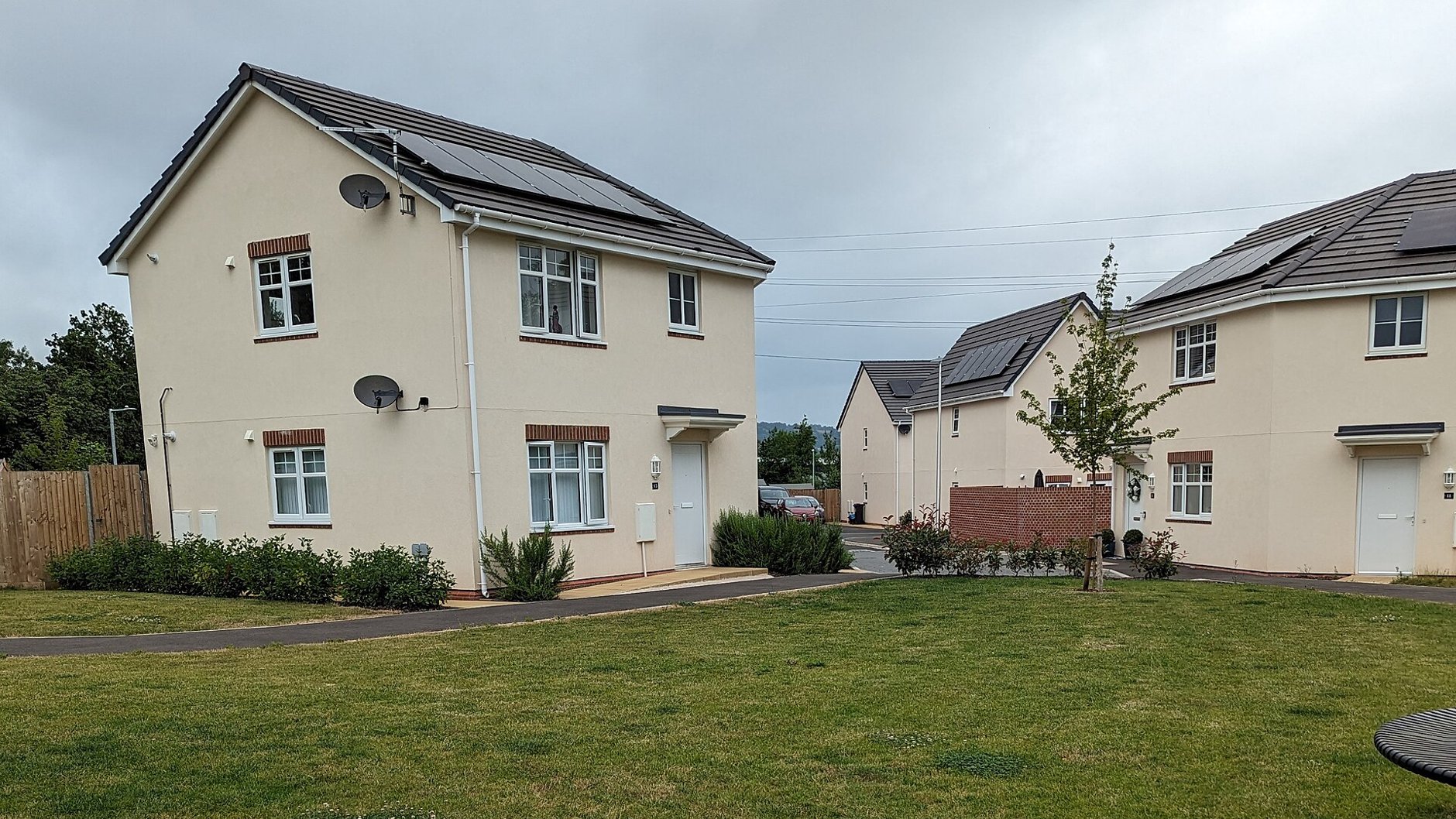
More solar systems have been fitted on British roofs in 2026 than in any year on record, and the year is not over. New data from MCS, the UK’s quality mark and consumer protection body for small-scale renewables, shows more than 270,000 installations across the UK, according to a UK government announcement. The previous full-year record was passed with more than a month of the year left.
The government says official data confirming the record will be published in December. Until then, the figure comes from MCS’s own daily-updated register, which covers certified installations of up to 50 kilowatts, and from a government release that is promoting the result.
What the record covers
MCS counts certified systems fitted to homes and small businesses. Renewable Energy Magazine reports that the figure so far is just over 269,000 certified installations, a slightly lower count than the government’s. The two sources differ by a rounding of less than 1,000, and both say the record has been broken. The magazine says it was passed with six weeks still to run.
Solar Energy UK, a trade association, says it expects more than 300,000 MCS-certified installations by the end of the year. That is a forecast from a body that represents the industry, not a measurement.
Where the growth comes from
Almost one in three solar installations this year has gone onto a new-build property, according to the MCS figures reported by Renewable Energy Magazine. The government’s Future Homes Standard, which will mean the vast majority of new homes in England have solar panels by default from 2028, is expected to grow that market further.
Battery storage is rising faster still. Certified battery installations are close to doubling last year’s record, at around 75,400 so far in 2026. About 82% of MCS-certified batteries installed this year were fitted at the same time as solar panels. That fits how households use them: panels make power at midday, and a battery holds the surplus for the evening.
The UK is also seeing solar fitted well beyond homes. The government release lists Cardiff’s Principality Stadium, which switched on more than 3,250 panels in 2026, and says that is enough to power more than 50 matchdays a year. It lists Ascot Racecourse, with more than 1,200 panels expected to meet around 9% of annual electricity needs, and Lincolnshire Co-op, which has installed panels at 53 sites in two years.
Where it is happening
Installations are not spread evenly. Cornwall and Somerset lead the table, with 3,399 and 3,325 installations so far in 2026. North Yorkshire is third with 3,094, according to the MCS data cited by Renewable Energy Magazine.
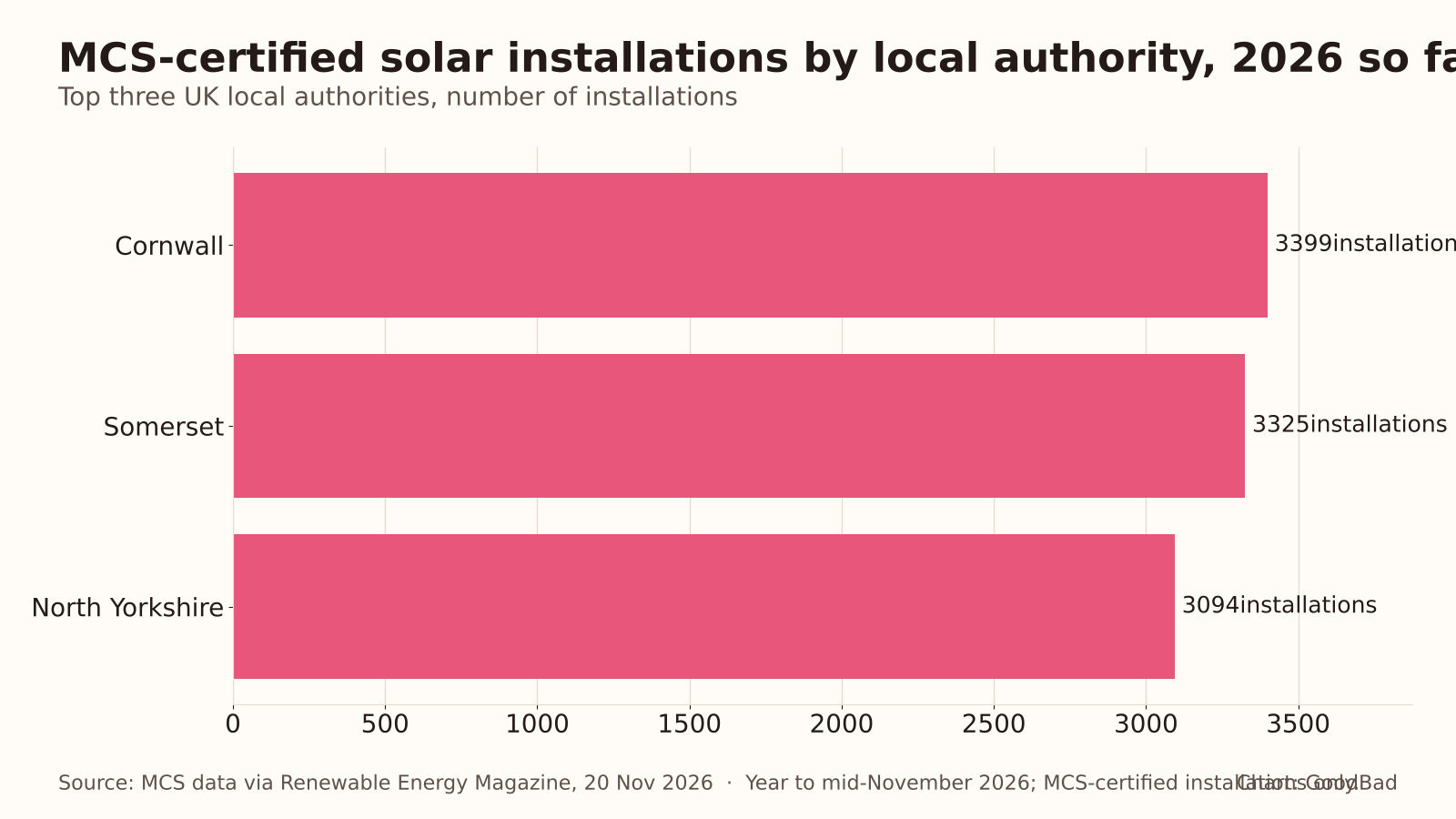 Chart: GoodBad. Data from MCS via Renewable Energy Magazine, 20 November 2026.
Those totals are large for single council areas, but they are a small share of the national figure. Three authorities together account for about 9,800 of more than 270,000 installations, a little under 4%, which shows how widely the growth is spread.
What it means for a household
Generating your own electricity means buying less from a supplier, which is how the government says solar helps cut bills. At Redbourn Leisure Centre in Hertfordshire, the release says rooftop solar and battery storage are expected to cut electricity costs by 61%, saving more than £19,000 a year. That is a community building with a large roof, and a home will see a smaller sum.
Lincolnshire Co-op says solar can provide around 12% of a site’s electricity demand, and Wren Kitchens and Bedrooms expects its new panels to meet around 23% of its headquarters’ needs. Those are the companies’ own estimates. The release does not give the typical saving for a household, so a reader weighing an installation would need a quote for their own roof.
The government points to two supports: cheap finance through the Warm Homes Loan Scheme, and plug-in solar, which it is rolling out in shops for the first time this year. Rules on solar for new homes and buildings are due to take effect, according to Solar Energy UK’s chief executive, Chris Hewett.
Why a record matters
A record for rooftop installations is a measure of ordinary decisions: thousands of households, shops and community halls each judging that panels will pay back. It also moves electricity generation closer to where it is used, which the government describes as strengthening energy security and protecting households from fossil fuel price shocks. That is the government’s framing, and the sources do not quantify the effect on national bills.
What to watch
The first thing to watch is the December data, which will show whether the official statistics confirm what the MCS register shows. The second is the year-end count against Solar Energy UK’s 300,000 forecast. The third is the new-build effect from 2028, when most new homes in England are due to carry panels by default.
MCS’s managing director, Lisa Cooke, said the industry is growing quickly and that quality installation matters more as demand rises. For anyone considering a system, MCS certification is the check that the installer and equipment meet recognised standards, which is what the organisation exists to confirm.