Good news
Vaccinating Whole Villages Cut Malaria Infection Odds by 70% in Gambian Trial
A Lancet trial of 54 villages found that giving everyone the R21 malaria vaccine before the rains cut the odds of infection by 70% in The Gambia and 25% in Burkina Faso, on top of nets and preventive drugs.

Read the bad side of this story
Whole-Village Malaria Vaccination Cut Infection Odds by Only 25% in High-Transmission Burkina Faso
Giving the R21 malaria vaccine to everyone in a village, not just to infants, cut the odds of infection by 70% in The Gambia, according to a randomised trial published in The Lancet. In Burkina Faso the same approach cut the odds by 25%. It is the first trial to vaccinate whole communities with R21, a vaccine used in small children. The researchers say it shows the vaccine also works in older children and adults.
The result was announced on 20 November by the London School of Hygiene & Tropical Medicine (LSHTM). Its MRC Unit The Gambia ran the study with the Clinical Research Unit of Nanoro in Burkina Faso. The trial is open-label, cluster-randomised trial, which means villages were assigned by chance but nobody was blinded to who received the vaccine. The authors call it a possible additional tool for a disease where global progress has stalled.
How to read the numbers
Two details help with the headline figures. The trial randomised whole villages, not individuals, so unvaccinated neighbours could not blur the comparison within a village. And “odds of infection” compares the chance of being infected with the chance of not being infected. A 70% fall in odds is therefore not the same as a 70% fall in the share of people infected.
The authors add one more point about Burkina Faso. The burden there is much higher, so even a smaller percentage drop could mean more infections prevented in absolute terms than the larger drop in The Gambia. They present that as a possibility, not a measured result.
What the trial did
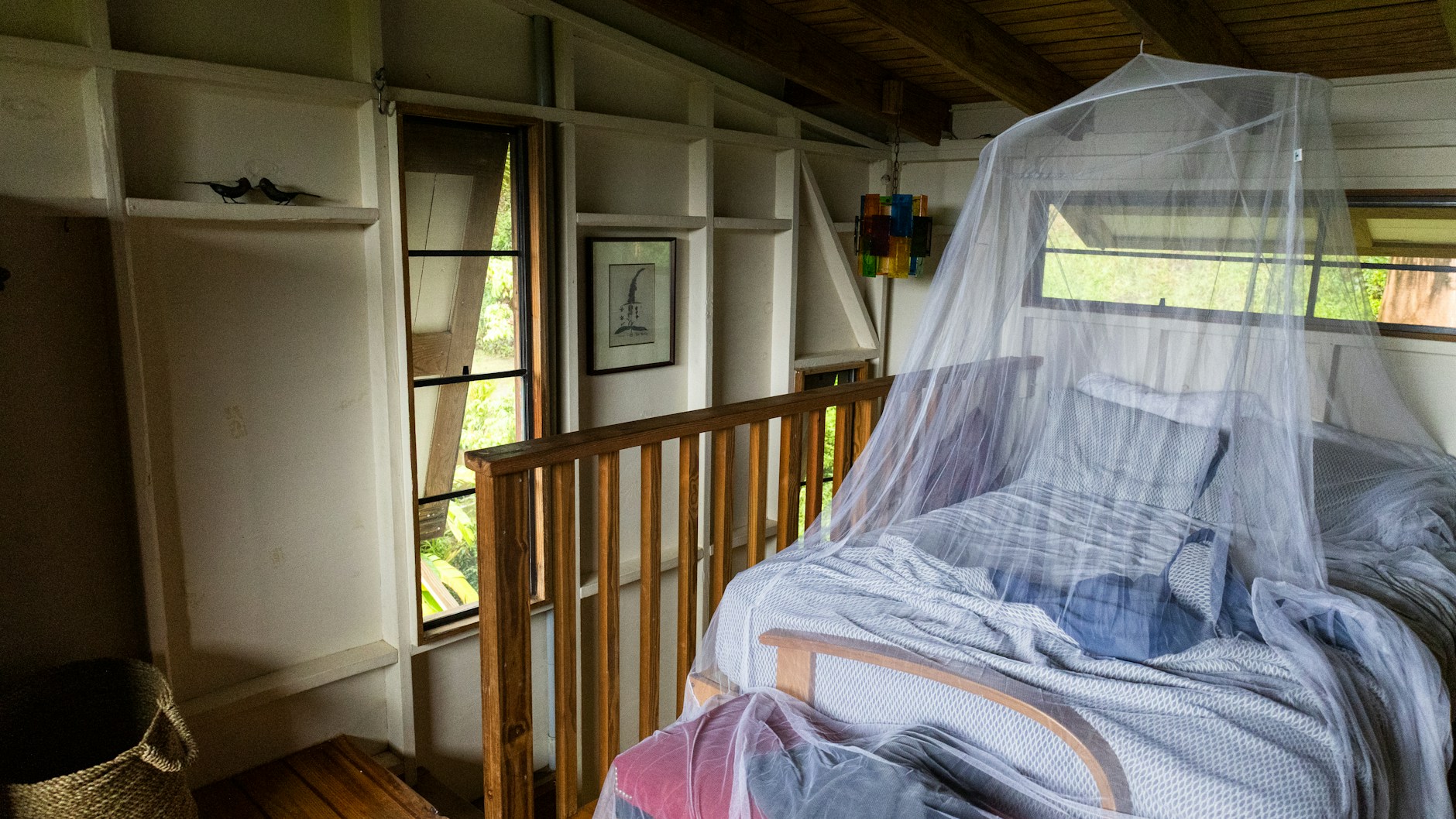
The team enrolled 54 villages, 30 in The Gambia and 24 in Burkina Faso. Half of the villages were randomly chosen to receive three monthly doses of the R21/Matrix-M vaccine between May and August, ahead of the rainy season. The other half received none. Everyone in all 54 villages kept the usual protection: bed nets and seasonal malaria chemoprevention, a course of preventive drugs given to young children.
The main outcome was the share of people infected at peak transmission in November. The odds of infection fell by 70% in The Gambia and 25% in Burkina Faso in the vaccinated villages. Clinical malaria, meaning people who fell ill, fell by 47% in The Gambia and 30% in Burkina Faso, according to the LSHTM release.
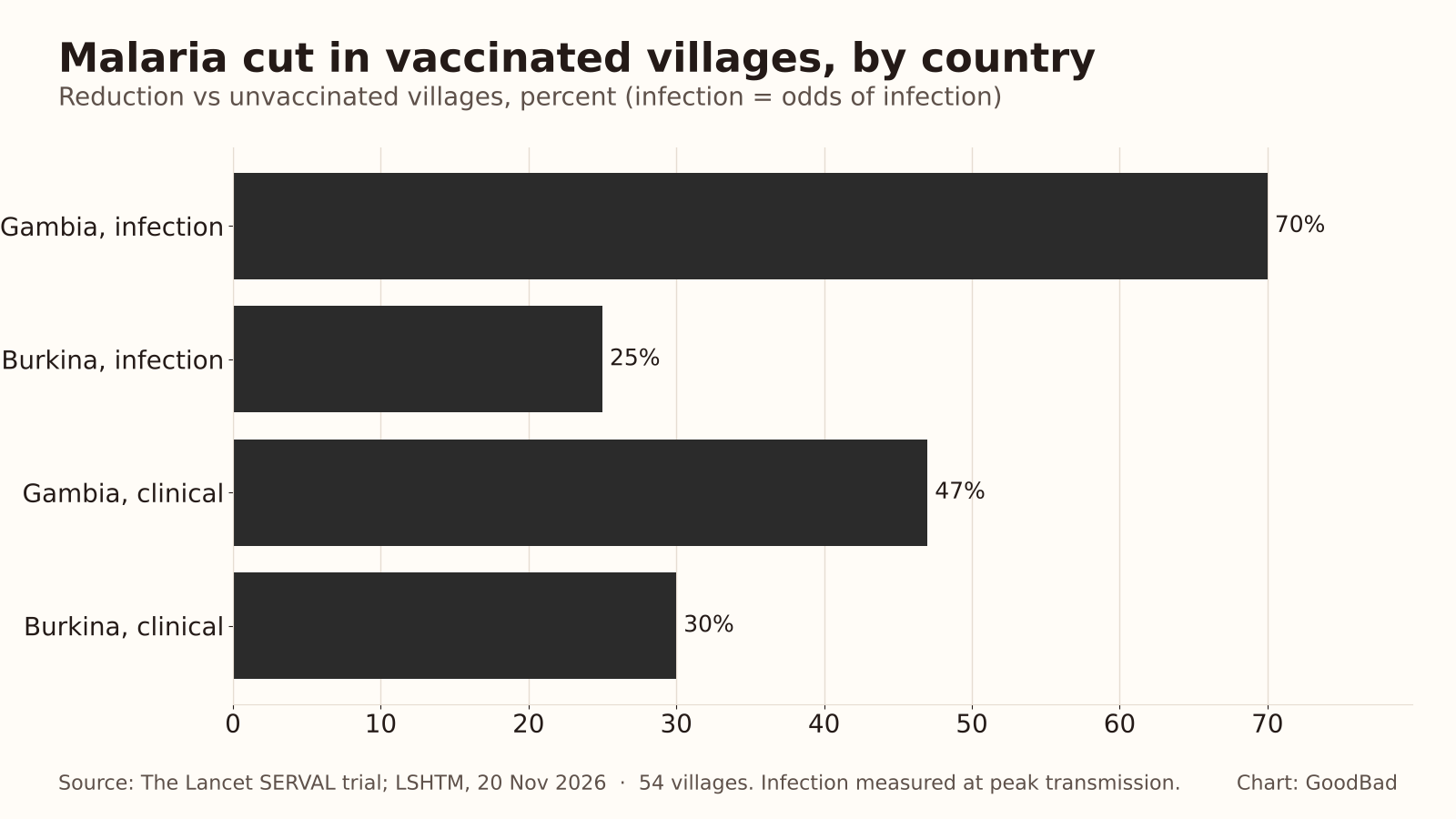 Chart: GoodBad. Data from The Lancet SERVAL trial and LSHTM, 20 November 2026.
Why older age groups matter
R21 is used in small children, and the study tested it on everyone. Professor Umberto D’Alessandro is the principal investigator in The Gambia. He said the data disprove “previous assumptions that the vaccine would not be effective in these age groups.” In The Gambia, the fall in infection appeared in every age group. D’Alessandro also said the result offers insight into how immunity to malaria infection works.
In Burkina Faso the picture was different, and the authors say so. Transmission there is intense and children are exposed repeatedly each rainy season. The largest reduction was in children under five, the group at highest risk of severe disease, though smaller effects showed up in older people too. Professor Halidou Tinto, who led the Burkina Faso arm, called the result encouraging for the Sahel region.
The vaccine was safe and well tolerated in both countries. The adverse events reported were mild and went away on their own, mostly headache and fever. The work was funded by MRC-UKRI and the UK Foreign, Commonwealth & Development Office.
What it could change
The need is large. The World Health Organization estimates 282 million malaria cases and 610,000 deaths in 2024, about nine million more cases than a year earlier. The WHO African Region carries most of the burden, and the agency says progress in cutting the death rate is far off track. At the same time the WHO credits new tools with saving a million lives in 2024 alone.
The WHO also counts big gains over the long run: 2.3 billion cases and 14 million deaths averted worldwide since 2000, and 47 countries and one territory certified malaria-free. Against that record, a new way to use an existing vaccine is welcome. Wandifa Samateh, programme manager at The Gambia’s National Malaria Control Programme, called the findings an important signal. The programme looks forward to assessing how the strategy could be integrated into national control and elimination plans.
What we do not know yet
This is one trial with two countries and one season of results. It does not say how long protection lasts, whether it could be repeated each year, or what the full campaign would cost per person. The researchers describe the strategy as additional to nets, drugs and routine vaccination, not a replacement for them. The open-label design is also a limit, because people who know they were vaccinated may behave differently.
No source reports a rollout. The next step they name is Gambian officials working with the research partners on how the approach could fit into national plans.
For a disease that has stubbornly resisted the last decade of effort, a 70% drop in infection odds in one setting is a real signal. The smaller number in Burkina Faso is a reminder that high-transmission areas will need more than one new tool, and the trial is honest about both.