Good news
NASA Asks Industry to Boost Hubble to a Higher Orbit by 2032
NASA has asked companies how they would raise Hubble to at least 600 km, service it or retire it safely, with answers due 30 November. The request is the first step toward a commercial rescue mission, not a contract.

Read the bad side of this story
Hubble Likely to Fall by 2034 as NASA Only Asks for Ideas
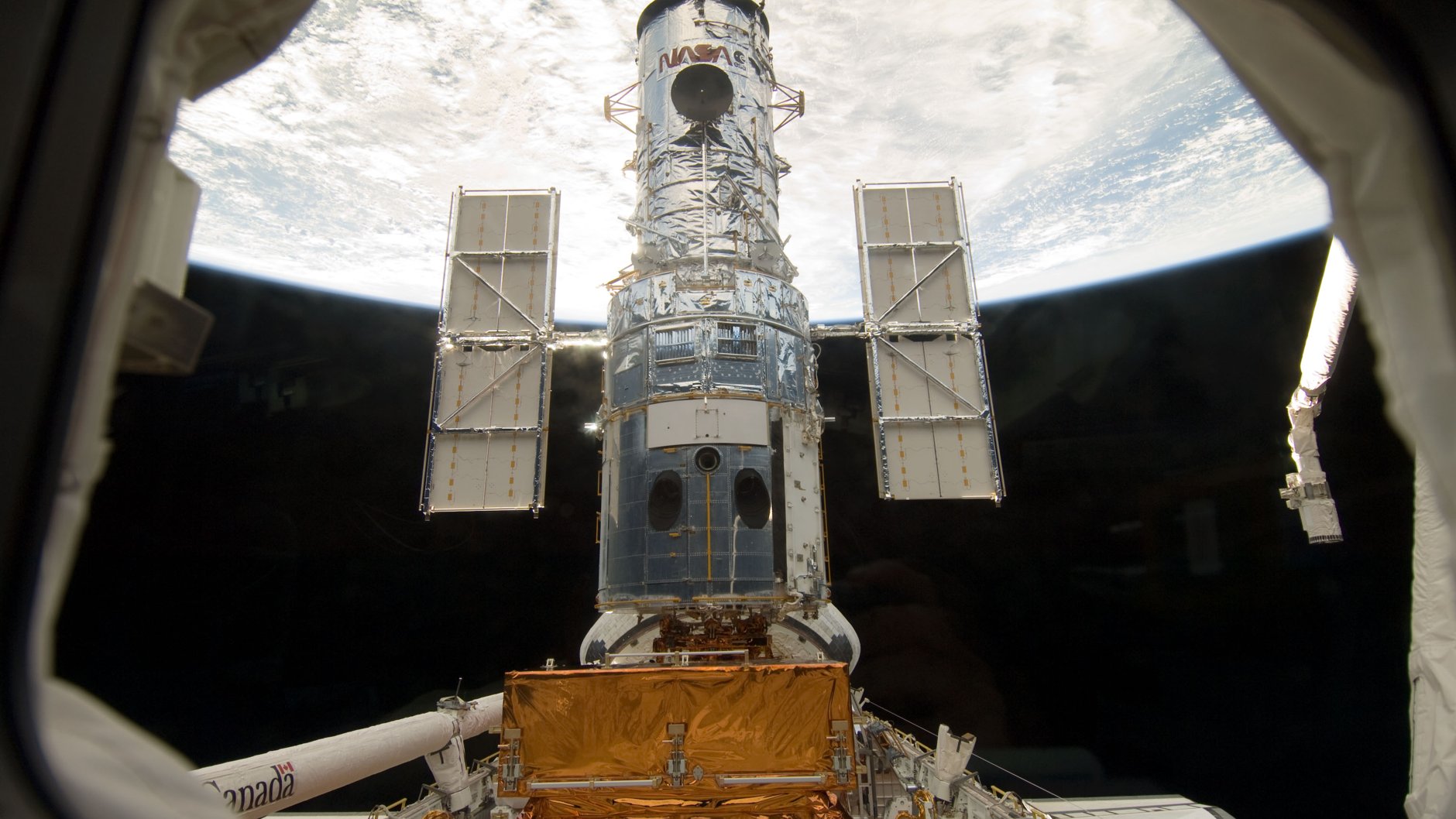
NASA has reopened the search for a way to keep the Hubble Space Telescope in orbit for longer. On 29 October the agency issued a request for information. It asks commercial companies how they would boost Hubble to a higher altitude, service it to improve its capabilities, or bring it down safely at the end of its life. Replies are due by 3 p.m. EST on Monday 30 November.
The notice is a reversal of sorts. SpaceNews reports that NASA is restarting its search for commercial missions more than two years after it concluded that the existing options were too risky. What changed, according to Nicky Fox, who heads NASA’s Science Mission Directorate, is that commercial industry has rapidly evolved in recent years, with new abilities for capturing and servicing satellites in space.
What NASA is asking for
Hubble has no engine of its own, so drag from the thin upper atmosphere slowly pulls it lower. NASA’s analysis says that, left alone, the telescope will most likely re-enter in 2033 or 2034. Any boost or servicing mission would need to fly by 2032, the notice says.
According to a local summary of the notice, the first option is to capture Hubble and raise its orbit to at least 600 km. The second is a servicing mission to improve performance, add resilience and extend its life. The third is to capture it and steer it into a controlled re-entry. Companies would supply the launch vehicle, the spacecraft and any crew. NASA would share technical data and coordinate the rendezvous and capture. Any approach must not harm the telescope.
NASA also wants to know how ready each company’s technology is and how soon it could launch. It asks how much altitude each could add, and the lowest starting altitude from which it could still reach 600 km. Those answers will show whether a rescue is a stretch goal or a routine job.
| Date | What happens |
|---|---|
| 29 October 2026 | NASA issues the request for information |
| 30 November 2026 | Company responses due, 3 p.m. EST |
| By 2032 | Latest date for a boost or servicing mission |
| 2033 to 2034 | Likely re-entry if nothing is done, per NASA analysis |
Table: GoodBad, from NASA and local coverage of the notice.
Why it is worth doing
NASA Administrator Jared Isaacman said in the agency’s announcement that Hubble “still has important science ahead of it”. NASA says it will consider every reasonable opportunity to keep the telescope working as long as possible. Fox said the agency is eager to explore ways to lift Hubble while it develops the flagship mission meant to follow it. Isaacman added that if cost-effective ways exist to extend an asset already in orbit, NASA owes it to taxpayers and scientists to look.
Does this affect you? Only indirectly, but Hubble’s images and data are public, and every year of extra life adds to a catalogue astronomers worldwide draw on. What does it cost? No source gives a figure. The notice is not a request for proposals, and NASA has not committed to buy anything. The next step is a formal request for proposals shaped by the responses, with no timeline or budget set yet.
That leaves a clear sequence to watch: responses on 30 November, a decision on whether to proceed, and a launch window that has to fit inside six years. A company would have to reach and capture a 36-year-old telescope, which is the hard part. The request is the first step in finding out whether anyone can. If the answers are good, Hubble could keep working into a decade that was not meant to include it.