 Good news
Japan's Real Wages Rise for a Ninth Straight Month, Up 2.2% in September
Pay in Japan beat prices by 2.2% in September, the ninth monthly rise in a row after four years of annual falls. Part-time hourly pay rose 5.4%, and summer bonuses averaged ¥448,765 for those who received them.
This story runs on the good side only. The biggest stories of the day are told on both sides.
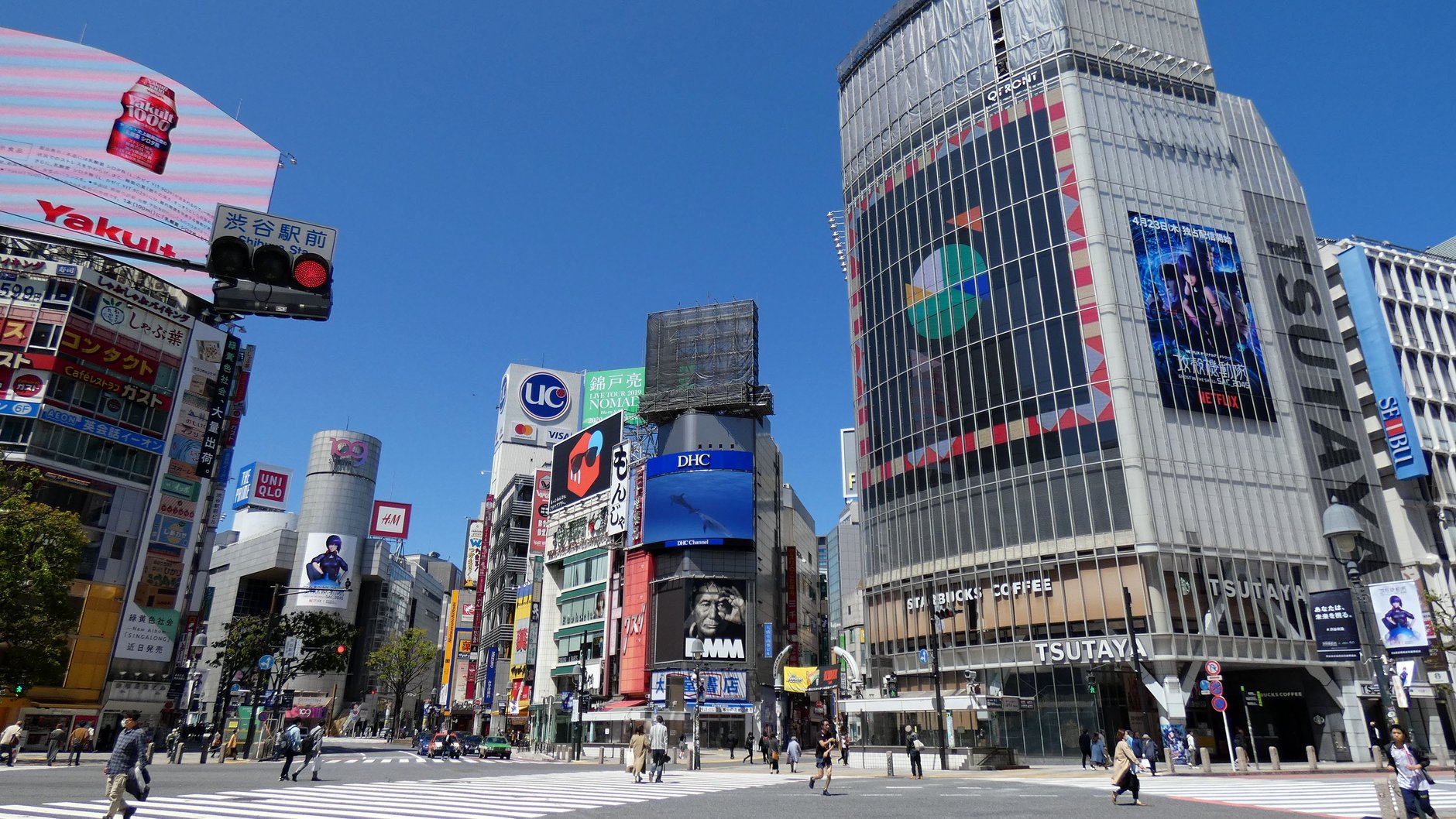
Japanese workers took home more than the rise in prices for the ninth month running in September. The labour ministry’s preliminary Monthly Labour Survey, published on 6 November, shows real cash earnings up 2.2% on a year earlier. The ministry adjusts for consumer prices excluding imputed rent, which rose 2.4% in the same month.
Reuters headlined its own report that the figures back the case for a Bank of Japan rate rise. The central bank has not said when it will move, and neither source gives a date.
What the pay packet looks like
Average total cash earnings per worker reached ¥311,409, up 4.6%, in establishments with five or more employees. In firms with 30 or more employees the figure was ¥350,562, also up 4.6%. Scheduled pay, which excludes overtime and bonuses, rose 3.7% to ¥279,182. Special payments such as bonuses were up 32.6% from a year earlier at ¥12,258, which lifts the headline figure.
The ministry compares the same set of firms to strip out changes in the sample. On that basis total cash earnings rose 4.4% and scheduled pay rose 3.3%. Both are lower than the headline, so the underlying raise is real but smaller than 4.6%.
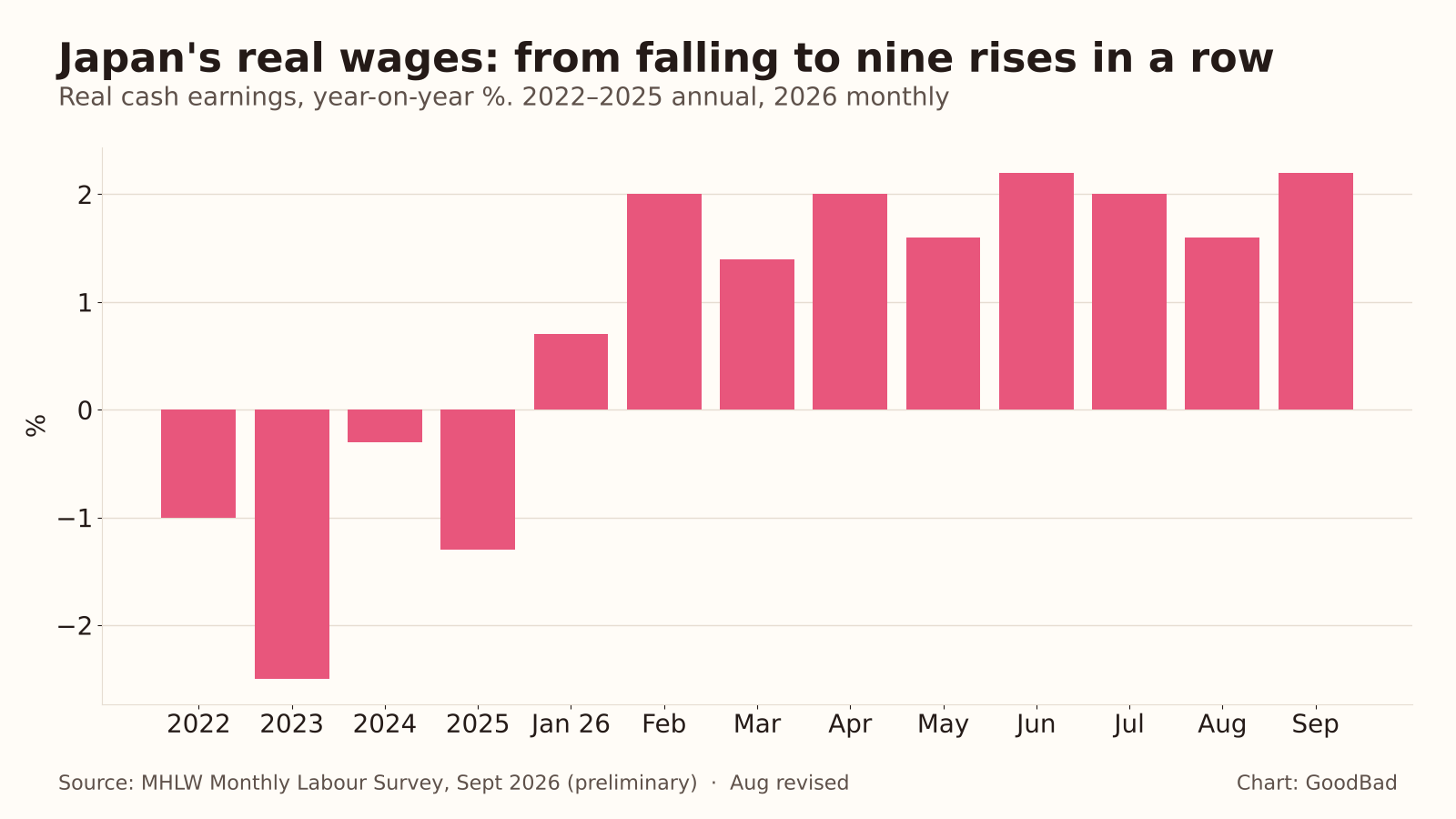 Chart: GoodBad. Data from the Japanese Ministry of Health, Labour and Welfare, Monthly Labour Survey, September 2026 preliminary results. August is the revised figure.
Who gained
Full-time workers saw total cash earnings rise 5.0% to ¥401,722. Part-time workers saw a 4.2% rise to ¥114,412, and their hourly scheduled pay climbed 5.4% to ¥1,463. Full-timers’ scheduled pay rose 4.0% to ¥356,516, so part-time hourly pay is growing faster than full-time scheduled pay.
September also carries the ministry’s annual summer bonus tally. Workers at firms that paid a summer bonus received an average of ¥448,765, up 5.3%, and the figure was ¥522,724 at firms with 30 or more employees, up 5.2%. The survey covers bonus-paying firms only, so it describes those firms rather than all workers.
How it compares
The streak is a change of direction. The ministry’s tables show real wages falling by 1.0% in 2022, 2.5% in 2023, 0.3% in 2024 and 1.3% in 2025. They turned up in January 2026 at 0.7% and have risen every month since, at between 0.7% and 2.2%.
Measured against the CPI that includes everything, as used for international comparison, real earnings rose 2.3% in September, because that price index rose only 2.2%. The two measures differ because the narrower one removes the notional rent that homeowners are assumed to pay themselves.
The caveats
The ministry’s real-wage index stands at 83.7, with the 2020 average as 100. A run of nine rises has therefore recovered only part of what four years of falls took away. The survey also shows total hours worked per employee down 1.4% from a year earlier, so monthly pay is rising despite shorter hours.
The ministry notes that preliminary figures can be revised when final results come out. August’s real-wage figure, shown at 1.6% in the chart, is already a revised number. The survey drew replies from 22,433 of 33,034 establishments, a response rate of 67.9%.
What it means for households
For a worker at a typical firm, a 2026 pay rise has mostly outrun prices, which was not true for most of the past four years. Whether that lasts depends on inflation, which the ministry takes from the national price index, and on firms keeping up raises. The ministry’s next monthly release will show whether the streak reaches a tenth month.