Good news
UN Climate Damage Fund Answers Its First Disaster With $20 Million for Nepal
The UN's Loss and Damage Fund has set aside $20 million for Nepal after August's glacial flood, its first response to a specific disaster. A fast-track route promises payment in six to eight weeks instead of months.

Read the bad side of this story
Nepal Is Offered $20 Million Toward a $4.7 Billion Rebuild After 1,400 Deaths
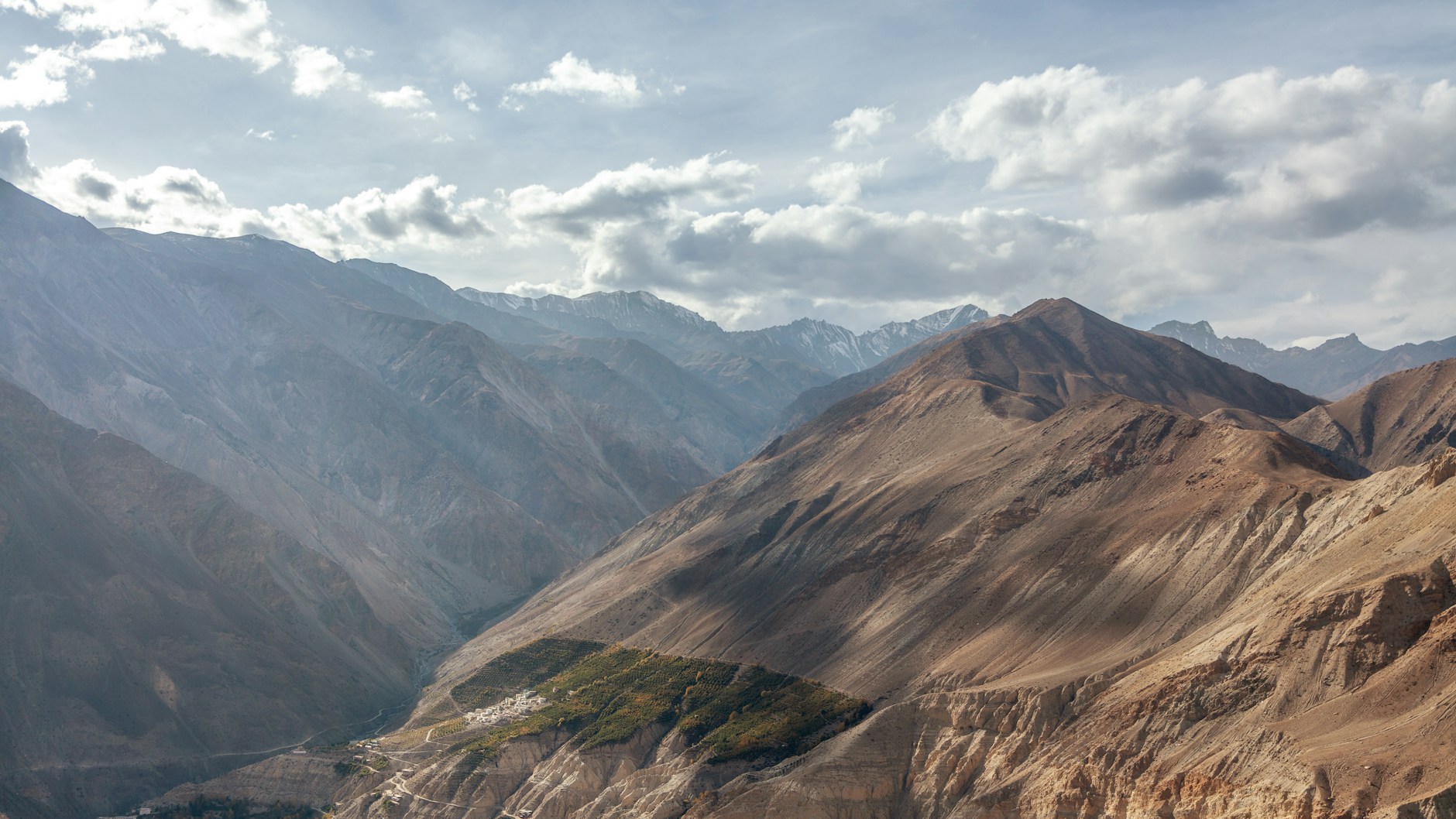
The United Nations’ Fund for Responding to Loss and Damage has, for the first time, answered a specific disaster. Its board agreed at an extraordinary meeting on 22 October to set aside $20 million for Nepal, after the ice-and-rock collapse and flood of 26 August killed more than 1,400 people. The Independent reports that no country had invoked the fund’s emergency procedures before.
The fund was created at the 2022 UN climate talks after years of demands from poorer countries that contribute little to warming but bear much of its cost. For most of its short life it has been a pot of pledges with no payouts. Nepal is the first beneficiary, and the decision shows that the machinery can move.
How the fast track works
The money is provisional. Nepal has been invited to submit a formal funding request under the fund’s start-up phase, and it must pass existing approval steps before anything is released. The Independent reports that the emergency route is meant to take an application to payment in six to eight weeks, against six to eight months under normal rules.
The $20 million is also the most the fund can currently give for any single disaster. The board set that cap when it chose to begin paying out in a test phase, rather than wait years for a full design. The fund’s executive director, Ibrahima Cheikh Diong, said the board had shown it can adapt its operations to pressing needs on the ground, according to Down To Earth. That outlet puts the figure at $21.6 million; this story uses the $20 million reported by AP and The Independent.
What it adds up to
The flood also left more than 5,000 people missing and caused losses the government puts at about $2.7 billion. Nepal’s government estimates $4.7 billion is needed for recovery and reconstruction. Officials say it had received around $102 million from domestic and international donors by the end of September, and is working with India, China and development banks for more. The fund’s allocation is a small share of that total, but it is new money and the first from a body built for exactly this purpose.
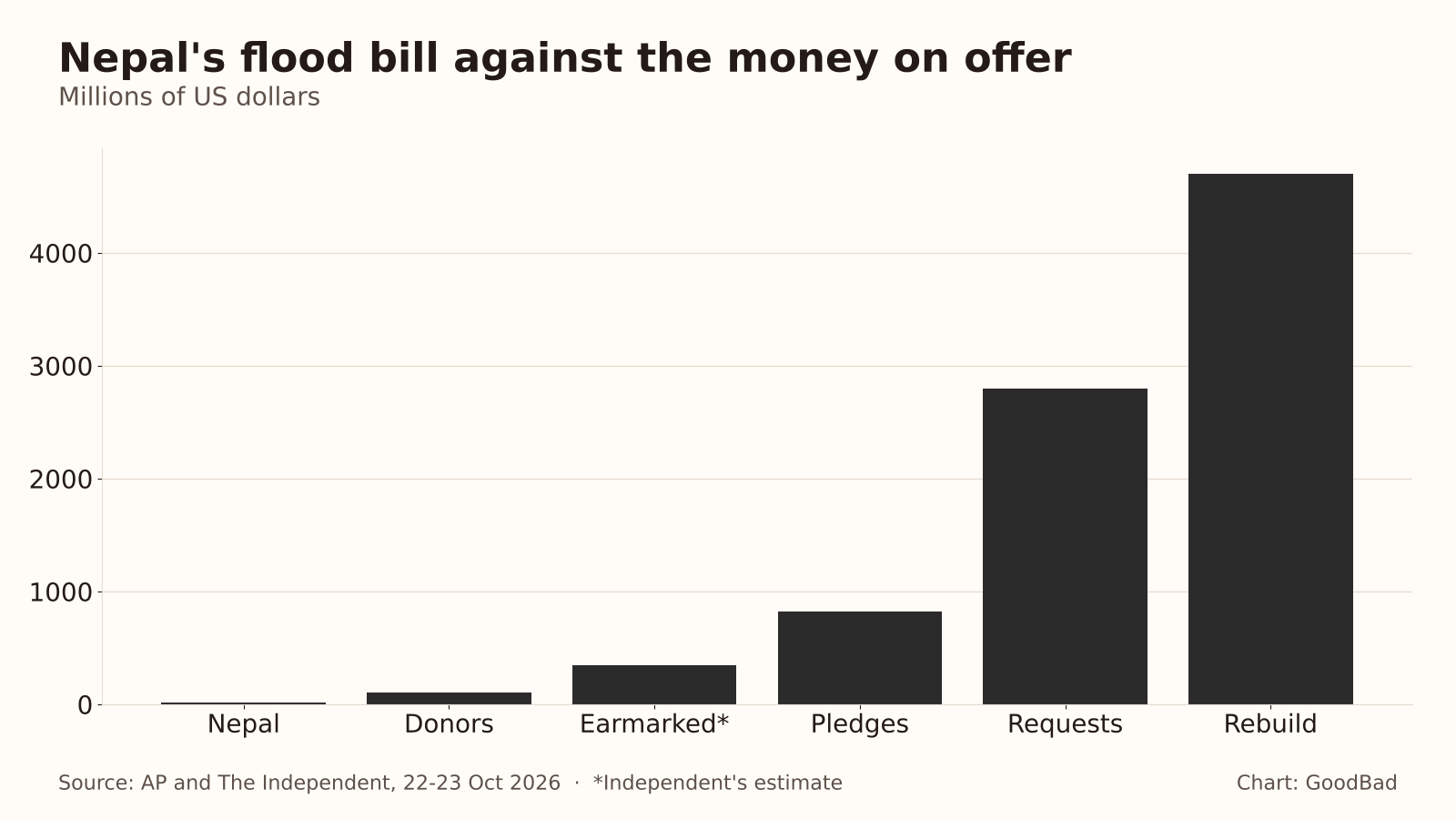 *Chart: GoodBad. Bars, left to right: allocation for Nepal, donor funds received to end September, fund earmarked for payout, fund pledges, requests to the fund, recovery cost. Data from AP and The Independent, 22 to 23 October 2026. Earmarked is The Independent’s estimate.
Maheshwar Dhakal, a senior official in Nepal’s climate and environment ministry, welcomed the decision. He told AP the sum is very small next to what Nepal lost, but that releasing it shows the global community can act in time for the most vulnerable.
Official data cited by The Independent say about 60,000 people from 15,000 families were affected by the flood, which is the group the money is meant to reach once Nepal’s proposal is approved.
What comes next
The fund’s board meets again in December to consider more requests. Countries have pledged more than $820 million, though The Independent reports only about $350 million is currently earmarked for disbursement. Developing nations have lodged 176 requests worth about $2.8 billion, according to AP, and the Independent’s count of earmarked money is far smaller. The next UN climate talks open in Turkey next month, where money for climate-hit countries is expected to be a central issue.
Scientists have linked the disaster to warming. The World Weather Attribution research group found in September that warmer temperatures had thinned glaciers and thawed the frozen ground that helped hold the mountain together, AP reports. That evidence is part of why the case for a standing response mechanism is now being argued from a real example.