Good news
NASA's Twin ESCAPADE Probes Slingshot Past Earth Twice and Head for Mars
Both ESCAPADE spacecraft completed a powered flyby of Earth on 7 and 9 November, the first time NASA has used the manoeuvre to reach Mars. They arrive in September 2027 and begin science in June 2028.
This story runs on the good side only. The biggest stories of the day are told on both sides.
Two small NASA spacecraft are now on their way to Mars after swinging past Earth within 48 hours of each other. The first of the twin ESCAPADE probes made its closest approach at about 5 a.m. EST on 7 November, roughly 1,000 miles above the surface. The second followed at 6 a.m. EST on 9 November at about 650 miles, NASA reports. Each fired its engine for about nine minutes at closest approach, which commits it to the path to Mars.
A new route to Mars
NASA says this is the first time it has used a powered Earth flyby to send a spacecraft to Mars. Asal Naseri, acting associate flight director in NASA’s Heliophysics Division, called it a manoeuvre the team executed twice, “flawlessly, in just two days”. The idea is to combine Earth’s gravity with a sustained engine burn, so the spacecraft gains more speed than gravity alone would give.
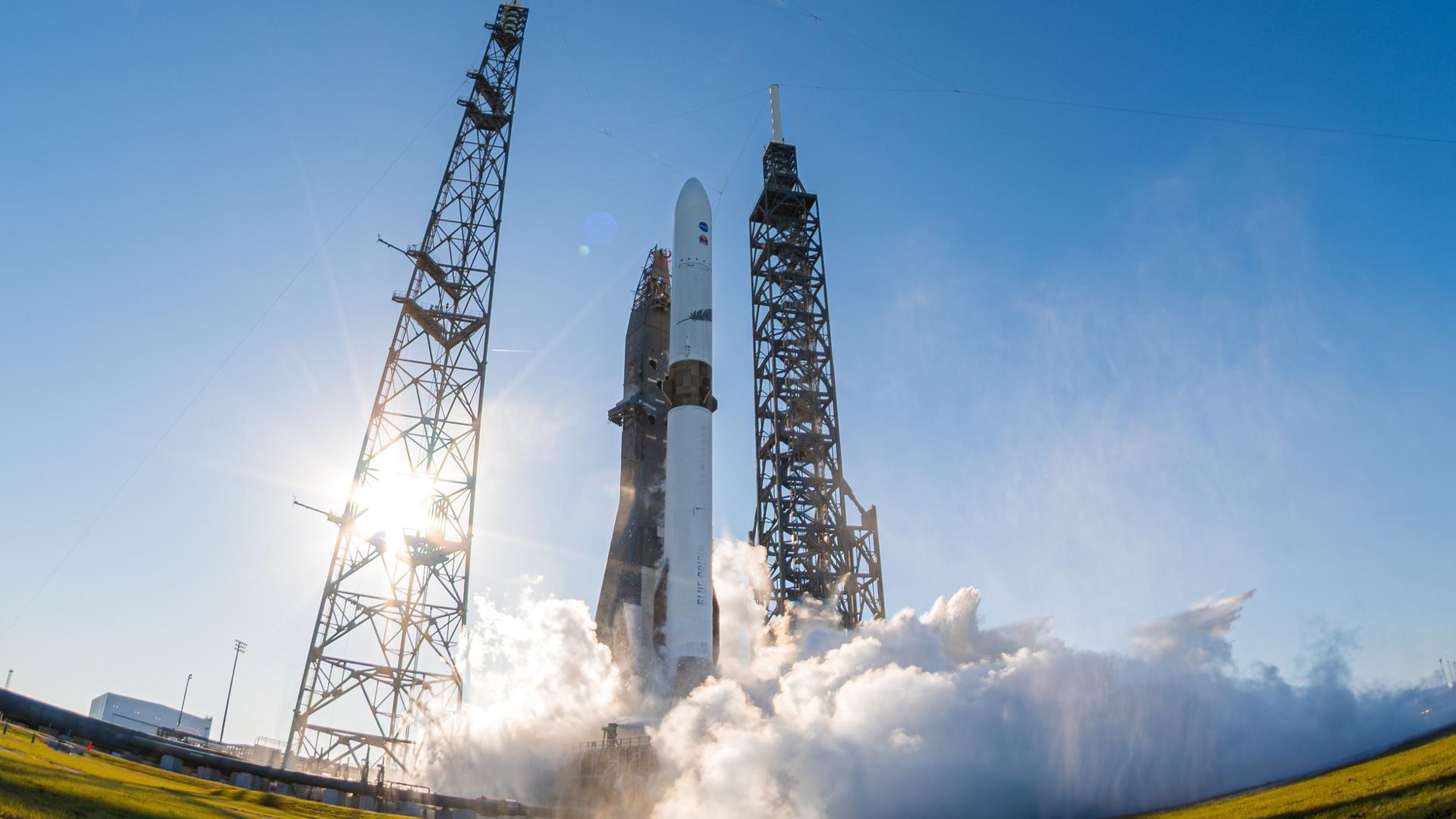
The route matters because of timing. Earth and Mars were on opposite sides of the Sun when ESCAPADE launched from Cape Canaveral on 13 November 2025, so a direct trip was impossible. Instead, both craft spent a year in a looping “loiter” orbit around a point about a million miles from Earth, then returned for the flybys. Jeff Parker of Advanced Space, the lead mission designer, says the method gives flexibility to launch almost anytime rather than waiting for the planets to line up every two years.
What they will study
The mission is led by the University of California, Berkeley. Its two spacecraft, nicknamed Blue and Gold, will fly in formation around Mars. They will study how the solar wind, a stream of material moving at about a million miles per hour, interacts with the Martian environment and drives atmospheric loss. The mission site describes it as a low-cost twin-spacecraft Class D mission.
The probes have already collected some data. During the loiter orbit they flew several times through Earth’s magnetotail, the part of our planet’s magnetic environment that the solar wind stretches away from the Sun. NASA’s Michele Cash, the program scientist, says the findings could help plan future human exploration of Mars.
The schedule from here
| Milestone | Date |
|---|---|
| Launch on Blue Origin’s New Glenn | 13 November 2025 |
| First Earth flyby and burn | 7 November 2026 |
| Second Earth flyby and burn | 9 November 2026 |
| Mars orbit insertion (each probe, about 11 minutes of engine firing) | 7 and 9 September 2027 |
| Science operations begin | June 2028 |
Table: GoodBad. Data from NASA, 9 November 2026.
The probes now cruise for about 10 months, correcting their course along the way and studying the solar wind between Earth and Mars. After arrival they spend several months manoeuvring into their first science formation, one following the other in the same orbit. Six months after science begins, they move to different orbits: one farther out to watch the incoming solar wind and the other close in to see how Mars responds.
What it means
For people on Earth, nothing changes this year. For mission planners, a proven loiter-and-flyby route could ease the dependence on a launch window that opens only about every two years, as Parker describes. NASA has not named a future mission that will use it. The next milestone is the orbit insertion in September 2027, when the engine burns will show whether the year of planning paid off.