Good news
Voyager 1 Reaches One Light-Day From Earth on 18 November, Still Reporting
Launched in 1977, Voyager 1 will be one light-day from Earth on 18 November, more than 16 billion miles away. Two of its ten instruments still work, and NASA is marking the day with a worldwide light signal.
This story runs on the good side only. The biggest stories of the day are told on both sides.
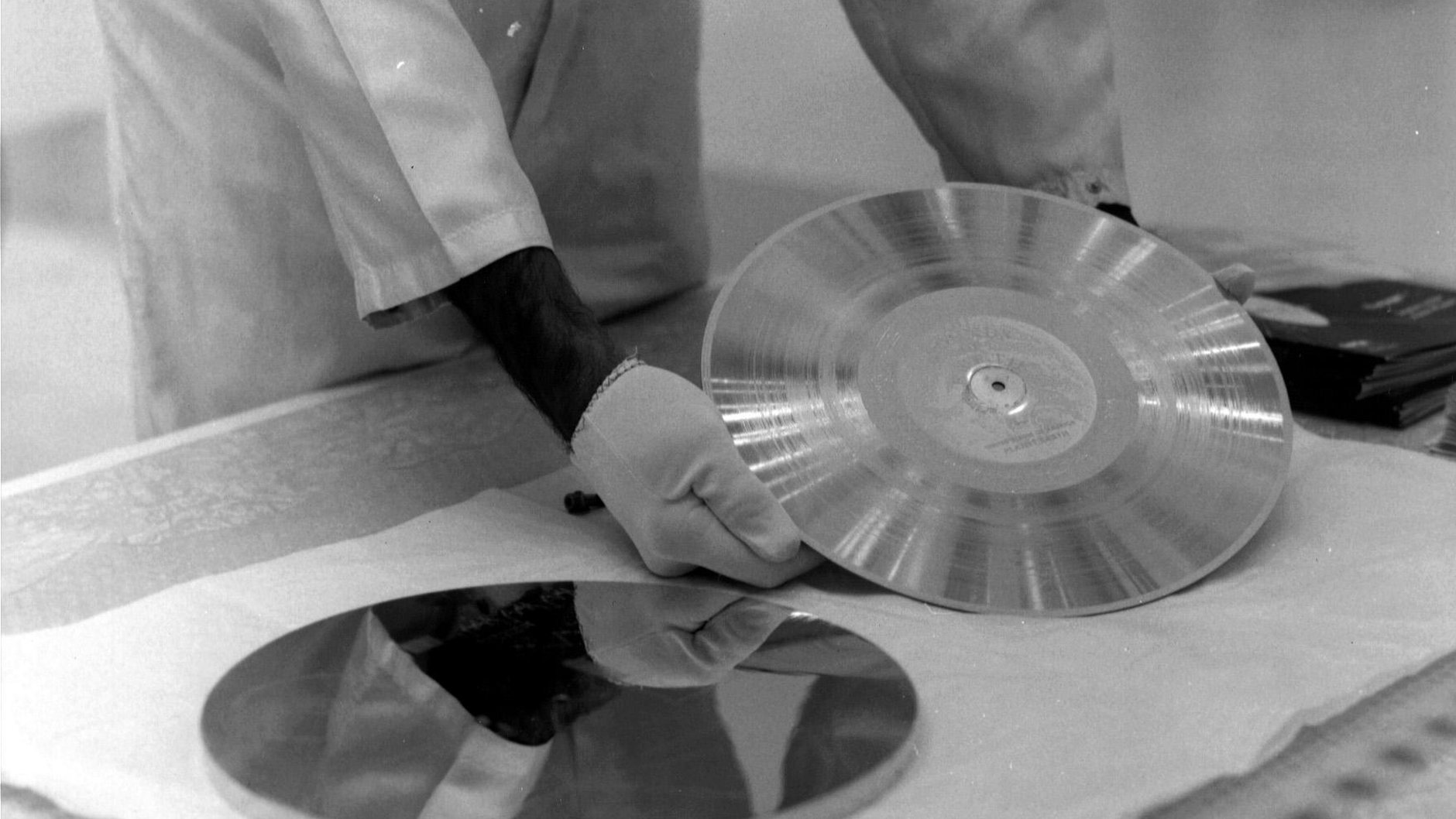
A message sent to Voyager 1 on 18 November will take a full day to arrive. That is the day the spacecraft, launched in 1977, reaches one light-day from Earth, a distance of more than 16 billion miles (25.9 billion kilometres), according to NASA. The agency calls it the most distant human-made object. It is still sending data, nearly 49 years after launch, from a machine built with 1970s electronics.
A day away and still talking
Popular Science puts the exact moment at 5:18 a.m. US Eastern time on 18 November, at 16.09 billion miles. A reply would take another 24 hours to come back, so a command and its answer need two days. Voyager 1 entered interstellar space in 2012, and its sister craft Voyager 2 followed in 2018 on a different path.
The craft transmits with a 23-watt radio, and only the 70-metre dishes of NASA’s Deep Space Network can hear it. That it can be heard at all after 49 years is the story. Engineers have kept it alive by switching things off in a careful order.
What still works
Voyager 1 carried ten working science instruments at launch, and two are active now, Popular Science reports. NASA turned off the Low-energy Charged Particles experiment in April, and in September it swapped three systems for lower-power alternatives. EarthSky notes that the instrument can be switched back on for future measurements.
The team has also run both Voyagers without several instrument heaters for years. Jamie Rankin, the deputy project scientist at Princeton, says that without those cuts the mission would have ended a decade ago. Contact was briefly lost in late October and appears to have been restored, Popular Science says, possibly after a group of thrusters went offline.
| Milestone | Date |
|---|---|
| Voyager 1 launched | 5 September 1977 |
| Enters interstellar space | 2012 |
| One light-day from Earth | 18 November 2026 |
| NASA’s estimate for losing contact | around 2036 |
| Voyager 2 reaches one light-day | November 2035 |
Table: GoodBad. Data from NASA, Popular Science and EarthSky. The 2036 date is NASA’s estimate as reported by Popular Science.
How you can join in
NASA is asking the public to send a signal back. On the evening of 17 November, after sunset, people can flash “VGR”, Voyager’s call sign, in Morse code with a phone, torch or glow stick, with an automated flasher on a NASA site. On 19 November at JPL, project manager Suzanne Dodd and mission manager Kareem Badaruddin will discuss the state of both probes. A preview of a NASA+ documentary follows, with its release planned for 2027, the 50th anniversary.
The limit is power. Voyager 1 runs on a nuclear source whose plutonium is dwindling, and NASA expects to lose contact around 2036, long before the craft reaches two light-days. Until then, the milestone shows how far careful engineering can stretch a probe designed for planets. It crossed the edge of the Sun’s influence in 2012 and is still reporting from beyond it.