 Good news
Kenya Releases Last Ebola Patient, Starting 42-Day Countdown to Ebola-Free Status
Kenya discharged its last Ebola patient on 11 November after nine confirmed cases, seven recoveries and no community transmission. If no new case appears in 42 days it can declare itself free of the virus, though Congo has passed 11,000 cases.

Read the bad side of this story
Congo Ebola Cases Pass 11,000 With 5,387 Dead as Travel Curbs Spread
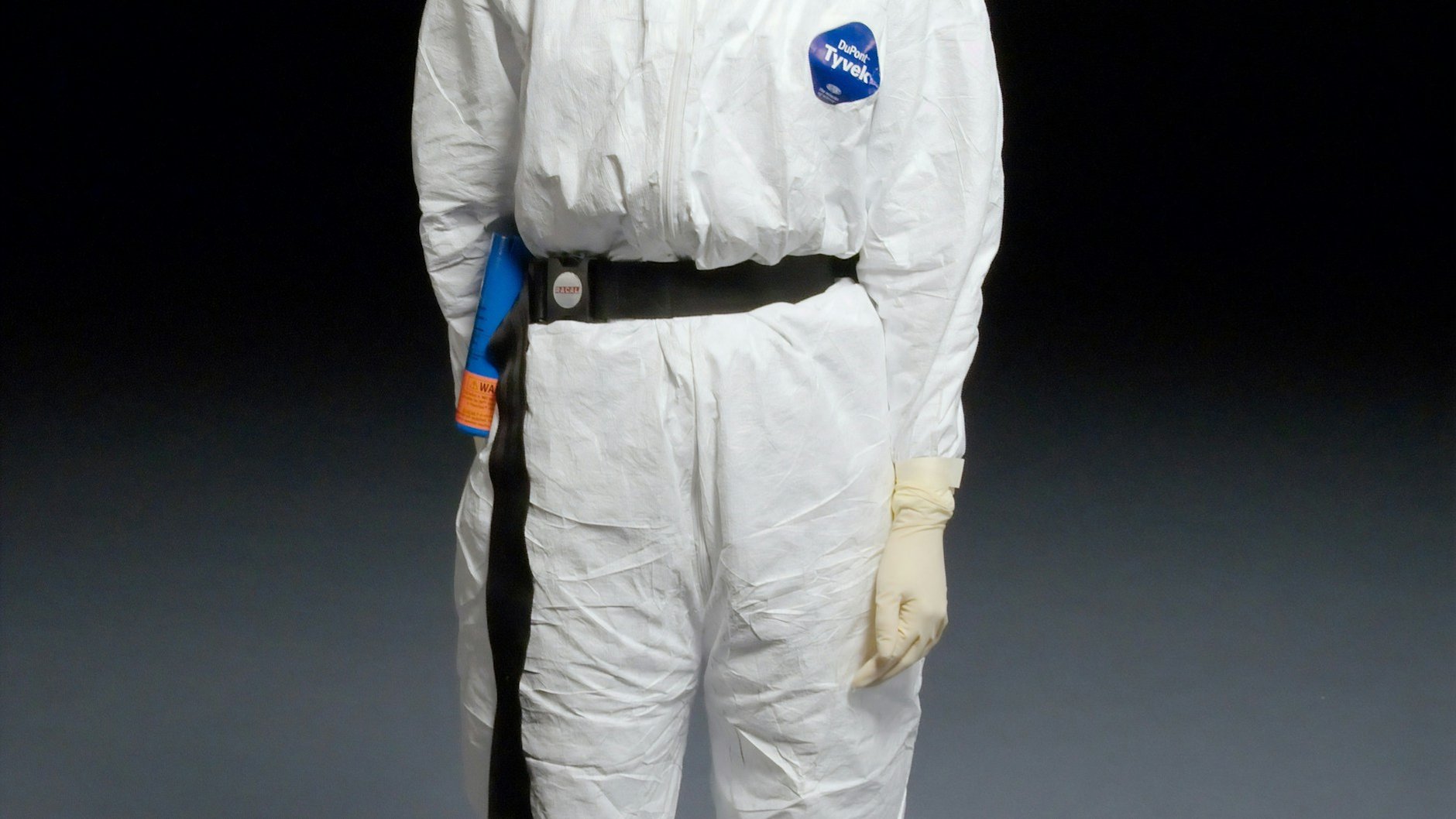
Kenya has discharged its last Ebola patient, and a 42-day countdown to being declared free of the virus has begun. Health Minister Aden Duale announced it in Nairobi on 11 November, Al Jazeera reports in AP copy. The cluster was small: nine confirmed cases, seven recoveries and no spread beyond the contact list of one traveller. Next door in Congo, the same Bundibugyo outbreak has now passed 11,000 confirmed cases, and 5,387 people have died.
How a nine-case cluster ended
The first patient travelled from Congo through Uganda to Kenya in early October and died. He infected four family members and four health workers, according to CIDRAP. His mother also died. The other seven people recovered, and the last new case was recorded on 19 October.
Contact tracing did the work. Kenyan officials identified 135 contacts of the first patient, and Duale said all contacts have completed follow-up monitoring. The ministry says every case traces back to that one contact list, which it takes as a sign there was no community transmission. Nothing in our sources tests that claim independently.
What the 42 days mean
The count of 42 days covers two incubation cycles of the virus. If no new case appears in that time, Kenya can declare the outbreak over. Duale said prevention measures stay in place until 23 December. WHO chief Tedros Adhanom Ghebreyesus congratulated Kenya on X, and Africa CDC Director-General Jean Kaseya called it an “encouraging moment” while insisting surveillance continue until the declaration.
Kenya is not the only country to close a chain. Uganda had 20 confirmed cases earlier this summer and is now Ebola-free, with its last patient released on 16 July, according to the US CDC. Nigeria has reported a single case. Kenya is the third African country outside Congo to see the Bundibugyo strain in this outbreak, and so far the pattern outside Congo is short, contained clusters.
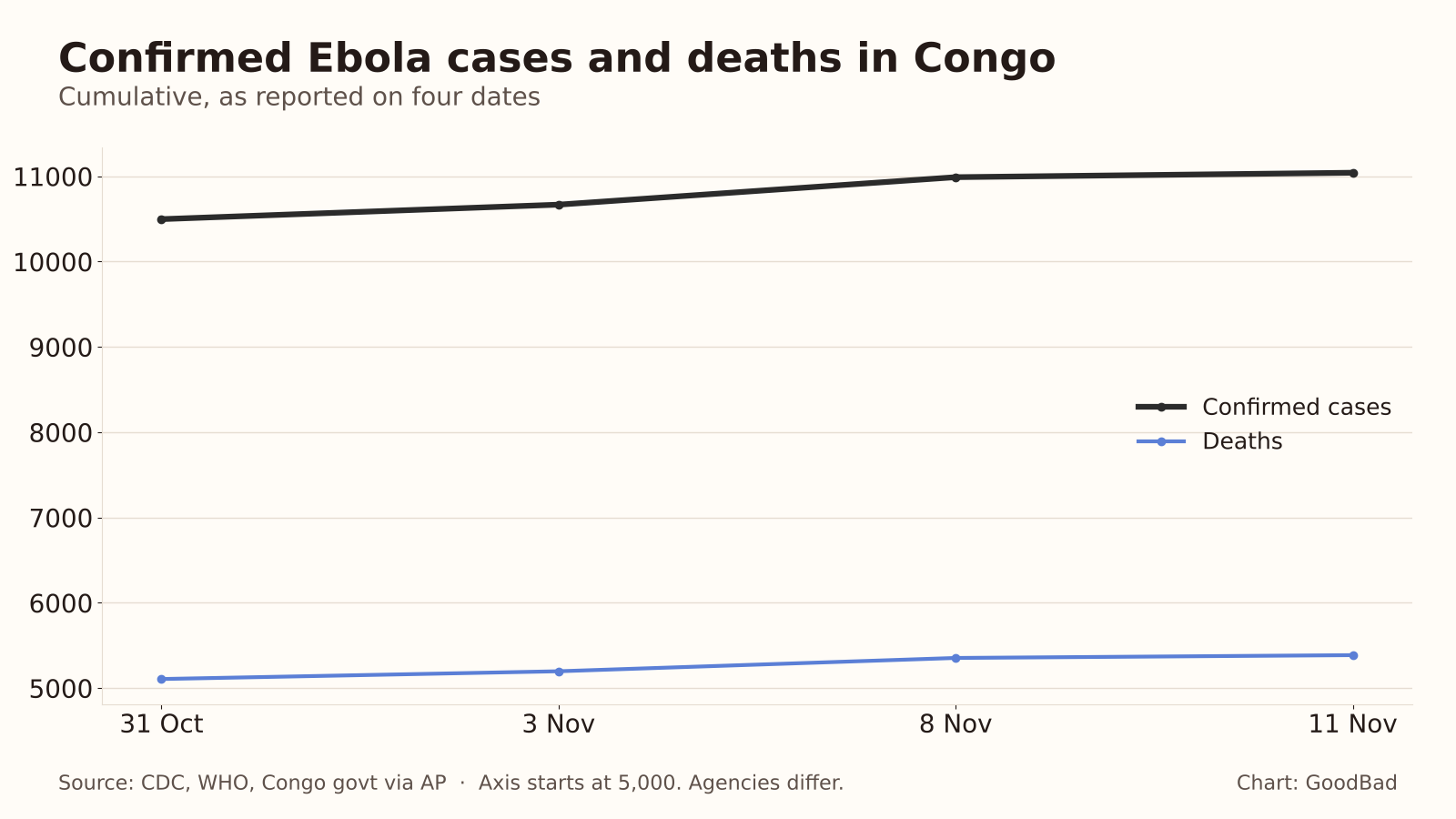 Chart: GoodBad. Data from CDC, WHO and the Congolese government via AP, 31 October to 11 November 2026.
The outbreak still burns at home
The good news has an edge. Congo’s government reported on 11 November that 11,042 people had been infected and 5,387 had died, with the virus detected in 8 of the country’s 26 provinces. The US CDC counted 10,990 confirmed cases and 5,354 deaths three days earlier, so the count is still climbing.
Travel rules reflect that. Kenya sends passengers from ten affected or neighbouring countries through one airport gate for thermal screening, and arrivals from Congo face 21 days of quarantine. Saudi Arabia suspended visas on 30 October, which affects hundreds of Kenyan domestic and hotel workers, and Kenya’s health ministry has asked it to reconsider.
What it shows
There is still no approved vaccine for Bundibugyo. Trials are under way, and we have covered the two new candidates joining the Tumaini trial and the earlier toll. Kenya’s result came without a vaccine: isolation, tracing and monitoring, applied fast to a small group. The next date to watch is the end of the 42 days, in late December, when Kenya can declare itself free of Ebola if nothing changes.